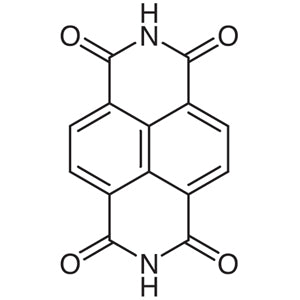
1,8:4,5-Naphthalenetetracarboxdiimide is a chemical compound widely used in laboratory settings as a building block for constructing complex molecular structures. This compound plays a crucial role in organic chemistry by enabling the synthesis of heteroaromatic compounds and polymers. Its versatility makes it an essential tool for researchers aiming to develop new materials or explore chemical reactions with high precision. In the context of Indonesian laboratories, it is frequently utilized in academic and industrial research environments to support advanced chemical investigations.
The compound is known for its chemical stability and controlled reactivity, making it ideal for applications requiring precise chemical manipulation. Its tetracarboxdiimide structure provides resistance to oxidation and reduction reactions, ensuring consistent performance in various synthetic processes. This stability, combined with its predictable behavior, allows scientists to design and execute experiments with confidence. The compound’s reliability and reproducibility are key factors in its popularity among researchers working in organic chemistry and material science.
In Indonesian laboratories, 1,8:4,5-Naphthalenetetracarboxdiimide is commonly used in organic chemistry research, compound synthesis, and material development. It is a preferred choice for applications that require high chemical accuracy and structural integrity. Its role in supporting both academic and industrial research makes it a valuable resource for scientists and students alike.
Related TCI products
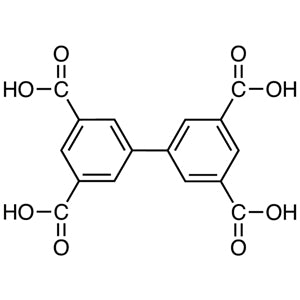
- TCI B3792 4371-28-2 Biphenyl-3,3',5,5'-tetracarboxylic Acid
- TCI B0684 4534-68-3 meso-Butane-1,2,3,4-tetracarboxylic Acid
- TCI B6179 22803-05-0 [1,1'-Biphenyl]-3,3',4,4'-tetracarboxylic Acid
- TCI C2679 4415-88-7 1,2,3,4-Cyclobutanetetracarboxdiimide
- TCI N1128 3711-01-1 2,3,6,7-Naphthalenetetracarboxylic 2,3:6,7-Dianhydride
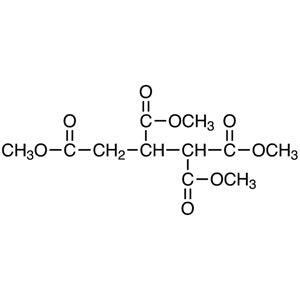
- TCI T2594 55525-27-4 Tetramethyl 1,1,2,3-Propanetetracarboxylate
- Organic synthesis applications benefit from this compound's structural versatility and chemical stability, enabling the creation of complex molecules with high precision.
- Polymer development projects utilize its tetracarboxdiimide structure to enhance the properties of new materials, offering improved thermal and mechanical characteristics.
- Heteroaromatic compound synthesis relies on its reactivity and compatibility with various reaction conditions, making it a key reagent in synthetic pathways.
- Material science research incorporates this compound to design advanced materials with tailored chemical and physical properties.
- Academic research in Indonesian universities and research institutions uses it as a fundamental building block for exploring new chemical reactions and molecular structures.
| Brand | TCI |
|---|---|
| CAS number | 5690-24-4 |
| Molecular formula | — |
| Purity | — |
| Category | Chemistry > Building Blocks > Non-Heterocyclic Building Blocks |
| Pack sizes | Available in standard laboratory quantities as specified by supplier |
| Physical form | Solid |
| Storage | Store in a cool, dry place away from light and moisture |
This compound should be stored in a cool, dry environment, away from direct light and moisture to maintain its chemical integrity. It is recommended to use airtight containers made of materials such as glass or polyethylene to prevent contamination and degradation. Due to its chemical stability, it does not require refrigeration but should be protected from environmental factors that may affect its performance. In laboratory settings, it is important to handle the compound with care, using appropriate personal protective equipment when necessary. Proper storage ensures the compound remains effective for its intended applications in research and development.
—
Produk Terkait
-
Biphenyl-3,3',5,5'-tetracarboxylicAcid TCI B3792
Regular price Rp 3.949.050,00Regular price -
meso-Butane-1,2,3,4-tetracarboxylicAcid TCI B0684
Regular price From Rp 717.150,00Regular price -
[1,1'-Biphenyl]-3,3',4,4'-tetracarboxylicAcid TCI B6179
Regular price Rp 4.479.300,00Regular price -
1,2,3,4-Cyclobutanetetracarboxdiimide TCI C2679
Regular price From Rp 4.718.700,00Regular price -
2,3,6,7-Naphthalenetetracarboxylic2,3:6,7-Dianhydride TCI N1128
Regular price From Rp 4.161.150,00Regular price -
Tetramethyl1,1,2,3-Propanetetracarboxylate TCI T2594
Regular price Rp 3.790.500,00Regular price -
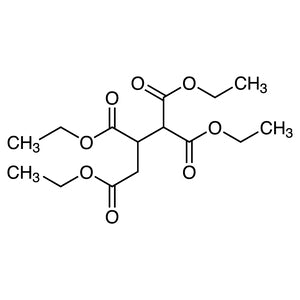
TetraethylPropane-1,1,2,3-tetracarboxylate TCI P0487
Regular price Rp 2.518.950,00Regular price -
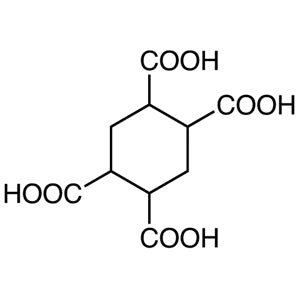
1,2,4,5-CyclohexanetetracarboxylicAcid TCI C2198
Regular price From Rp 1.140.300,00Regular price

![[1,1'-Biphenyl]-3,3',4,4'-tetracarboxylic Acid (CAS 22803-05-0) - TCI B6179 - AMI Scientific](http://amiscientific.com/cdn/shop/files/TCI2510B6179.jpg?v=1767093266&width=533)