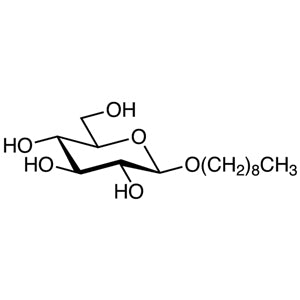
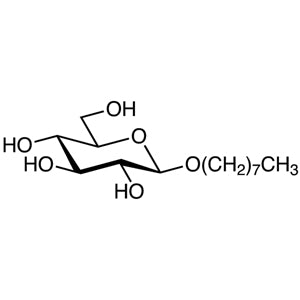
Nonyl beta-D-Glucopyranoside is a chemical compound widely used in laboratory experiments across chemical and biochemical research. As a non-ionic surfactant, it plays a crucial role in solubilizing lipids and proteins, making it essential for various analytical techniques. Its ability to facilitate extraction and precipitation processes enhances the efficiency of experimental workflows. This compound is particularly valuable in biophysical studies where precise molecular interactions are required. It is commonly found in research settings where stability and reliability are paramount.
The compound's non-ionic nature makes it a preferred choice for many applications. Unlike ionic surfactants, it does not produce negative or positive ions, thus avoiding interference with other chemical reactions. This property ensures that it remains stable under a wide range of environmental conditions. Additionally, its resistance to degradation in solution prolongs its shelf life and enhances the accuracy of experimental results. These characteristics make it an ideal component for both routine and advanced laboratory procedures.
In Indonesian laboratories, Nonyl beta-D-Glucopyranoside is frequently used in biochemical, pharmacological, and food technology research. Researchers and students at universities and research institutions rely on this compound for experiments requiring non-ionic surfactants. Its versatility and reliability have made it a standard material in various scientific disciplines, supporting both fundamental and applied research efforts.
TCI brochures (PDF)
Related TCI products
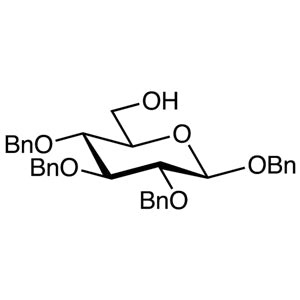
- TCI B4171 27851-29-2 Benzyl 2,3,4-Tri-O-benzyl-beta-D-glucopyranoside
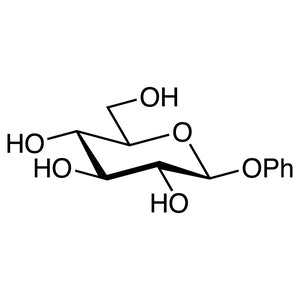
- TCI P0178 1464-44-4 Phenyl beta-D-Glucopyranoside
- TCI O0355 29836-26-8 n-Octyl beta-D-Glucopyranoside [for Biochemical Research]
- TCI O0232 29836-26-8 n-Octyl beta-D-Glucopyranoside
- TCI N0493 3767-28-0 4-Nitrophenyl alpha-D-Glucopyranoside [Substrate for alpha-D-Glucosidase]
- TCI N0235 2492-87-7 4-Nitrophenyl beta-D-Glucopyranoside Monohydrate [Substrate for beta-D-Glucosidase]
- Biochemical research utilizes Nonyl beta-D-Glucopyranoside for solubilizing membrane proteins, aiding in structural analysis and functional studies.
- Pharmaceutical development benefits from its ability to stabilize and dissolve hydrophobic compounds, enhancing drug formulation processes.
- Food technology applications leverage its surfactant properties to improve emulsification and solubility in food product development.
- Spectroscopic analysis relies on this compound to enhance the clarity and accuracy of molecular structure determination.
- Cell membrane studies use it to maintain membrane integrity during extraction and purification procedures.
| Brand | TCI |
|---|---|
| CAS number | 69984-73-2 |
| Molecular formula | — |
| Purity | — |
| Category | Chemistry > Chemical Biology > Glycoscience |
| Pack sizes | Available in various quantities as per standard laboratory supply |
| Physical form | Solid powder |
| Storage | Store in a cool, dry place away from direct sunlight |
Nonyl beta-D-Glucopyranoside should be stored in a cool, dry environment to maintain its chemical integrity. It is best kept in airtight containers to prevent moisture absorption, which could affect its performance. Since it is a solid powder, it should be handled with care to avoid inhalation or skin contact. In laboratory settings, it is advisable to use a fume hood when working with larger quantities to ensure proper ventilation. Always follow standard safety protocols when handling chemical substances to minimize risks. Proper storage and handling ensure the compound remains effective and safe for use in various research applications.
—
Product Categories
Produk Terkait
-
Benzyl2,3,4-Tri-O-benzyl-beta-D-glucopyranoside TCI B4171
Regular price Rp 3.870.300,00Regular price -
Phenylbeta-D-Glucopyranoside TCI P0178
Regular price Rp 848.400,00Regular price -
n-Octylbeta-D-Glucopyranoside[forBiochemicalResearch] TCI O0355
Regular price Rp 2.650.200,00Regular price -
n-Octylbeta-D-Glucopyranoside TCI O0232
Regular price From Rp 1.803.900,00Regular price -
4-Nitrophenylalpha-D-Glucopyranoside[Substrateforalpha-D-Glucosidase] TCI N0493
Regular price From Rp 2.147.250,00Regular price -
4-Nitrophenylbeta-D-GlucopyranosideMonohydrate[Substrateforbeta-D-Glucosidase] TCI N0235
Regular price From Rp 2.359.350,00Regular price -
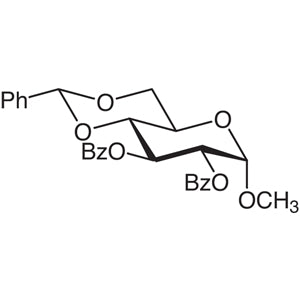
Methyl2,3-Di-O-benzoyl-4,6-O-benzylidene-alpha-D-glucopyranoside TCI M2013
Regular price Rp 3.763.200,00Regular price -
Methyl4,6-O-Benzylidene-alpha-D-glucopyranoside TCI M1125
Regular price From Rp 1.140.300,00Regular price
![29836-26-8 n-Octyl beta-D-Glucopyranoside [for Biochemical Research] - AMI Scientific](http://amiscientific.com/cdn/shop/files/TCI2510O0355.jpg?v=1767131790&width=533)
![3767-28-0 4-Nitrophenyl alpha-D-Glucopyranoside [Substrate for alpha-D-Glucosidase] - AMI Scientific](http://amiscientific.com/cdn/shop/files/TCI2510N0493.jpg?v=1767129938&width=533)
![2492-87-7 4-Nitrophenyl beta-D-Glucopyranoside Monohydrate [Substrate for beta-D-Glucosidase] - AMI Scientific](http://amiscientific.com/cdn/shop/files/TCI2510N0235.jpg?v=1767129472&width=533)