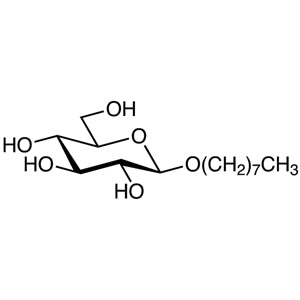
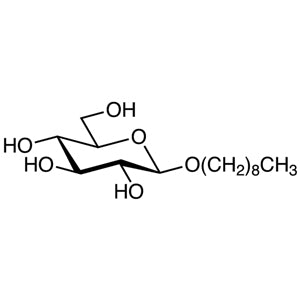
n-Octyl beta-D-Glucopyranoside is a chemical compound widely used in scientific and industrial applications. It belongs to the class of glycosides, which are organic compounds featuring a sugar structure attached to a hydrocarbon chain. In the laboratory, this compound serves as a non-ionic surfactant, capable of reducing surface tension and facilitating emulsification processes. Its versatility makes it a valuable tool in various chemical and biochemical experiments. Due to its stability and non-corrosive nature, it is a preferred choice for researchers looking for reliable and safe reagents.
One of the key properties that make n-Octyl beta-D-Glucopyranoside a preferred choice is its non-toxicity and good solubility in organic solvents such as ethyl acetate and ethanol. These characteristics ensure that it can be effectively used as an emulsifier and solvent without interfering with the main reaction. Additionally, its high thermal stability allows it to perform reliably under varying temperature conditions, making it suitable for a wide range of experimental setups. The compound’s chemical properties also contribute to its effectiveness in maintaining the integrity of experimental processes.
In Indonesian laboratories, n-Octyl beta-D-Glucopyranoside is commonly used in biochemical and chemical research. It is particularly useful in applications requiring surfactant properties, such as in the preparation of emulsions or in the study of membrane interactions. Its stability and non-reactive nature make it ideal for use in both routine and specialized laboratory procedures. Researchers in Indonesia rely on this compound for its consistent performance and safety profile in various experimental contexts.
TCI brochures (PDF)
Related TCI products
- TCI O0355 29836-26-8 n-Octyl beta-D-Glucopyranoside [for Biochemical Research]
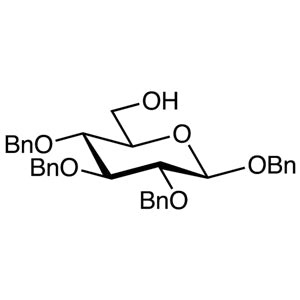
- TCI B4171 27851-29-2 Benzyl 2,3,4-Tri-O-benzyl-beta-D-glucopyranoside
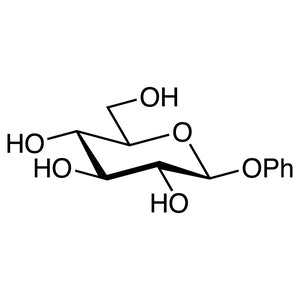
- TCI P0178 1464-44-4 Phenyl beta-D-Glucopyranoside
- TCI N0909 69984-73-2 Nonyl beta-D-Glucopyranoside
- TCI N0493 3767-28-0 4-Nitrophenyl alpha-D-Glucopyranoside [Substrate for alpha-D-Glucosidase]
- TCI N0235 2492-87-7 4-Nitrophenyl beta-D-Glucopyranoside Monohydrate [Substrate for beta-D-Glucosidase]
- Used in biochemical research for its surfactant properties, aiding in the disruption of cell membranes and the solubilization of hydrophobic compounds.
- Applied in the formulation of emulsions and microemulsions, where its ability to reduce surface tension is critical for stability.
- Employed in the study of lipid bilayers and membrane proteins, as it helps in the preparation of model membranes for structural and functional analysis.
- Utilized in the synthesis of glycosylated compounds, where its role as a glycosyl donor is essential for the formation of complex carbohydrates.
- Applied in analytical chemistry for sample preparation, particularly in the extraction and purification of organic compounds from complex matrices.
| Brand | TCI |
|---|---|
| CAS number | 29836-26-8 |
| Molecular formula | — |
| Purity | — |
| Category | Chemistry > Chemical Biology > Glycoscience |
| Pack sizes | Available in various quantities as per supplier specifications |
| Physical form | Liquid |
| Storage | Store in a cool, dry place away from direct sunlight |
n-Octyl beta-D-Glucopyranoside should be stored in a cool, dry place, away from direct sunlight and sources of heat. It is recommended to use airtight containers to prevent contamination and maintain its chemical integrity. Due to its non-toxic nature, it is generally safe to handle, but standard laboratory precautions should still be followed, such as wearing gloves and safety goggles when working with it. The compound is stable under normal storage conditions and does not require special handling beyond those typical for most organic solvents. It is important to ensure that the storage area is well-ventilated to avoid any potential buildup of vapors. Proper labeling of containers is also essential for safe and efficient laboratory operations.
—
Product Categories
Produk Terkait
-
n-Octylbeta-D-Glucopyranoside[forBiochemicalResearch] TCI O0355
Regular price Rp 2.650.200,00Regular price -
Benzyl2,3,4-Tri-O-benzyl-beta-D-glucopyranoside TCI B4171
Regular price Rp 3.870.300,00Regular price -
Phenylbeta-D-Glucopyranoside TCI P0178
Regular price Rp 848.400,00Regular price -
Nonylbeta-D-Glucopyranoside TCI N0909
Regular price Rp 3.976.350,00Regular price -
4-Nitrophenylalpha-D-Glucopyranoside[Substrateforalpha-D-Glucosidase] TCI N0493
Regular price From Rp 2.147.250,00Regular price -
4-Nitrophenylbeta-D-GlucopyranosideMonohydrate[Substrateforbeta-D-Glucosidase] TCI N0235
Regular price From Rp 2.359.350,00Regular price -
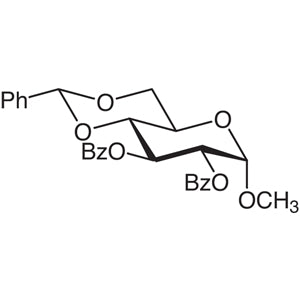
Methyl2,3-Di-O-benzoyl-4,6-O-benzylidene-alpha-D-glucopyranoside TCI M2013
Regular price Rp 3.763.200,00Regular price -
Methyl4,6-O-Benzylidene-alpha-D-glucopyranoside TCI M1125
Regular price From Rp 1.140.300,00Regular price
![29836-26-8 n-Octyl beta-D-Glucopyranoside [for Biochemical Research] - AMI Scientific](http://amiscientific.com/cdn/shop/files/TCI2510O0355.jpg?v=1767131790&width=533)
![3767-28-0 4-Nitrophenyl alpha-D-Glucopyranoside [Substrate for alpha-D-Glucosidase] - AMI Scientific](http://amiscientific.com/cdn/shop/files/TCI2510N0493.jpg?v=1767129938&width=533)
![2492-87-7 4-Nitrophenyl beta-D-Glucopyranoside Monohydrate [Substrate for beta-D-Glucosidase] - AMI Scientific](http://amiscientific.com/cdn/shop/files/TCI2510N0235.jpg?v=1767129472&width=533)