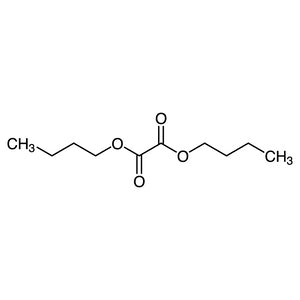
Dibutyl oxalate is a chemical compound widely used in laboratory settings for its versatility in synthetic reactions. It serves as a key building block in the synthesis of complex organic compounds, particularly in esterification and substitution reactions. Its role in organic chemistry makes it essential for researchers aiming to create new molecular structures. This compound is commonly found in both academic and industrial laboratories, supporting a wide range of chemical investigations. Its chemical stability and reactivity make it a reliable choice for various experimental setups.
Dibutyl oxalate is valued for its chemical stability and moderate reactivity, which allow it to participate effectively in multiple reaction types without undergoing unwanted side reactions. It is a colorless liquid with a characteristic odor, making it easy to identify and handle. Its low volatility simplifies storage and use, reducing the risk of evaporation during experiments. Additionally, its ability to bind with specific ions makes it useful in purification processes. These properties contribute to its popularity among chemists and researchers.
In Indonesian laboratories, dibutyl oxalate is frequently used in pharmaceutical and organic chemistry research. It plays a crucial role in the development of new drugs and chemical compounds. Many research institutions and universities in Indonesia rely on this compound for its reliability and effectiveness in various chemical processes. Its availability in different packaging sizes ensures convenient use across different experimental scales.
Related TCI products
- Organic synthesis applications benefit from dibutyl oxalate's role in esterification and substitution reactions, enabling the creation of complex molecular structures.
- Pharmaceutical research utilizes this compound for the synthesis of drug-related compounds, supporting the development of new therapeutic agents.
- Chemical purification processes take advantage of dibutyl oxalate's ability to bind with specific ions, aiding in the isolation of target compounds.
- Academic research in Indonesian universities relies on dibutyl oxalate for its consistent performance in various chemical experiments.
- Industrial chemical production incorporates this compound for its stability and reactivity, ensuring reliable outcomes in large-scale synthesis.
| Brand | TCI |
|---|---|
| CAS number | 2050-60-4 |
| Molecular formula | — |
| Purity | — |
| Category | Chemistry > Building Blocks > Non-Heterocyclic Building Blocks |
| Pack sizes | Available in various sizes to suit different experimental needs |
| Physical form | Colorless liquid |
| Storage | Store in a cool, dry place away from direct sunlight |
Dibutyl oxalate should be stored in a cool, dry environment to maintain its chemical stability. It is recommended to keep it in a tightly sealed container to prevent exposure to air and moisture. Due to its low volatility, it does not require extreme containment, but proper ventilation should be ensured in the laboratory. Avoid direct sunlight and high temperatures to prevent degradation. Always handle the compound with appropriate personal protective equipment, such as gloves and safety goggles, to ensure safe usage. Regularly check the container for any signs of leakage or damage to maintain safety standards in the laboratory.
—
Produk Terkait
-
Bis[3,4,6-trichloro-2-(pentyloxycarbonyl)phenyl]Oxalate TCI O0236
Regular price From Rp 2.199.750,00Regular price -
DiethylOxalate[forSpectrophotometry] TCI O0120
Regular price Rp 2.730.000,00Regular price -
DiphenylOxalate TCI O0111
Regular price From Rp 2.597.700,00Regular price -
DimethylOxalate TCI O0080
Regular price From Rp 530.250,00Regular price -
DiethylOxalate TCI O0078
Regular price From Rp 505.050,00Regular price -
EthylPotassiumOxalate TCI E1184
Regular price From Rp 4.213.650,00Regular price -
DibenzylOxalate TCI D6617
Regular price From Rp 1.378.650,00Regular price -
Bis(4-methylbenzyl)Oxalate TCI D6189
Regular price Rp 610.050,00Regular price
![30431-54-0 Bis[3,4,6-trichloro-2-(pentyloxycarbonyl)phenyl] Oxalate - AMI Scientific](http://amiscientific.com/cdn/shop/files/TCI2510O0236.jpg?v=1767131634&width=533)
![95-92-1 Diethyl Oxalate [for Spectrophotometry] - AMI Scientific](http://amiscientific.com/cdn/shop/files/TCI2510O0120.jpg?v=1767131409&width=533)