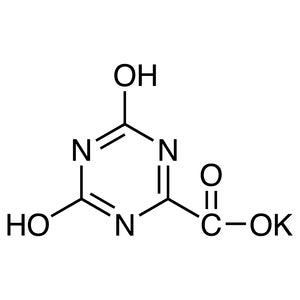
Potassium Oxonate is the potassium salt of oxonic acid, a nitrogen-containing heterocyclic triazine derivative. In the TCI catalogue it belongs to the Heterocyclic Building Blocks group. In the life sciences it is best known as an inhibitor of the enzyme uricase, also called urate oxidase. Because of this, it is widely used in preclinical research to create animal models of hyperuricemia. Hyperuricemia means a high level of uric acid in the blood, the same condition seen in people with gout. Chemists also use the compound as a heterocyclic starting material.
Researchers choose this material because its mechanism of action is clear and well documented. Most rodents have an active uricase enzyme that breaks down uric acid, but humans do not. When potassium oxonate blocks this enzyme, uric acid builds up in test animals, so their condition comes closer to human physiology. This gives more relevant results in hyperuricemia and gout studies. Its triazine structure also makes it a useful heterocyclic building block for synthesis. The same compound is known as oteracil potassium, and it has been studied as part of anticancer drug combinations to reduce side effects in the digestive tract.
In Indonesia, potassium oxonate is especially relevant to pharmacology laboratories in faculties of pharmacy and medicine. These labs test the uric-acid-lowering activity of drug candidates, including extracts from local medicinal plants that are traditionally used for gout. Research institutes working on drug discovery and preclinical testing also use it. Organic and medicinal chemistry groups can use it as a triazine-based heterocyclic building block. For all of these users, a well-documented TCI material helps keep results consistent from one experiment to the next.
TCI brochures (PDF)
- Reagents for Preparing Animal Disease Models 2024-09-13 · p. 1
- Reagents for Biological Research 2025-03-11 · p. 49
- Hyperuricemia animal models: potassium oxonate inhibits uricase in rodents, which raises their blood uric acid levels and produces a reproducible model that resembles hyperuricemia in humans.
- Gout and anti-hyperuricemic drug screening: it creates a raised uric acid baseline in test animals, so researchers can measure how well candidate compounds or herbal extracts lower uric acid.
- Uricase (urate oxidase) enzyme studies: its known inhibitory action on uricase makes it a useful reference compound for studying the enzyme's activity and purine metabolism in biochemical experiments.
- Heterocyclic synthesis: as a triazine derivative listed among TCI Heterocyclic Building Blocks, it gives synthetic chemists a nitrogen-rich scaffold for making new heterocyclic compounds.
- Pharmaceutical research on oteracil potassium: as the same compound as oteracil potassium, it supports studies of anticancer drug combinations that aim to reduce gastrointestinal side effects.
| Brand | TCI (product code O0164) |
|---|---|
| CAS number | 2207-75-2 |
| Molecular formula | — |
| Purity | — |
| Category | Chemistry > Building Blocks > Heterocyclic Building Blocks |
| Pack sizes | available in the pack sizes TCI offers; please confirm current options with AMI Scientific |
| Physical form | see the product label and TCI certificate of analysis |
| Storage | follow the storage conditions on the TCI label and safety data sheet |
Keep Potassium Oxonate in its original tightly closed container in a cool, dry, well-ventilated place. Protect it from moisture, direct sunlight and heat, and store it away from incompatible substances such as strong oxidising agents. Always check the TCI label and safety data sheet for the exact recommended storage temperature. When handling it, wear standard laboratory protective equipment: gloves, safety glasses and a lab coat. Avoid creating or breathing in dust, and weigh the material in a fume hood or a ventilated weighing enclosure. Close the container again right after use so the contents stay in good condition. Clean up spills promptly, and dispose of waste according to local regulations and your institution's rules for handling chemicals.
—
Produk Terkait
-
AlloxanMonohydrate TCI A0216
Regular price From Rp 848.400,00Regular price -
ArachidonicAcid TCI A0781
Regular price From Rp 2.332.050,00Regular price -
Adenosine5'-DiphosphateDisodiumSalt TCI A0626
Regular price From Rp 769.650,00Regular price -
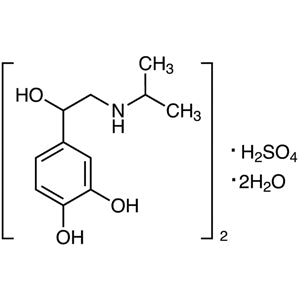
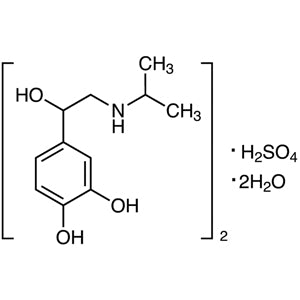
IsoproterenolSulfateDihydrate TCI I0261
Regular price Rp 1.776.600,00Regular price -
IsoproterenolHydrochloride TCI I0260
Regular price From Rp 2.254.350,00Regular price -
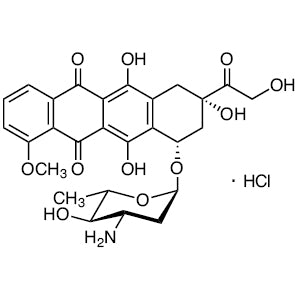
EpirubicinHydrochloride TCI E0840
Regular price From Rp 3.763.200,00Regular price -
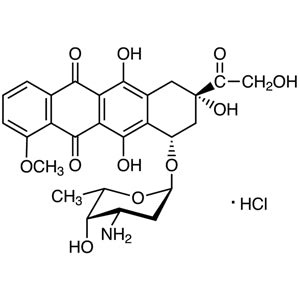
DoxorubicinHydrochloride TCI D4193
Regular price From Rp 6.042.750,00Regular price -
Digoxin TCI D1828
Regular price From Rp 1.060.500,00Regular price