1-Octadecylpyrrole from TCI is a pyrrole derivative whose nitrogen atom carries a long eighteen-carbon alkyl chain. It belongs to the heterocyclic building blocks, a group of reagents that play an important role in materials chemistry and organic synthesis. In the laboratory, 1-octadecylpyrrole is mainly used as a monomer or precursor for modified polypyrrole derivatives. It also serves as a starting material for pyrrole-based amphiphilic molecules. Attaching a long chain to the nitrogen lets researchers change solubility and molecular packing while keeping the reactivity of the pyrrole ring.
Chemists choose this compound because it combines an aromatic, electron-rich pyrrole ring with a strongly hydrophobic octadecyl chain. The pyrrole ring stays reactive toward electrophilic substitution at its carbon positions and can undergo oxidative polymerisation. The long chain improves solubility in nonpolar solvents and encourages molecular ordering at interfaces, which matters in thin-film fabrication, including the Langmuir–Blodgett technique. Because the nitrogen is substituted, the molecule has no N–H bond, so its chemical behaviour differs from that of unsubstituted pyrrole. This gives researchers a predictable, well-defined structural unit for designing functional materials.
In Indonesian laboratories, this compound is most relevant to university research groups and institutes that work on materials chemistry, conductive polymers and organic synthesis. Researchers who study modified polypyrrole films, surface-active pyrrole derivatives or ordered molecular layers at interfaces may use it as a key starting material. It suits both exploratory synthesis at small scale and more focused studies of how alkyl chain length affects solubility, film formation and molecular organisation. As a TCI reagent, it offers the consistent quality that research work needs.
- Synthesis of modified polypyrrole: the pyrrole ring can undergo oxidative polymerisation, and the octadecyl chain on nitrogen changes solubility and packing, so the compound suits the preparation of processable polypyrrole derivatives.
- Preparation of pyrrole-based amphiphiles: the electron-rich aromatic head and the strongly hydrophobic eighteen-carbon tail make it a practical starting material for amphiphilic molecules with a pyrrole core.
- Langmuir–Blodgett and thin-film studies: the long alkyl chain encourages molecular ordering at interfaces, which makes the compound useful for building ordered monolayers and thin films for materials research.
- Electrophilic substitution chemistry: the ring carbons stay reactive toward electrophilic substitution, so chemists can use the compound as a building block to add further functional groups while keeping the long N-alkyl chain.
- Structure–property studies of N-substituted pyrroles: because there is no N–H bond, the compound helps researchers compare how N-substitution and long alkyl chains change reactivity, solubility and molecular organisation.
| Brand | TCI (product code O0219) |
|---|---|
| CAS number | 89601-24-1 |
| Molecular formula | — |
| Purity | — |
| Category | Chemistry > Building Blocks > Heterocyclic Building Blocks |
| Pack sizes | available as listed on the product page |
| Physical form | see the manufacturer's certificate of analysis and SDS |
| Storage | follow the storage conditions stated on the TCI label and SDS |
Keep 1-octadecylpyrrole in its original, tightly closed manufacturer's container, in a cool, dry and well-ventilated place away from direct sunlight, heat sources and strong oxidising agents. Pyrrole derivatives are electron-rich and can react with oxidants, so close the container promptly after each use to limit contact with air and moisture. Always check the TCI label and Safety Data Sheet for the recommended storage temperature. Handle the compound in a fume hood and wear standard personal protective equipment, including a lab coat, chemical-resistant gloves and safety glasses. Avoid contact with skin and eyes, and don't breathe in dust or vapour. Dispose of waste according to institutional and local chemical waste rules.
—
Produk Terkait
-
1,2,5-Trimethylpyrrole TCI T1939
Regular price From Rp 1.193.850,00Regular price -
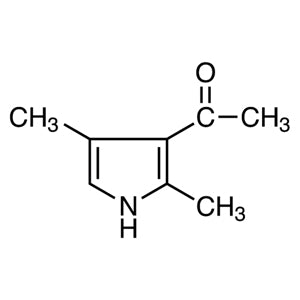
3-Acetyl-2,4-dimethylpyrrole TCI A2734
Regular price From Rp 1.724.100,00Regular price -
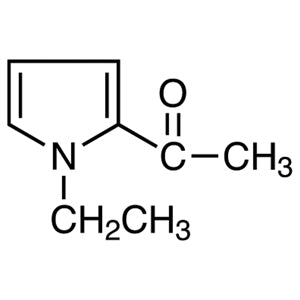
2-Acetyl-1-ethylpyrrole TCI A1977
Regular price From Rp 955.500,00Regular price -
2-Acetyl-1-methylpyrrole TCI A1014
Regular price From Rp 1.115.100,00Regular price -
3-Methylpyrrole TCI M1144
Regular price From Rp 9.223.200,00Regular price -
Methyl1-Methylpyrrole-2-acetate TCI M0846
Regular price From Rp 1.220.100,00Regular price -
1-Methylpyrrole TCI M0414
Regular price From Rp 1.060.500,00Regular price -
Ethyl2,4-Dimethylpyrrole-3-carboxylate TCI E1075
Regular price From Rp 955.500,00Regular price