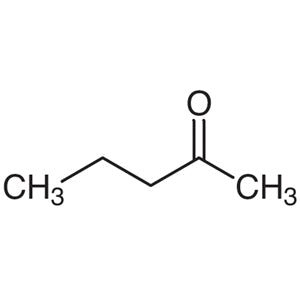
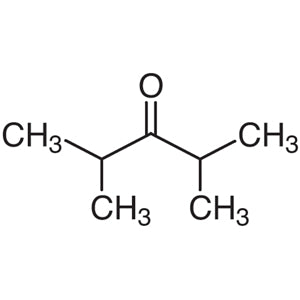
3-Pentanone is an organic compound widely used in various chemical reactions within laboratory settings. As a key building block in organic synthesis, it plays a vital role in the creation of complex molecules such as esters, ketones, and aromatic compounds. Its versatility makes it an essential reagent for chemists working on diverse synthetic pathways. This compound is particularly valuable for its ability to participate in nucleophilic substitution and oxidation reactions, enabling the formation of more complex chemical structures.
The properties of 3-pentanone make it a preferred choice for laboratory use. It has a simple molecular structure that allows for a wide range of chemical transformations. Its volatility and tendency to evaporate quickly make it suitable for reactions requiring controlled conditions. Additionally, its relatively low boiling point facilitates processes like evaporation and distillation, which are common in laboratory procedures. These characteristics contribute to its effectiveness in both research and educational environments.
In Indonesian laboratories, 3-pentanone is a crucial component in both educational and research settings. It is frequently used in teaching chemical reactions and in the development of practical skills for students. Its application extends to industrial chemical development, where it supports the synthesis of aromatic compounds and other organic materials. Its availability and reliability make it a staple in chemical laboratories across Indonesia.
- Aromatic Compound Synthesis: 3-Pentanone is used to create aromatic compounds, which are essential in industrial chemical development.
- Nucleophilic Substitution Reactions: It serves as a key reagent in nucleophilic substitution reactions, enabling the formation of organic compounds.
- Organic Compound Synthesis: Its versatility makes it ideal for the synthesis of various organic compounds, supporting research and development.
- Educational Demonstrations: It is commonly used in teaching chemical reactions to illustrate fundamental principles of organic chemistry.
- Distillation and Evaporation Processes: Its low boiling point makes it suitable for distillation and evaporation techniques in laboratory settings.
| Brand | TCI |
|---|---|
| CAS number | 96-22-0 |
| Molecular formula | — |
| Purity | — |
| Category | Chemistry > Building Blocks > Non-Heterocyclic Building Blocks |
| Pack sizes | Available in various sizes as per supplier specifications |
| Physical form | Liquid |
| Storage | Store in a cool, dry place away from direct sunlight |
3-Pentanone should be stored in a cool, dry place away from direct sunlight to maintain its stability. It is recommended to use airtight containers to prevent evaporation and contamination. Due to its volatility, it is important to handle it in a well-ventilated area to avoid inhalation of vapors. Always ensure that the container is sealed properly when not in use. Avoid exposure to heat sources and keep it away from incompatible materials. Proper handling and storage are essential to ensure safety and maintain the compound’s effectiveness in laboratory applications.
—
Product Categories
Produk Terkait
-
2-Pentanone TCI P0060
Regular price From Rp 477.750,00Regular price -
4-Methyl-2-pentanone TCI M0389
Regular price From Rp 477.750,00Regular price -
2-Bromo-3-pentanone TCI B4648
Regular price From Rp 4.213.650,00Regular price -
2-Methyl-3-pentanone TCI M1249
Regular price From Rp 823.200,00Regular price -
4-Methoxy-4-methyl-2-pentanone TCI M0652
Regular price From Rp 557.550,00Regular price -
3-Methyl-2-pentanone TCI M0388
Regular price From Rp 2.016.000,00Regular price -
5-Hydroxy-2-pentanone(mixtureofmonomeranddimer) TCI H0511
Regular price From Rp 2.227.050,00Regular price -
2,4-Dimethyl-3-pentanone TCI D0770
Regular price From Rp 637.350,00Regular price