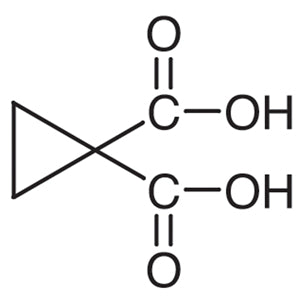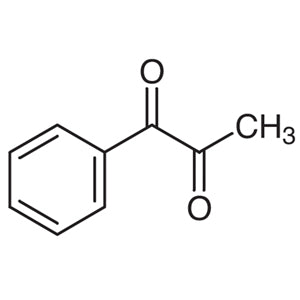
1-Phenyl-1,2-propanedione is a chemical compound widely used as a building block in various chemical reactions. It plays a crucial role in the synthesis of aromatic and heterocyclic compounds, as well as in the creation of complex organic molecules. In laboratory settings, this compound serves as an essential reagent that facilitates the formation of specific chemical structures. Its versatility makes it a valuable tool for chemists working in diverse research areas.
The compound is known for its high reactivity and ability to participate in multiple reaction types, including condensation and substitution reactions. These properties make it a preferred choice for researchers aiming to develop new chemical compounds efficiently. Its capacity to form bonds with various functional groups enhances its utility in synthetic pathways, contributing to the efficiency and success of chemical experiments.
In Indonesian laboratories, 1-Phenyl-1,2-propanedione is commonly used in organic chemistry, pharmaceutical, and materials research. Its availability and cost-effectiveness make it a popular choice among researchers and students. The compound’s reliability and consistent performance ensure that it remains a staple in laboratory workflows across various scientific disciplines.
Related TCI products
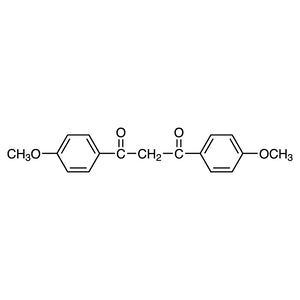
- TCI B1733 18362-51-1 1,3-Bis(4-methoxyphenyl)-1,3-propanedione
- TCI D2324 16619-55-9 2,2-Dibromo-1,3-diphenyl-1,3-propanedione
- TCI D0910 120-46-7 1,3-Diphenyl-1,3-propanedione
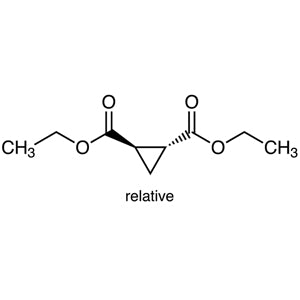
- TCI D4743 3999-55-1 Diethyl trans-1,2-Cyclopropanedicarboxylate
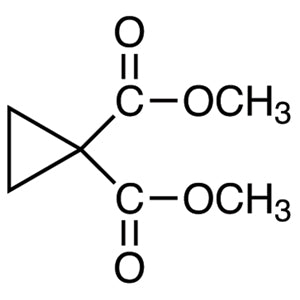
- TCI C1471 6914-71-2 Dimethyl 1,1-Cyclopropanedicarboxylate
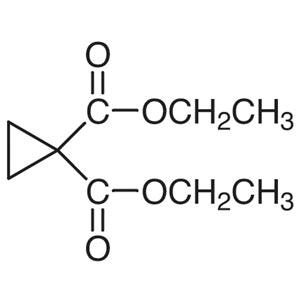
- TCI C1341 1559-02-0 Diethyl 1,1-Cyclopropanedicarboxylate
- Synthesis of aromatic compounds due to its ability to form bonds with functional groups, enabling efficient creation of complex structures.
- Development of heterocyclic compounds as it participates in various reaction mechanisms, supporting the formation of ring structures.
- Organic chemistry research where it is used to facilitate the formation of new chemical entities through condensation and substitution reactions.
- Pharmaceutical applications where it contributes to the synthesis of drug molecules by acting as a key intermediate in synthetic pathways.
- Material science experiments where it is employed to create organic materials with specific chemical properties and structural integrity.
| Brand | TCI |
|---|---|
| CAS number | 579-07-7 |
| Molecular formula | — |
| Purity | — |
| Category | Chemistry > Building Blocks > Non-Heterocyclic Building Blocks |
| Pack sizes | Available in various quantities as per standard laboratory requirements |
| Physical form | Solid |
| Storage | Store in a cool, dry place away from direct sunlight and moisture |
This compound should be stored in a cool, dry environment, away from direct sunlight and moisture to maintain its chemical integrity. It is recommended to use airtight containers to prevent exposure to air and humidity, which could affect its stability. Proper labeling of storage containers is essential for safe handling and easy identification. Laboratory personnel should wear appropriate personal protective equipment, such as gloves and safety goggles, when handling the compound. It should be kept in a well-ventilated area to minimize inhalation risks. Regular inspection of storage conditions ensures that the compound remains in optimal condition for use in experiments.
—
Produk Terkait
-
1,3-Bis(4-methoxyphenyl)-1,3-propanedione TCI B1733
Regular price From Rp 4.056.150,00Regular price -
2,2-Dibromo-1,3-diphenyl-1,3-propanedione TCI D2324
Regular price Rp 1.644.300,00Regular price -
1,3-Diphenyl-1,3-propanedione TCI D0910
Regular price From Rp 689.850,00Regular price -
Diethyltrans-1,2-Cyclopropanedicarboxylate TCI D4743
Regular price From Rp 1.060.500,00Regular price -
Dimethyl1,1-Cyclopropanedicarboxylate TCI C1471
Regular price Rp 1.378.650,00Regular price -
Diethyl1,1-Cyclopropanedicarboxylate TCI C1341
Regular price From Rp 664.650,00Regular price -
1,1-CyclopropanedicarboxylicAcid TCI C1309
Regular price From Rp 769.650,00Regular price -
1-(4-Bromophenyl)-1,3-butanedione TCI B4754
Regular price From Rp 4.929.750,00Regular price