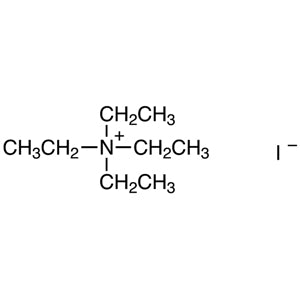
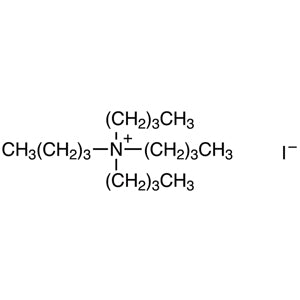
Triethylphenylammonium Iodide (TEPI), with the CAS number 1010-19-1, is a chemical compound widely used in materials science research, particularly in the development of dye-sensitized solar cells (DSSCs). This material plays a crucial role in laboratory settings by serving as a key component in the light-sensitive layer of DSSCs, where it facilitates the absorption of light and the generation of electrical current. Its application extends beyond solar cell research, contributing to the advancement of optoelectronic devices and organic-based electronic materials.
TEPI is valued for its chemical stability and controlled reactivity, allowing researchers to precisely manipulate chemical reactions during synthesis. Its ability to form bonds with various substrates enhances its versatility in experimental applications. These properties make it a preferred choice for scientists aiming to develop materials with specific optical and electronic characteristics. The compound’s predictable behavior under different conditions ensures consistent results in laboratory experiments.
In Indonesian laboratories, TEPI is commonly used in research focused on renewable energy and electronic materials. It is an essential component in projects aimed at improving the efficiency and stability of solar cells. Its role in material synthesis and optoelectronic device development makes it a valuable resource for researchers in the field of advanced materials and sustainable technologies.
TCI brochures (PDF)
- Solar Cell Materials 2026-04-21 · p. 12
- Quaternary Ammonium Salts 2025-11-10 · p. 7
- Dye-Sensitized Solar Cell (DSSC) Development: TEPI is essential for creating the light-sensitive layer in DSSCs, enhancing their ability to convert sunlight into electricity.
- Organic Electronic Material Synthesis: Its chemical stability and reactivity make it ideal for synthesizing materials with tailored optical and electronic properties.
- Optoelectronic Device Research: TEPI's ability to bond with various substrates supports the development of advanced optoelectronic components.
- Energy Conversion Studies: It is used in experiments focused on improving the efficiency of photovoltaic materials and energy-harvesting systems.
- Material Stability Testing: TEPI's controlled reactivity allows for precise testing of material behavior under different environmental conditions.
| Brand | TCI |
|---|---|
| CAS number | 1010-19-1 |
| Molecular formula | — |
| Purity | — |
| Category | Materials Science > Electronic Materials > Dye-Sensitized Solar Cell (DSSC) Materials |
| Pack sizes | Available in various quantities as per supplier specifications |
| Physical form | Solid powder (as per standard product description) |
| Storage | Store in a cool, dry place away from direct sunlight |
TEPI should be stored in a cool, dry environment to maintain its chemical stability and prevent degradation. It is recommended to keep the material in a sealed container to minimize exposure to moisture and air. Due to its chemical nature, it should be handled in a well-ventilated laboratory setting, with appropriate personal protective equipment such as gloves and safety goggles. Avoid contact with skin and eyes, and ensure proper disposal of any unused material according to local regulations. Regular monitoring of storage conditions ensures the material remains suitable for use in research applications.
—
Produk Terkait
-
TrimethylphenylammoniumIodide TCI P0246
Regular price Rp 1.326.150,00Regular priceRp 942.900,00Sale price Rp 1.326.150,00 -
TetraamylammoniumIodide TCI T1011
Regular price From Rp 1.643.250,00Regular priceRp 1.164.450,00Sale price From Rp 1.643.250,00 -
TetrahexylammoniumIodide TCI T1010
Regular price From Rp 1.167.600,00Regular priceRp 831.600,00Sale price From Rp 1.167.600,00 -
TetrapropylammoniumIodide TCI T0172
Regular price From Rp 1.405.950,00Regular priceRp 998.550,00Sale price From Rp 1.405.950,00 -
TetramethylammoniumIodide TCI T0139
Regular price From Rp 900.900,00Regular priceRp 645.750,00Sale price From Rp 900.900,00 -
TetraethylammoniumIodide TCI T0097
Regular price From Rp 1.033.200,00Regular priceRp 738.150,00Sale price From Rp 1.033.200,00 -
TetrabutylammoniumIodide TCI T0057
Regular price From Rp 769.650,00Regular priceRp 553.350,00Sale price From Rp 769.650,00 -
EthyltripropylammoniumIodide TCI E0191
Regular price Rp 1.881.600,00Regular priceRp 1.331.400,00Sale price Rp 1.881.600,00