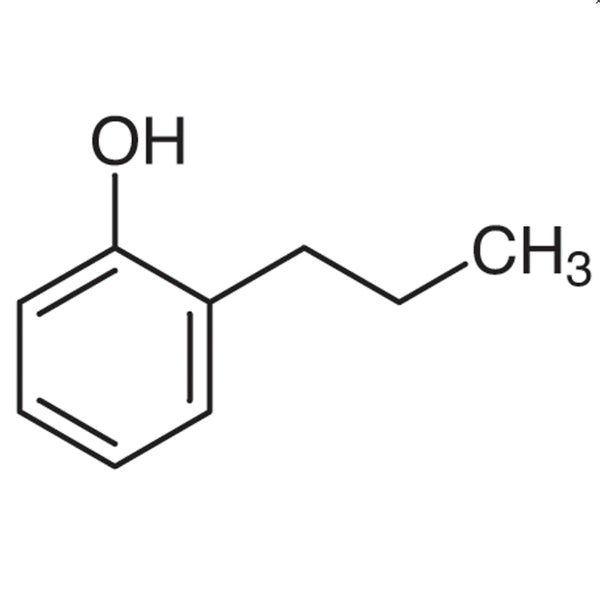
2-Propylphenol is a chemical compound widely used in various laboratory applications, particularly in the synthesis of organic compounds and the development of chemical products. As a key building block in chemistry, it plays a crucial role in reactions that require a phenolic structure combined with a long hydrocarbon chain. This compound is commonly found in substitution, oxidation, and condensation reactions, making it a versatile reagent in synthetic chemistry. Its chemical stability and controlled reactivity make it a reliable choice for laboratories seeking consistent results in their experiments.
The properties of 2-Propylphenol that make it a preferred choice include its solubility in organic solvents such as ethyl acetate and chloroform, as well as its hydrophobic nature. It has a relatively high boiling point and a distinct odor, which aids in its identification. These characteristics ensure that it remains stable under various reaction conditions, allowing for precise and reproducible outcomes in chemical processes. Its compatibility with a wide range of solvents and reagents further enhances its utility in diverse laboratory settings.
In the context of Indonesian laboratories, 2-Propylphenol is used in a variety of chemical research applications, including the development of industrial chemicals, pharmaceuticals, and environmental studies. It serves as a fundamental building block for creating compounds that require a phenolic structure with a hydrocarbon chain. Its presence in both academic and industrial research underscores its importance in advancing chemical innovation in the region.
- Organic synthesis applications benefit from 2-Propylphenol due to its ability to participate in substitution and condensation reactions, making it ideal for creating complex organic molecules.
- Pharmaceutical research utilizes this compound as a building block for synthesizing active pharmaceutical ingredients that require phenolic structures with hydrocarbon chains.
- Environmental studies incorporate 2-Propylphenol to analyze the behavior of phenolic compounds in various environmental matrices, aiding in pollution monitoring and remediation efforts.
- Industrial chemical development relies on this compound for the production of specialty chemicals, where its stability and reactivity contribute to the synthesis of high-value products.
- Polymer science applications use 2-Propylphenol as a functional group in the creation of polymer-based materials, enhancing their chemical and physical properties.
| Brand | TCI |
|---|---|
| CAS number | 644-35-9 |
| Molecular formula | — |
| Purity | — |
| Category | Chemistry > Building Blocks > Non-Heterocyclic Building Blocks |
| Pack sizes | Available in various quantities as per standard laboratory supply |
| Physical form | Liquid |
| Storage | Store in a cool, dry place away from direct sunlight and incompatible materials |
2-Propylphenol should be stored in a cool, dry place, away from direct sunlight and sources of heat. It is recommended to use airtight containers made of materials such as glass or polyethylene to prevent contamination and evaporation. Due to its hydrophobic nature, it should be kept separate from water and aqueous solutions to avoid unintended reactions. In laboratory settings, it is essential to ensure proper ventilation when handling this compound to minimize exposure. Always use appropriate personal protective equipment, including gloves and safety goggles, to ensure safe handling and reduce the risk of skin contact or inhalation.
—
Produk Terkait
-
4-Propylphenol TCI P0698
Regular price From Rp 903.000,00Regular price -
4-Isopropylphenol TCI I0262
Regular price From Rp 2.041.200,00Regular price -
2-Isopropylphenol TCI I0173
Regular price From Rp 530.250,00Regular price -
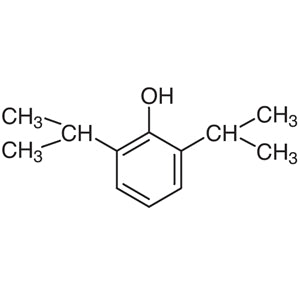
2,6-Diisopropylphenol TCI D0617
Regular price From Rp 1.749.300,00Regular price -
Bis(2,6-diisopropylphenyl)carbodiimide TCI B2756
Regular price From Rp 584.850,00Regular price -
4-(4-Propylphenyl)benzoicAcid TCI P1037
Regular price Rp 2.411.850,00Regular price -
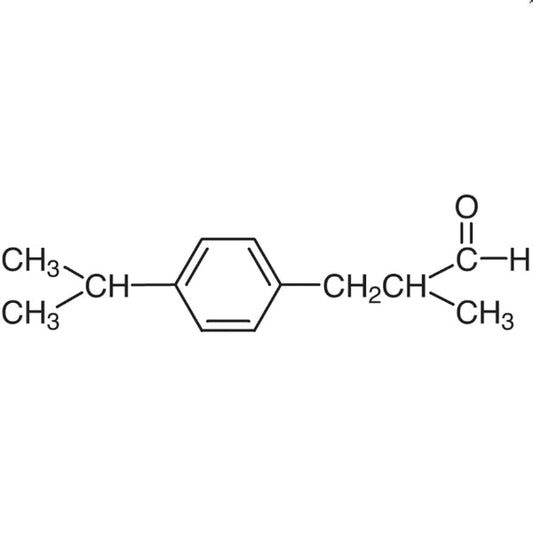
3-(4-Isopropylphenyl)isobutyraldehyde TCI I0377
Regular price Rp 1.115.100,00Regular price -
3-(3-Isopropylphenyl)butanal TCI F1415
Regular price Rp 3.100.650,00Regular price