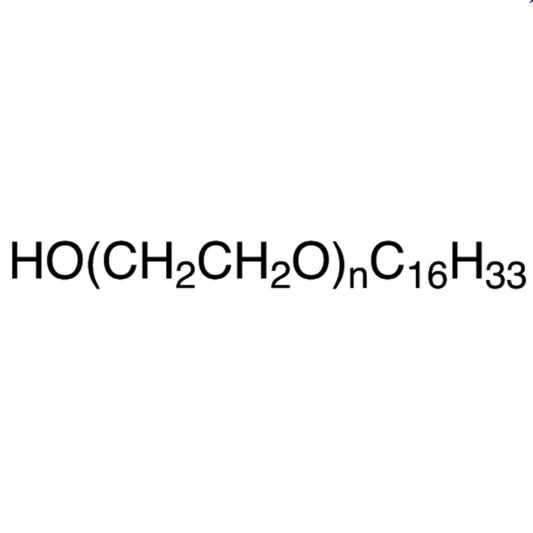
Polyethylene Glycol Monostearate (PEG Monostearate), with the CAS number 9004-99-3, is a widely used chemical compound in laboratory settings. It serves as a non-ionic surfactant and is commonly employed in material science and chemical research to modify surface properties and improve the dispersibility of substances. This compound is particularly valuable in applications where emulsification, stabilization, and compatibility between different phases are required. Its versatile nature makes it a key component in various experimental processes, contributing to the efficiency and accuracy of laboratory procedures.
The properties of PEG Monostearate make it a preferred choice in many laboratory environments. It exhibits good solubility in organic solvents and has the ability to form stable emulsions, which is essential for many chemical and material applications. Its low viscosity and non-ionic nature ensure that it does not interfere with the chemical integrity of the system it is used in. These characteristics make it ideal for use in formulations that require chemical stability and purity, such as in cosmetic, pharmaceutical, and industrial product development.
In Indonesian laboratories, PEG Monostearate is frequently utilized in research related to materials science, cosmetics, and pharmaceuticals. Its availability in the local market supports the development of innovative products and scientific studies. The compound's role in enhancing surface properties and facilitating emulsification makes it a valuable tool for researchers and scientists working in various fields of applied chemistry and material development.
- Used in material science research for modifying surface properties and improving the compatibility of different materials.
- Applied in cosmetic formulation to enhance the stability and dispersion of emulsions in skincare and personal care products.
- Employed in pharmaceutical development to improve the solubility and bioavailability of active ingredients in drug formulations.
- Utilized in industrial applications for creating stable emulsions and improving the performance of coatings and adhesives.
- Applied in polymer science to act as a compatibilizer in blends of different polymer types, enhancing mechanical properties.
| Brand | TCI |
|---|---|
| CAS number | 9004-99-3 |
| Molecular formula | — |
| Purity | — |
| Category | Materials Science > Polymer/Macromolecule Reagents > Polymer Additives |
| Pack sizes | Available in various quantities as per supplier specifications |
| Physical form | Solid powder |
| Storage | Store in a cool, dry place away from direct sunlight |
Polyethylene Glycol Monostearate should be stored in a cool, dry environment to maintain its chemical stability and prevent degradation. It is recommended to keep the material in a sealed container to avoid moisture absorption, which could affect its performance. As a non-ionic surfactant, it does not react with most common laboratory chemicals, but it is important to handle it with care to prevent contamination. The compound is generally considered safe for laboratory use, but standard safety protocols should be followed when handling any chemical substance. Proper labeling and storage conditions ensure the material remains effective and suitable for its intended applications in research and development settings.
—
Produk Terkait
-
PolyethyleneGlycolMonostearylEther(n=approx.20) TCI P3064
Regular price From Rp 505.050,00Regular price -
PolyethyleneGlycolDistearate(n=approx.10) TCI P2885
Regular price Rp 1.220.100,00Regular price -
PolyethyleneGlycolMono-4-octylphenylEther(n=approx.10) TCI P0873
Regular price From Rp 557.550,00Regular price -
PolyethyleneGlycolMonolaurate(n=approx.10) TCI P0872
Regular price From Rp 477.750,00Regular price -
PolyethyleneGlycolMonocetylEther(n=approx.23) TCI P0841
Regular price From Rp 477.750,00Regular price -
PolyethyleneGlycolMonostearate(n=approx.55)(palmitateandstearatemixture) TCI P0723
Regular price From Rp 477.750,00Regular price -
PolyethyleneGlycolMonostearate(n=approx.45)(palmitateandstearatemixture) TCI P0722
Regular price From Rp 477.750,00Regular price -
PolyethyleneGlycolMonostearate(n=approx.40)(palmitateandstearatemixture) TCI P0721
Regular price From Rp 477.750,00Regular price