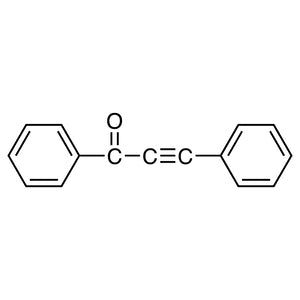
Ethyl Phenylpropiolate is a chemical compound widely used as a building block in organic synthesis within laboratory settings. It serves as a versatile reagent that enables the creation of complex organic molecules through various chemical reactions. Its molecular structure provides the necessary reactivity for applications in both academic and industrial research. This compound is particularly valued for its ability to participate in esterification, hydrolysis, and substitution reactions, making it a key component in the development of aromatic compounds, pharmaceuticals, and industrial chemicals.
The chemical properties of Ethyl Phenylpropiolate make it a preferred choice for high-reactivity experiments. It is known for its sensitivity to water and oxidation, which requires careful handling during synthesis. Despite its reactivity, it exhibits chemical stability under controlled conditions, allowing for precise manipulation in laboratory processes. The compound also has a distinct aroma that can influence reaction environments, necessitating controlled and clean experimental setups. These characteristics make it ideal for applications requiring high precision and environmental control.
In Indonesian laboratories, Ethyl Phenylpropiolate is commonly used in research focused on organic synthesis and pharmaceutical development. Its role in creating complex chemical structures supports both basic and applied research. Due to its reactivity and versatility, it is a staple in chemical laboratories across Indonesia, contributing to advancements in various scientific fields. Its utility in controlled environments ensures its continued relevance in modern chemical research.
- Organic synthesis experiments benefit from Ethyl Phenylpropiolate due to its reactivity and ability to form ester bonds, enabling the creation of complex aromatic compounds.
- Pharmaceutical research utilizes this compound as a building block for developing new drug molecules, leveraging its structural versatility in synthetic pathways.
- Industrial chemical production relies on Ethyl Phenylpropiolate for the synthesis of specialty chemicals, where its functional group reactivity is essential for process efficiency.
- Analytical chemistry applications use Ethyl Phenylpropiolate as a standard for calibration and as a reference compound in chromatographic analysis.
- Environmental studies incorporate this compound to investigate its behavior in chemical degradation processes, assessing its reactivity under different environmental conditions.
| Brand | TCI |
|---|---|
| CAS number | 2216-94-6 |
| Molecular formula | — |
| Purity | — |
| Category | Chemistry > Building Blocks > Non-Heterocyclic Building Blocks |
| Pack sizes | Available in standard laboratory quantities |
| Physical form | Liquid |
| Storage | Store in a cool, dark place away from moisture and oxidizing agents |
Ethyl Phenylpropiolate should be stored in a cool, dark environment to maintain its chemical stability. It is recommended to keep the compound in a tightly sealed container to prevent exposure to moisture and air, which can lead to oxidation. Due to its reactivity, it should be handled in a well-ventilated area, ideally with a fume hood, to minimize inhalation risks. Laboratory personnel should wear appropriate personal protective equipment, including gloves and safety goggles, when working with this compound. Storage should be away from incompatible materials such as strong oxidizers and acids to ensure safety. Proper labeling of containers is essential to prevent accidental exposure and ensure safe handling practices.
—
Produk Terkait
-
MethylPhenylpropiolate TCI M2080
Regular price From Rp 1.881.600,00Regular price -
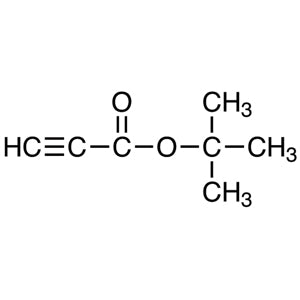
tert-ButylPropiolate TCI P1038
Regular price Rp 6.122.550,00Regular price -
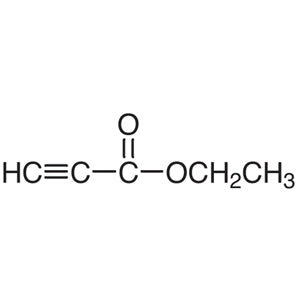
EthylPropiolate TCI P0529
Regular price From Rp 1.035.300,00Regular price -
MethylPropiolate TCI P0528
Regular price From Rp 1.035.300,00Regular price -
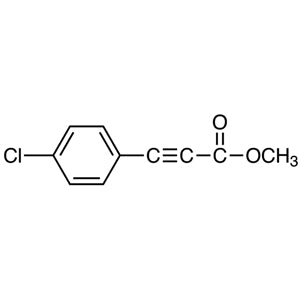
Methyl3-(4-Chlorophenyl)propiolate TCI M2894
Regular price Rp 4.479.300,00Regular price -
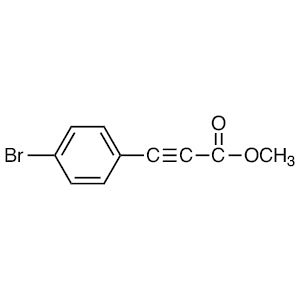
Methyl3-(4-Bromophenyl)propiolate TCI M2893
Regular price Rp 4.293.450,00Regular price -
1,3-Diphenylprop-2-yn-1-one TCI D6145
Regular price Rp 6.042.750,00Regular price -
3-(4-Bromophenyl)-1-phenylprop-2-en-1-one TCI B6397
Regular price Rp 4.929.750,00Regular price