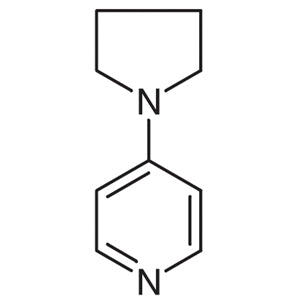
4-Pyrrolidinopyridine is a chemical compound widely used in laboratory settings for the synthesis of complex organic molecules. As a heterocyclic building block, it plays a crucial role in the development of new compounds with diverse applications in chemistry and pharmaceutical research. Its unique molecular structure enables it to participate in various chemical reactions, including substitution, coupling, and structural modification. This compound is particularly valued for its stability and reactivity, making it a reliable reagent in synthetic pathways.
The compound's chemical properties and molecular structure make it a preferred choice for organic synthesis. Its ability to undergo a wide range of chemical transformations allows researchers to create more complex molecules with tailored functionalities. The stability of 4-Pyrrolidinopyridine ensures that it remains effective under various reaction conditions, enhancing the efficiency of synthetic processes. These characteristics make it an essential tool for chemists working on drug discovery and material science projects.
In Indonesian laboratories, 4-Pyrrolidinopyridine is commonly used in chemical, pharmaceutical, and industrial research. It is integral to the development of new compounds with potential applications in medicine and technology. Its availability and reliability make it a valuable resource for scientific institutions and research centers in Indonesia. The compound's versatility supports a wide range of experimental needs, contributing to the advancement of scientific knowledge in the region.
TCI brochures (PDF)
- Condensing Agents 2025-11-18 · p. 9
Related TCI products
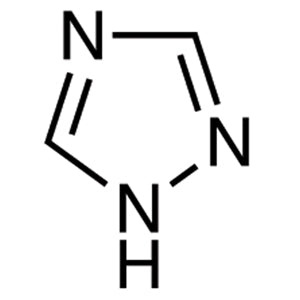
- TCI T0340 288-88-0 1,2,4-Triazole
- TCI M0670 61751-44-8 9-Methyl-3,4-dihydro-2H-pyrido[1,2-a]pyrimidin-2-one
- TCI D1393 5439-14-5 3,4-Dihydro-2H-pyrido[1,2-a]pyrimidin-2-one
- TCI B3603 103057-44-9 1-(tert-Butoxycarbonyl)-3-pyrrolidinol
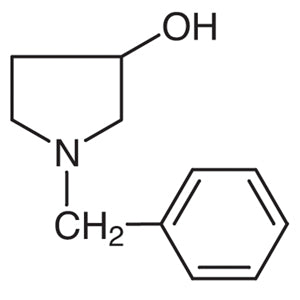
- TCI B1597 775-15-5 1-Benzyl-3-pyrrolidinol
- TCI P1083 40499-83-0 DL-3-Pyrrolidinol
- Chemical synthesis: 4-Pyrrolidinopyridine is ideal for creating complex organic molecules due to its reactivity and structural versatility.
- Pharmaceutical research: It is used in the development of new drugs, as it can be modified to produce bioactive compounds with therapeutic potential.
- Organic chemistry experiments: Its stability and reactivity make it a key reagent in synthetic pathways for teaching and research purposes.
- Industrial chemical processes: It supports the production of specialty chemicals and materials used in various industries.
- Drug discovery projects: The compound's ability to undergo functional group modifications makes it valuable in the design of new pharmaceutical compounds.
| Brand | TCI |
|---|---|
| CAS number | 2456-81-7 |
| Molecular formula | — |
| Purity | — |
| Category | Chemistry > Building Blocks > Heterocyclic Building Blocks |
| Pack sizes | Available in various quantities as per supplier specifications |
| Physical form | Solid or liquid, depending on the specific product variant |
| Storage | Store in a cool, dry place away from moisture and direct sunlight |
4-Pyrrolidinopyridine should be stored in a cool, dry environment to maintain its chemical stability. It is recommended to keep the compound in a tightly sealed container to prevent exposure to moisture and air. Due to its reactivity, it should be handled in a well-ventilated area, and appropriate personal protective equipment such as gloves and goggles should be worn. Avoid direct contact with skin and eyes, and ensure that it is stored away from incompatible substances. Regular monitoring of storage conditions is essential to ensure the compound remains safe and effective for use in laboratory applications.
—
Produk Terkait
-
1,2,4-Triazole TCI T0340
Regular price From Rp 717.150,00Regular price -
9-Methyl-3,4-dihydro-2H-pyrido[1,2-a]pyrimidin-2-one TCI M0670
Regular price Rp 2.386.650,00Regular price -
3,4-Dihydro-2H-pyrido[1,2-a]pyrimidin-2-one TCI D1393
Regular price From Rp 1.353.450,00Regular price -
1-(tert-Butoxycarbonyl)-3-pyrrolidinol TCI B3603
Regular price From Rp 1.618.050,00Regular price -
1-Benzyl-3-pyrrolidinol TCI B1597
Regular price From Rp 1.618.050,00Regular price -
DL-3-Pyrrolidinol TCI P1083
Regular price From Rp 3.843.000,00Regular price -
1-Methyl-3-pyrrolidinol TCI M2115
Regular price From Rp 2.545.200,00Regular price -
1-Isopropyl-3-pyrrolidinol TCI I0430
Regular price Rp 3.075.450,00Regular price
![61751-44-8 9-Methyl-3,4-dihydro-2H-pyrido[1,2-a]pyrimidin-2-one - AMI Scientific](http://amiscientific.com/cdn/shop/files/TCI2510M0670.jpg?v=1767123458&width=533)
![3,4-Dihydro-2H-pyrido[1,2-a]pyrimidin-2-one (CAS 5439-14-5) - TCI D1393 - AMI Scientific](http://amiscientific.com/cdn/shop/files/TCI2510D1393.jpg?v=1767103018&width=533)