1,2-Phenylenediacetic Acid from TCI, also known as o-phenylenediacetic acid, is an aromatic dicarboxylic acid. Its molecule carries two acetic acid groups attached at adjacent (ortho) positions on a benzene ring. In the laboratory, this compound serves as a versatile non-heterocyclic building block. Its two neighbouring carboxylic acid groups can be used to build new rings, to form diester or diamide derivatives, and to act as a metal-binding ligand in coordination chemistry, which makes it a useful starting material for many research directions.
Researchers choose this compound because of its distinctive geometry. The two –CH2COOH groups in the ortho position sit close enough together to take part in intramolecular cyclisation reactions, for example in building indane frameworks and their derivatives. The methylene groups between the ring and each carboxylic acid group also give the molecule conformational flexibility. When it is used as a ligand, this flexibility allows a range of coordination modes and a wide variety of coordination polymer architectures. Because it is a solid, the compound is relatively easy to weigh accurately and stays stable under reasonable storage conditions.
In Indonesian laboratories, 1,2-Phenylenediacetic Acid is useful for research groups working in organic synthesis, inorganic chemistry and materials chemistry. University chemistry departments can use it in student research projects and theses on cyclisation, derivatisation and ligand design. Research institutes and industrial R&D teams can use it as a reliable intermediate when they develop new compounds or coordination materials. Sourcing a consistent TCI-branded product helps teams keep their results reproducible across repeated experiments and over long research programmes.
Related TCI products
- Intramolecular cyclisation studies: the two ortho –CH2COOH groups sit close together, so they can react to form new rings such as indane frameworks and their derivatives.
- Synthesis of diester derivatives: both carboxylic acid groups can be esterified, which gives symmetrical or mixed diesters that serve as intermediates for further synthetic work.
- Preparation of diamide derivatives: the adjacent carboxylic acid groups can react with amines to give diamides, which is useful when building more complex molecules in organic synthesis research.
- Ligand for coordination chemistry: the two carboxylate groups can bind metal centres, and the flexible methylene linkers allow several coordination modes in metal complex research.
- Design of coordination polymers: the conformational flexibility of the molecule supports a wide variety of coordination polymer architectures, which makes it valuable for materials chemistry research.
| Brand | TCI (product code P1052) |
|---|---|
| CAS number | 7500-53-0 |
| Molecular formula | — |
| Purity | — |
| Category | Chemistry > Building Blocks > Non-Heterocyclic Building Blocks |
| Pack sizes | available in standard TCI pack sizes; please ask our team about available options |
| Physical form | solid |
| Storage | keep tightly closed in a cool, dry place, following the supplier's label and Safety Data Sheet |
Store 1,2-Phenylenediacetic Acid in its original, tightly closed container in a cool, dry and well-ventilated place, away from direct sunlight, moisture and incompatible materials such as strong oxidising agents and strong bases. If you transfer portions, use clean, dry, chemically compatible containers with a secure closure, and label them clearly. Handle the solid in a well-ventilated area or a fume hood, and avoid creating or breathing in dust. Wear suitable personal protective equipment, including safety glasses, gloves and a lab coat. Always read the product's Safety Data Sheet before use, and dispose of waste according to local regulations and your institution's procedures.
—
Produk Terkait
-
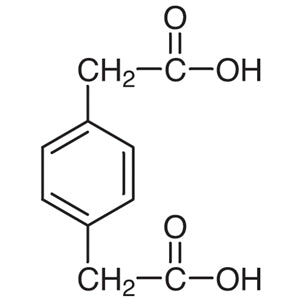
1,4-PhenylenediaceticAcid TCI P1433
Regular price From Rp 1.724.100,00Regular price -
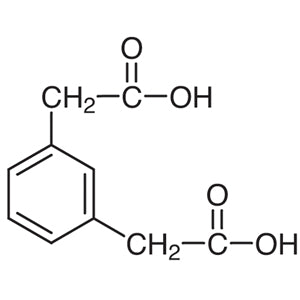
1,3-PhenylenediaceticAcid TCI P1064
Regular price From Rp 1.670.550,00Regular price -
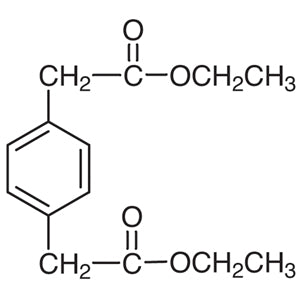
Diethyl1,4-Phenylenediacetate TCI P1434
Regular price From Rp 3.763.200,00Regular price -
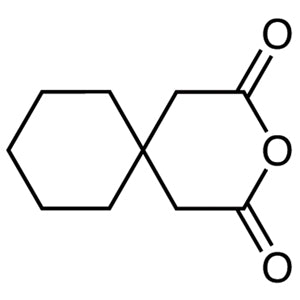
1,1-CyclohexanediaceticAnhydride TCI C2533
Regular price Rp 2.411.850,00Regular price -
1,1-CyclohexanediaceticAcid TCI C1444
Regular price From Rp 477.750,00Regular price -
1,1-CyclopentanediaceticAnhydride TCI C0839
Regular price Rp 1.565.550,00Regular price -
1,1-CyclopentanediaceticAcid TCI C0838
Regular price Rp 769.650,00Regular price -
Diethyl1,4-Phenylenediacrylate TCI P1345
Regular price Rp 7.792.050,00Regular price