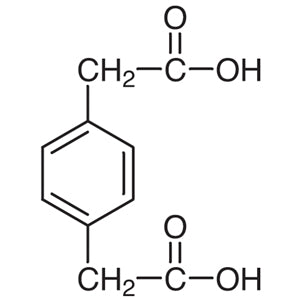
1,4-Phenylenediacetic Acid from TCI (product code P1433) is an aromatic dicarboxylic acid with two acetic acid groups attached at the para positions of a benzene ring. Its structure is symmetrical and linear: the two carboxylic acid groups are separated by a phenylene ring and two methylene bridges. In the laboratory, this compound is a versatile building block for assembling bifunctional molecules, condensation polymers, and coordination materials such as metal-organic frameworks (MOFs) and coordination polymers. It gives synthetic chemists a well-defined, predictable starting point for linear molecular architectures.
Researchers choose this compound because its two carboxylic acid groups are identical and sit on opposite sides of the ring, so it can react symmetrically at both ends. The methylene groups between the ring and the carboxylic acid groups add a degree of flexibility. As a result, the ligand can adopt different conformations when it binds to metal ions, which produces a variety of network structures. In polymerization, its difunctional character allows it to form polyesters and polyamides when reacted with diols or diamines. This combination of a rigid aromatic core and flexible linkers makes it useful across several areas of synthesis.
In Indonesia, this material is relevant to research groups working in inorganic chemistry, materials chemistry, and polymer chemistry at universities and research institutions. These groups develop porous materials for adsorption and catalysis, and they explore new coordination networks and condensation polymers. Laboratories working on crystal engineering, ligand design, and structure-property studies can use this compound as a reliable linker in their synthesis programs. It also suits teaching and thesis projects that need a clear example of a symmetrical bifunctional building block with predictable reactivity.
- Metal-organic framework (MOF) synthesis: the two opposing carboxylic acid groups coordinate to metal ions, and the flexible methylene bridges allow different ligand conformations and varied network structures.
- Coordination polymer research: the symmetrical bifunctional structure lets researchers build extended chains and networks with metal centers to study how linker flexibility affects the final architecture.
- Polyester synthesis: when reacted with diols, the two identical carboxylic acid groups take part in condensation polymerization to form polyester chains with an aromatic unit in the backbone.
- Polyamide synthesis: when reacted with diamines, the difunctional acid forms amide linkages at both ends, giving polyamides that contain phenylene and methylene segments in a regular repeating pattern.
- Bifunctional molecule assembly: as a non-heterocyclic building block, it allows symmetrical derivatization at both ends, which is useful for designing linkers, spacers, and model compounds in organic synthesis.
| Brand | TCI (product code P1433) |
|---|---|
| CAS number | 7325-46-4 |
| Molecular formula | — |
| Purity | — |
| Category | Chemistry > Building Blocks > Non-Heterocyclic Building Blocks |
| Pack sizes | Available in the pack sizes listed in the TCI catalog; please confirm with our team when ordering |
| Physical form | — |
| Storage | Follow the conditions stated on the TCI label and Safety Data Sheet (SDS) |
- Chemical type: Aromatic dicarboxylic acid with two para-substituted acetic acid groups
Keep this compound in its original, tightly closed container in a cool, dry, well-ventilated area, away from moisture, direct sunlight, and incompatible substances such as strong bases and strong oxidizing agents. If you need to transfer it, use a clean, dry, chemically compatible container with a clear label. Handle the material in a fume hood or a well-ventilated area, and wear standard personal protective equipment, including safety glasses, gloves, and a lab coat. Avoid creating or breathing in dust, and avoid contact with the skin and eyes. Always check the TCI Safety Data Sheet for specific hazard information, first-aid measures, and the recommended storage temperature before use, and dispose of waste according to local regulations.
—
Produk Terkait
-
TCI B5774 5,10-Bis(4,4,5,5-tetramethyl-1,3,2-dioxaborolan-2-yl)naphtho[1,2-c:5,6-c']bis([1,2,5]oxadiazole)
Regular price Rp 10.255.350,00Regular price -
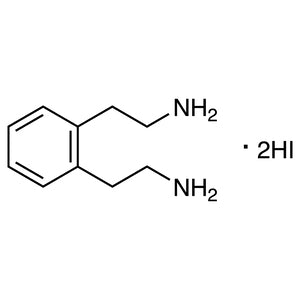
Dihydroiodide TCI B6569
Regular price From Rp 1.936.200,00Regular price -
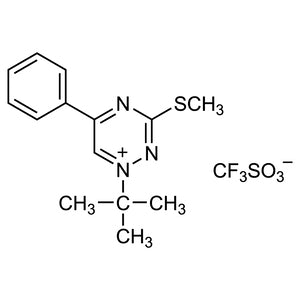
Trifluoromethanesulfonate TCI B7003
Regular price From Rp 1.936.200,00Regular price
![5,10-Bis(4,4,5,5-tetramethyl-1,3,2-dioxaborolan-2-yl)naphtho[1,2-c:5,6-c']bis([1,2,5]oxadiazole) - TCI B5774 - AMI Scientific](http://amiscientific.com/cdn/shop/files/TCI2510B5774.jpg?v=1769180228&width=533)