9,10-Bis(phenylethynyl)anthracene is an organic compound widely used in semiconductor material research. This compound plays a crucial role in the development of advanced materials with unique optical and electronic properties. In the laboratory, it serves as a fundamental building block for creating complex structures such as polymers and composites. Its versatility makes it an essential component in various scientific investigations, particularly in the field of materials science. Researchers rely on this compound to explore new applications in light-based technologies and electronic devices.
The compound's molecular structure, consisting of an anthracene core linked by phenylethynyl chains, gives it exceptional conductivity and light responsiveness. These properties make it highly desirable for use in advanced material synthesis. Its stability and chemical processability further enhance its appeal, allowing it to be easily integrated into diverse chemical and physical systems. The compound's ability to maintain its integrity under various experimental conditions ensures consistent results in laboratory settings.
In Indonesian laboratories, 9,10-Bis(phenylethynyl)anthracene is commonly used in semiconductor material research. It is a key component in experiments related to light-emitting diodes (LEDs), solar cells, and optical sensors. Local researchers frequently utilize this compound as a base material for experiments requiring specific optical and electronic characteristics. Its availability through reliable suppliers ensures that it remains a valuable resource for scientific innovation in the region.
TCI brochures (PDF)
- Building Blocks for Organic Semiconductor 2026-03-24 · p. 11
Related TCI products
- TCI B5022 24672-76-2 9,10-Bis(4-methoxyphenyl)anthracene
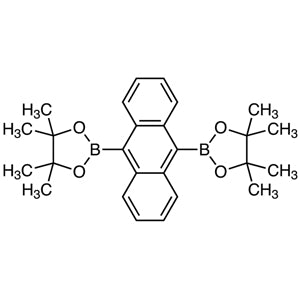
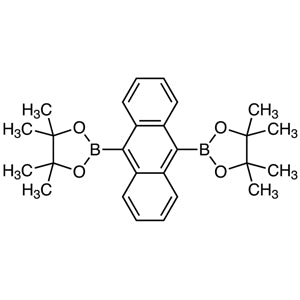
- TCI B4562 863992-56-7 9,10-Bis(4,4,5,5-tetramethyl-1,3,2-dioxaborolan-2-yl)anthracene
- TCI A2664 7044-91-9 Anthracene-9,10-dicarboxaldehyde
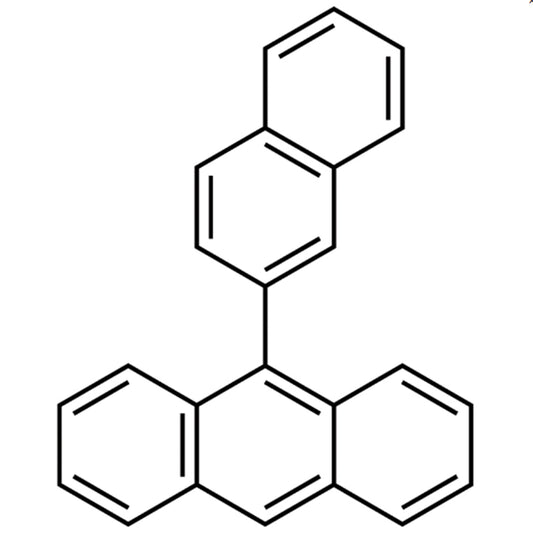
- TCI N1130 7424-72-8 9-(2-Naphthyl)anthracene
- TCI N0994 7424-70-6 9-(1-Naphthyl)anthracene
- TCI B5717 323195-31-9 9-([1,1'-Biphenyl]-4-yl)anthracene
- Semiconductor material development for optoelectronic devices due to its unique optical and electronic properties.
- LED manufacturing as a component in light-emitting materials with high efficiency and stability.
- Solar cell research for its ability to enhance charge transport and light absorption characteristics.
- Optical sensor fabrication to improve sensitivity and response to light stimuli in detection systems.
- Composite material synthesis for creating advanced polymers with tailored electronic and structural properties.
| Brand | TCI |
|---|---|
| CAS number | 10075-85-1 |
| Molecular formula | — |
| Purity | — |
| Category | Materials Science > Material Building Blocks > Small Molecule Semiconductor Building Blocks |
| Pack sizes | Available in standard laboratory quantities |
| Physical form | Solid |
| Storage | Store in a cool, dry place away from light and moisture |
This compound should be stored in a cool, dry environment, away from direct light and moisture to maintain its stability and prevent degradation. It is recommended to use airtight containers to minimize exposure to air and contaminants. Proper labeling and secure storage are essential to ensure safe handling in the laboratory. Due to its chemical nature, it should be handled with appropriate personal protective equipment, such as gloves and safety goggles. Regular monitoring of storage conditions is advised to maintain the integrity of the material. Laboratory personnel should follow standard safety protocols when working with this compound to ensure a safe and efficient research environment.
—
Produk Terkait
-
9,10-Bis(4-methoxyphenyl)anthracene TCI B5022
Regular price From Rp 1.961.400,00Regular price -
9,10-Bis(4,4,5,5-tetramethyl-1,3,2-dioxaborolan-2-yl)anthracene TCI B4562
Regular price From Rp 13.911.450,00Regular price -
Anthracene-9,10-dicarboxaldehyde TCI A2664
Regular price From Rp 4.081.350,00Regular price -
9-(2-Naphthyl)anthracene TCI N1130
Regular price From Rp 1.510.950,00Regular price -
9-(1-Naphthyl)anthracene TCI N0994
Regular price From Rp 743.400,00Regular price -
9-([1,1'-Biphenyl]-4-yl)anthracene TCI B5717
Regular price From Rp 1.220.100,00Regular price -
[5,15-Bis(phenylethynyl)-10,20-bis[(triisopropylsilyl)ethynyl]porphyrinato]magnesium(II) TCI B4314
Regular price Rp 11.925.900,00Regular price -
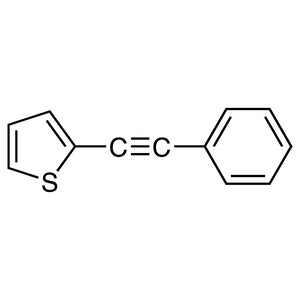
2-(Phenylethynyl)thiophene TCI P3136
Regular price Rp 3.100.650,00Regular price




![9-([1,1'-Biphenyl]-4-yl)anthracene (CAS 323195-31-9) - TCI B5717 - AMI Scientific](http://amiscientific.com/cdn/shop/files/TCI2510B5717.jpg?v=1768815871&width=533)
![1397288-30-0 [5,15-Bis(phenylethynyl)-10,20-bis[(triisopropylsilyl)ethynyl]porphyrinato]magnesium(II) - AMI Scientific](http://amiscientific.com/cdn/shop/files/TCI2510B4314.jpg?v=1768815587&width=533)