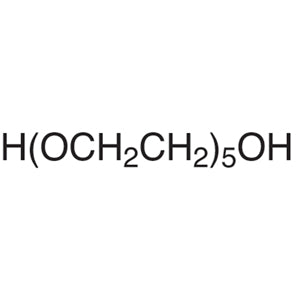
Pentaethylene Glycol (PEG) is a versatile chemical compound widely used in laboratory settings for its ability to serve as a fundamental building block in organic synthesis. Its simple yet adaptable molecular structure enables it to participate in a variety of chemical reactions, making it an essential component in many experimental processes. In the laboratory, PEG is often employed as a reagent or solvent, contributing to the development of polymers, pharmaceuticals, and cosmetic ingredients. Its role extends beyond mere reactivity, as it also supports the stability and control of chemical reactions under various conditions.
One of the key attributes that make PEG a preferred choice is its favorable physical and chemical properties. It exhibits high boiling points and good solubility in organic solvents, which are advantageous for both synthesis and purification processes. Additionally, PEG is non-corrosive and chemically stable under certain conditions, ensuring reliability in long-term applications. Its non-toxic nature further enhances its safety profile, making it suitable for use in environments where safety and compliance are paramount.
In Indonesian laboratories, PEG is commonly utilized in research and educational institutions for a wide range of applications. It is particularly valued in the fields of chemistry and pharmaceutical sciences due to its versatility and reliability. Its use is prevalent in both academic and industrial research settings, supporting the development of new materials and formulations. The compound's stability and safety make it a trusted choice for laboratory professionals in Indonesia.
- Organic synthesis as a versatile building block for creating complex molecules through various reaction mechanisms.
- Polymer production due to its ability to act as a monomer or cross-linking agent in polymerization processes.
- Pharmaceutical formulation as a solvent or excipient in drug development and dosage form preparation.
- Cosmetic industry applications for its role in creating emulsifiers and stabilizers in skincare and personal care products.
- Analytical chemistry as a reference standard or solvent in chromatographic and spectroscopic analyses.
| Brand | TCI |
|---|---|
| CAS number | 4792-15-8 |
| Molecular formula | — |
| Purity | — |
| Category | Chemistry > Building Blocks > Non-Heterocyclic Building Blocks |
| Pack sizes | Available in various quantities as per supplier specifications |
| Physical form | Colorless liquid |
| Storage | Store in a cool, dry place away from direct sunlight and incompatible materials |
Pentaethylene Glycol should be stored in a cool, dry environment, away from direct sunlight and sources of heat. It is recommended to use sealed containers made of materials that are chemically inert to prevent any reaction or contamination. Due to its non-corrosive nature, it is generally safe to handle, but standard laboratory safety practices should still be followed, including the use of personal protective equipment. The compound is non-toxic, but care should be taken to avoid inhalation of vapors in poorly ventilated areas. It is important to ensure that storage conditions are consistent with the manufacturer's guidelines to maintain its chemical stability and effectiveness in laboratory applications.
—
Produk Terkait
-
TCI B5774 5,10-Bis(4,4,5,5-tetramethyl-1,3,2-dioxaborolan-2-yl)naphtho[1,2-c:5,6-c']bis([1,2,5]oxadiazole)
Regular price Rp 10.255.350,00Regular price -
Dihydroiodide TCI B6569
Regular price From Rp 1.936.200,00Regular price -
Trifluoromethanesulfonate TCI B7003
Regular price From Rp 1.936.200,00Regular price
![5,10-Bis(4,4,5,5-tetramethyl-1,3,2-dioxaborolan-2-yl)naphtho[1,2-c:5,6-c']bis([1,2,5]oxadiazole) - TCI B5774 - AMI Scientific](http://amiscientific.com/cdn/shop/files/TCI2510B5774.jpg?v=1769180228&width=533)