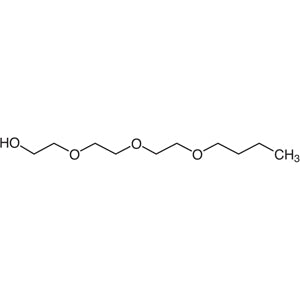
Triethylene Glycol (TEG), with CAS number 112-27-6, is a widely used chemical compound in laboratory settings. As a fundamental building block in chemistry, TEG plays a crucial role in the synthesis of complex molecules. Its simple molecular structure provides versatility, making it a valuable tool for researchers in various fields. TEG is commonly employed as a solvent, auxiliary material, or component in chemical formulations, supporting a wide range of experimental needs. Its chemical inertness and solubility properties make it a reliable choice for many laboratory applications.
One of the key attributes of TEG is its non-polar nature, which allows it to dissolve in numerous organic solvents. This property is particularly beneficial in reactions requiring a non-reactive yet effective solvent. Additionally, TEG has a high boiling point and thermal stability, making it suitable for use in high-temperature environments. These characteristics ensure that TEG remains stable and functional under various experimental conditions, enhancing its utility in both academic and industrial research.
In Indonesian laboratories, TEG is frequently used in chemical research, especially in analytical and industrial processes. Its availability and reliability make it a common component in experiments involving separation techniques, absorption processes, and chemical synthesis. TEG’s ease of handling and compatibility with a wide range of solvents further contribute to its widespread use in the scientific community across Indonesia.
TCI brochures (PDF)
- Biomaterials Research Reagents 2025-02-19 · p. 20
- Chemical synthesis: TEG is widely used in the synthesis of complex organic compounds due to its solubility and inertness, allowing for controlled reaction environments.
- Solvent in analytical chemistry: TEG serves as a non-reactive solvent for dissolving various organic compounds, making it ideal for chromatographic and spectroscopic analyses.
- Industrial process formulation: TEG is commonly used in the formulation of industrial chemicals, providing stability and compatibility in diverse chemical systems.
- Separation and absorption processes: TEG is employed in distillation and absorption techniques due to its high boiling point and thermal stability, ensuring efficient separation of components.
- Laboratory reagent for chemical reactions: TEG acts as a versatile reagent in various chemical reactions, supporting both preparative and analytical experiments.
| Brand | TCI |
|---|---|
| CAS number | 112-27-6 |
| Molecular formula | — |
| Purity | — |
| Category | Chemistry > Building Blocks > Non-Heterocyclic Building Blocks |
| Pack sizes | Available in various sizes as per supplier specifications |
| Physical form | Liquid |
| Storage | Store in a cool, dry place away from direct sunlight |
Triethylene Glycol should be stored in a cool, dry place, away from direct sunlight and sources of heat. It is recommended to use airtight containers made of glass or polyethylene to prevent contamination and evaporation. Due to its non-polar nature, TEG is generally inert and does not react with most common laboratory materials, but it should be handled with care to avoid spills or exposure. In laboratory settings, TEG should be stored separately from strong oxidizing agents to maintain safety. Proper labeling of containers is essential to ensure safe handling and prevent accidental use in incompatible applications. Always follow standard laboratory safety protocols when working with TEG to ensure a safe and controlled environment.
—
Product Categories
Produk Terkait
-
TriethyleneGlycolMonoethylEther TCI E0167
Regular price Rp 742.350,00Regular priceRp 534.450,00Sale price Rp 742.350,00 -
TetraethyleneGlycol TCI T0099
Regular price From Rp 557.550,00Regular priceRp 405.300,00Sale price From Rp 557.550,00 -
PentaethyleneGlycol TCI P1154
Regular price From Rp 1.618.050,00Regular priceRp 1.146.600,00Sale price From Rp 1.618.050,00 -
NonaethyleneGlycol TCI N0698
Regular price Rp 11.791.500,00Regular priceRp 8.261.400,00Sale price Rp 11.791.500,00 -
HeptaethyleneGlycol TCI H1045
Regular price Rp 4.399.500,00Regular priceRp 3.092.250,00Sale price Rp 4.399.500,00 -
DecaethyleneGlycol TCI D2900
Regular price Rp 11.288.550,00Regular priceRp 7.909.650,00Sale price Rp 11.288.550,00 -
TriethyleneGlycolMonobutylEther TCI T0915
Regular price From Rp 557.550,00Regular priceRp 405.300,00Sale price From Rp 557.550,00 -
TriethyleneGlycolMonomethylEther TCI T0709
Regular price From Rp 582.750,00Regular priceRp 423.150,00Sale price From Rp 582.750,00