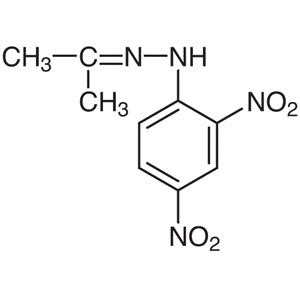
TCI P1166 725-00-8 Propionaldehyde 2,4-Dinitrophenylhydrazone is a chemical compound widely used in laboratory settings for the identification and analysis of organic compounds. As a derivative of propionaldehyde and 2,4-dinitrophenylhydrazine, it serves as a reagent in hydrazine reactions. This compound plays a crucial role in both qualitative and quantitative analysis, particularly in analytical and organic chemistry. Its ability to react with various organic substances makes it an essential tool for structural analysis and compound identification.
The compound is chemically stable under specific conditions, which ensures reliable performance in laboratory experiments. Its reactivity with organic compounds allows for accurate and consistent results in analytical procedures. The stability of the compound during storage also contributes to its reliability as a reagent. These characteristics make it a preferred choice for researchers and educators in chemical laboratories.
In Indonesian laboratories, this compound is commonly used in educational and research settings. It supports chemistry programs and applied sciences that require reagents for organic compound analysis. Its relevance in both academic and research environments highlights its importance in the Indonesian scientific community. The compound is an essential part of the laboratory toolkit for those working in analytical chemistry and molecular structure studies.
Related TCI products
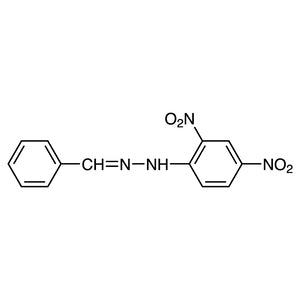
- TCI B1593 1157-84-2 Benzaldehyde 2,4-Dinitrophenylhydrazone
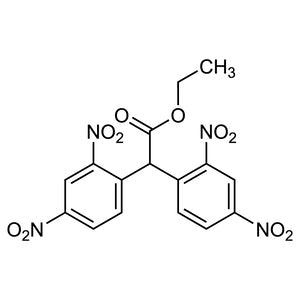
- TCI B0817 5833-18-1 Ethyl Bis(2,4-dinitrophenyl)acetate
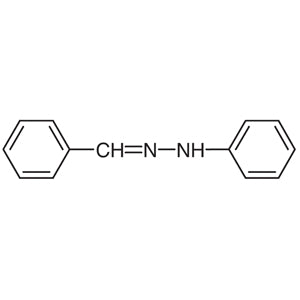
- TCI B0014 588-64-7 Benzaldehyde Phenylhydrazone
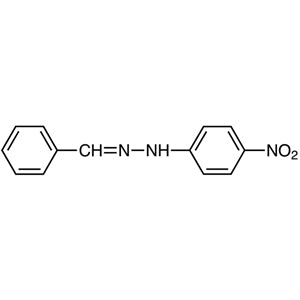
- TCI B0009 3078-09-9 Benzaldehyde 4-Nitrophenylhydrazone
- TCI A1273 1567-89-1 Acetone 2,4-Dinitrophenylhydrazone
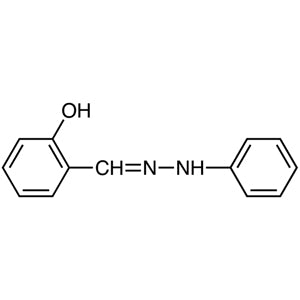
- TCI H1478 614-65-3 2-Hydroxybenzaldehyde Phenylhydrazone
- Qualitative Analysis: This compound is used for identifying unknown organic compounds due to its reactivity and ability to form characteristic derivatives.
- Quantitative Analysis: It enables precise measurement of organic substances through its stable chemical properties and predictable reaction patterns.
- Structural Analysis: The compound aids in determining molecular structures by reacting with specific functional groups in organic molecules.
- Teaching and Research: It is a valuable tool in educational institutions for demonstrating chemical reactions and analytical techniques.
- Organic Chemistry Experiments: Its role in hydrazine reactions makes it essential for experiments involving compound synthesis and characterization.
| Brand | TCI |
|---|---|
| CAS number | 725-00-8 |
| Molecular formula | — |
| Purity | — |
| Category | Chemistry > Building Blocks > Non-Heterocyclic Building Blocks |
| Pack sizes | — |
| Physical form | — |
| Storage | Store in a cool, dry place away from light and incompatible materials. |
This compound should be stored in a cool, dry place away from direct light and incompatible materials to maintain its stability and effectiveness. It is recommended to use airtight containers to prevent moisture absorption and contamination. Due to its chemical nature, it should be handled with care, using appropriate personal protective equipment such as gloves and safety goggles. Avoid exposure to heat or open flames to prevent potential hazards. Proper labeling and storage conditions are essential to ensure safe handling and long-term usability in laboratory environments. Always follow standard laboratory safety protocols when working with this compound.
—
Produk Terkait
-
Benzaldehyde2,4-Dinitrophenylhydrazone TCI B1593
Regular price From Rp 1.087.800,00Regular price -
EthylBis(2,4-dinitrophenyl)acetate TCI B0817
Regular price Rp 1.458.450,00Regular price -
BenzaldehydePhenylhydrazone TCI B0014
Regular price Rp 3.551.100,00Regular price -
Benzaldehyde4-Nitrophenylhydrazone TCI B0009
Regular price Rp 5.009.550,00Regular price -
Acetone2,4-Dinitrophenylhydrazone TCI A1273
Regular price From Rp 1.087.800,00Regular price -
2-HydroxybenzaldehydePhenylhydrazone TCI H1478
Regular price From Rp 1.936.200,00Regular price -
EthylMethylKetone2,4-Dinitrophenylhydrazone TCI E0439
Regular price From Rp 1.167.600,00Regular price -
2-(3,5-Dinitrophenyl)-4,4,5,5-tetramethyl-1,3,2-dioxaborolane TCI D5431
Regular price From Rp 1.881.600,00Regular price