2-Propylpyrazine is a chemical compound classified under the heterocyclic category and is commonly used as a building block in the synthesis of complex compounds. It plays a vital role in laboratory settings where the presence of heterocyclic groups is essential for chemical reactions. This compound is valued for its unique molecular structure, which includes a pyrazine ring reinforced by a propyl chain, making it a versatile component in organic chemistry. Its presence allows for the development of various chemical structures and functional groups, supporting a wide range of experimental applications.
The properties of 2-Propylpyrazine that make it a preferred choice include its chemical stability under specific conditions and its reactivity due to the presence of heterocyclic groups. The compound’s volatile nature enables rapid absorption in certain chemical reactions, enhancing its utility in applications requiring speed and efficiency. Additionally, its distinct aroma can serve as an indicator in some analytical procedures, further expanding its use in laboratory environments. These characteristics contribute to its reliability and effectiveness in various chemical processes.
In Indonesian laboratories, 2-Propylpyrazine is widely used in chemical research, including the synthesis of aromatic compounds and the analysis of chemical composition. Its role is crucial in both academic and industrial settings, where precision and consistency are paramount. The compound is often selected for its ability to meet the demands of complex chemical reactions, making it a valuable resource for researchers and scientists.
Related TCI products
- TCI M0841 15986-80-8 2-Methyl-3-propylpyrazine
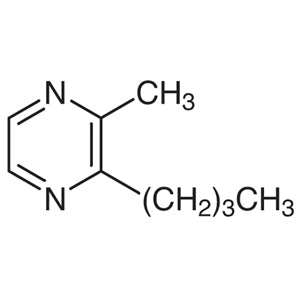
- TCI B1173 15987-00-5 2-Butyl-3-methylpyrazine
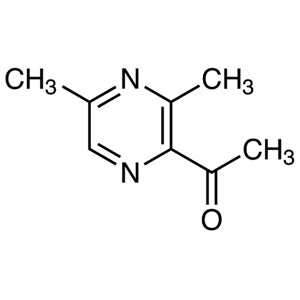
- TCI A3326 54300-08-2 2-Acetyl-3,5-dimethylpyrazine (contains 2-Acetyl-3,6-dimethylpyrazine)
- TCI A2992 5521-56-2 2-Amino-6-methylpyrazine
- TCI A2003 32974-92-8 2-Acetyl-3-ethylpyrazine
- TCI A1978 23787-80-6 2-Acetyl-3-methylpyrazine
- Synthetic chemistry applications benefit from 2-Propylpyrazine due to its ability to introduce heterocyclic functionality into complex molecular structures.
- It is ideal for aroma analysis because of its distinct and identifiable scent, which can be used to identify or characterize volatile compounds.
- In the study of heterocyclic compounds, 2-Propylpyrazine serves as a model compound for understanding reactivity and structural behavior.
- It is commonly used in the development of pharmaceuticals, where heterocyclic rings are essential for drug molecule design.
- The compound's volatility makes it suitable for use in gas chromatography and other analytical techniques that require rapid evaporation and detection.
| Brand | TCI |
|---|---|
| CAS number | 18138-03-9 |
| Molecular formula | — |
| Purity | — |
| Category | Chemistry > Building Blocks > Heterocyclic Building Blocks |
| Pack sizes | Available in various quantities as per supplier specifications |
| Physical form | Liquid |
| Storage | Store in a cool, dry place away from direct sunlight |
2-Propylpyrazine should be stored in a cool, dry environment to maintain its chemical stability and prevent degradation. It is recommended to use sealed containers to minimize exposure to air and moisture. Due to its volatile nature, it is important to handle the compound in a well-ventilated area to avoid inhalation of vapors. Laboratory personnel should wear appropriate personal protective equipment, such as gloves and safety goggles, when working with this compound. Proper disposal methods should be followed to ensure compliance with environmental and safety regulations. Regular monitoring of storage conditions is essential to maintain the integrity of the compound and ensure safe handling in laboratory settings.
—
Produk Terkait
-
2-Methyl-3-propylpyrazine TCI M0841
Regular price From Rp 1.538.250,00Regular price -
2-Butyl-3-methylpyrazine TCI B1173
Regular price Rp 3.232.950,00Regular price -
2-Acetyl-3,5-dimethylpyrazine(contains2-Acetyl-3,6-dimethylpyrazine) TCI A3326
Regular price From Rp 1.326.150,00Regular price -
2-Amino-6-methylpyrazine TCI A2992
Regular price From Rp 903.000,00Regular price -
2-Acetyl-3-ethylpyrazine TCI A2003
Regular price From Rp 1.035.300,00Regular price -
2-Acetyl-3-methylpyrazine TCI A1978
Regular price Rp 1.035.300,00Regular price -
2,3,5-Trimethylpyrazine TCI T0942
Regular price From Rp 875.700,00Regular price -
5-Methylpyrazin-2-amine TCI M3006
Regular price From Rp 4.293.450,00Regular price