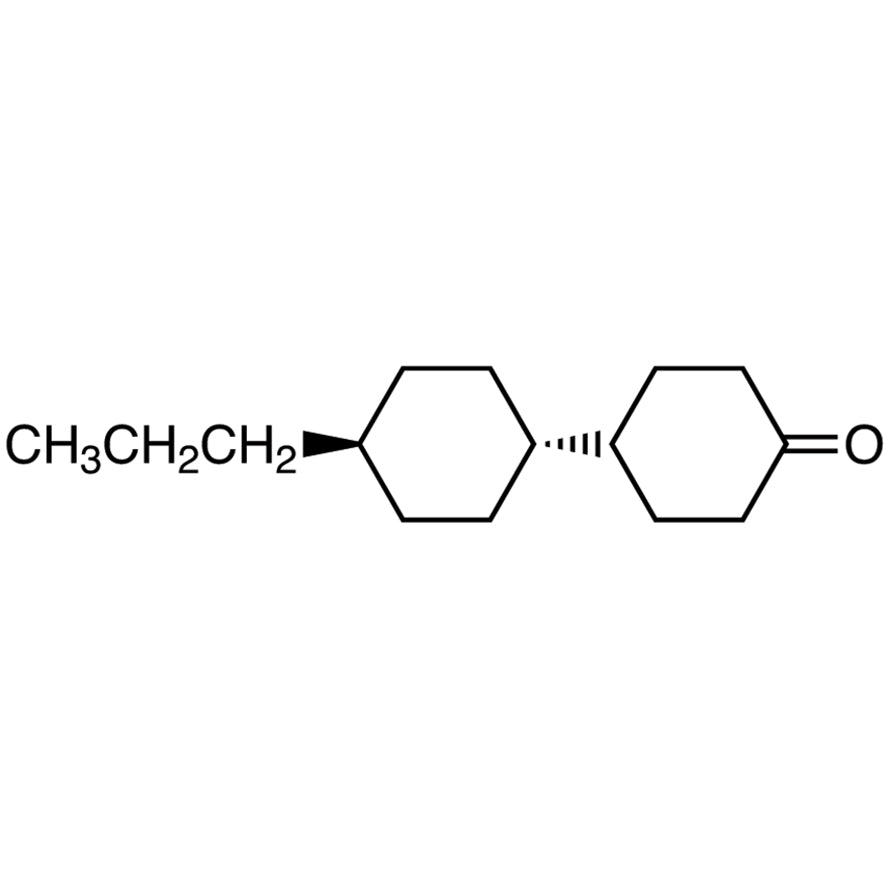
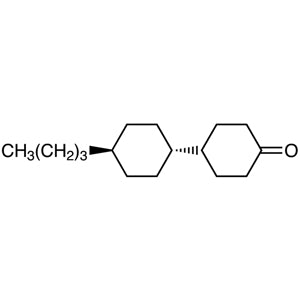
TCI P2108 82832-73-3, 4-(trans-4-Propylcyclohexyl)cyclohexanone, is a specialized chemical compound used in advanced materials research. It belongs to the class of liquid crystal (LC) building blocks, which are essential for developing materials with anisotropic properties. This compound plays a crucial role in the synthesis of complex molecular structures, particularly in the field of material science. Its unique molecular architecture enables it to interact effectively with other chemical substances, making it a valuable tool for researchers seeking to create new materials with tailored properties.
The compound is known for its molecular stability and cyclic structure, which contribute to its versatility in various experimental setups. These characteristics make it a preferred choice for applications requiring consistent performance under different conditions. Its solubility in organic solvents further enhances its usability, as it simplifies the process of synthesis and manipulation in laboratory settings. This solubility also supports the development of optoelectronic and construction materials, where precise control over molecular interactions is essential.
In Indonesian laboratories, TCI P2108 82832-73-3 is commonly used in academic and research institutions. It supports a wide range of scientific investigations, particularly in the development of advanced materials. Its application in both educational and industrial research contexts highlights its importance in driving innovation in material science. Researchers in Indonesia rely on this compound to explore new possibilities in material design and functionality.
Related TCI products
- TCI B4946 92413-47-3 4-(trans-4-Butylcyclohexyl)cyclohexanone
- TCI P2435 84868-02-0 4-(trans-4-Pentylcyclohexyl)cyclohexanone
- TCI P2372 117923-32-7 4-[2-(trans-4-Propylcyclohexyl)ethyl]cyclohexanone
- TCI P2370 121040-08-2 4-[2-(trans-4-Pentylcyclohexyl)ethyl]cyclohexanone
- TCI P1849 40649-36-3 4-Propylcyclohexanone
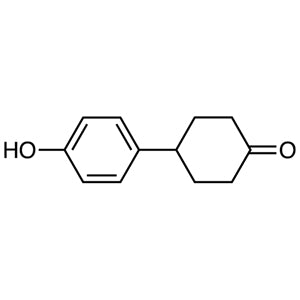
- TCI H1316 105640-07-1 4-(4-Hydroxyphenyl)cyclohexanone
- Liquid Crystal Material Synthesis: This compound is ideal for creating liquid crystal materials due to its anisotropic properties and molecular structure, which allow for precise alignment and phase transitions.
- Optoelectronic Device Development: Its unique molecular configuration supports the fabrication of optoelectronic components, enabling the design of materials with specific optical and electronic behaviors.
- Advanced Polymer Research: The compound's stability and solubility make it suitable for polymer synthesis, where it can act as a building block for creating high-performance polymers.
- Nanomaterial Fabrication: Its cyclic structure and molecular interactions are beneficial in the development of nanomaterials, allowing for controlled self-assembly and functionalization.
- Construction Material Innovation: The compound's ability to interact with various chemical substances makes it a useful component in the development of new construction materials with enhanced properties.
| Brand | TCI |
|---|---|
| CAS number | 82832-73-3 |
| Molecular formula | — |
| Purity | — |
| Category | Materials Science > Material Building Blocks > Liquid Crystal (LC) Building Blocks |
| Pack sizes | — |
| Physical form | Liquid |
| Storage | Store in a cool, dry place away from direct sunlight |
This compound should be stored in a cool, dry environment to maintain its stability and prevent degradation. It is recommended to use airtight containers to minimize exposure to moisture and air, which can affect its molecular integrity. Due to its chemical nature, it should be handled in a well-ventilated laboratory setting to ensure safety. Proper personal protective equipment, such as gloves and safety goggles, should be worn during handling to prevent direct contact. The compound is not flammable, but it should be kept away from incompatible substances to avoid any potential reactions. Regular monitoring of storage conditions is advised to ensure optimal performance and safety in laboratory applications.
—
Produk Terkait
-
4-(trans-4-Butylcyclohexyl)cyclohexanone TCI B4946
Regular price From Rp 689.850,00Regular price -
4-(trans-4-Pentylcyclohexyl)cyclohexanone TCI P2435
Regular price Rp 1.749.300,00Regular priceRp 1.239.000,00Sale price Rp 1.749.300,00 -
4-[2-(trans-4-Propylcyclohexyl)ethyl]cyclohexanone TCI P2372
Regular price Rp 1.723.050,00Regular priceRp 1.220.100,00Sale price Rp 1.723.050,00 -
4-[2-(trans-4-Pentylcyclohexyl)ethyl]cyclohexanone TCI P2370
Regular price Rp 1.087.800,00Regular priceRp 775.950,00Sale price Rp 1.087.800,00 -
4-Propylcyclohexanone TCI P1849
Regular price Rp 822.150,00Regular priceRp 590.100,00Sale price Rp 822.150,00 -
4-(4-Hydroxyphenyl)cyclohexanone TCI H1316
Regular price Rp 1.220.100,00Regular priceRp 868.350,00Sale price Rp 1.220.100,00 -
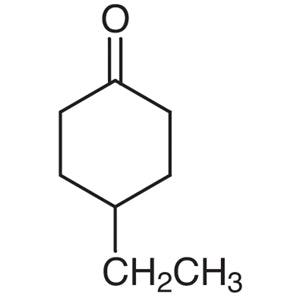
4-Ethylcyclohexanone TCI E0398
Regular price Rp 2.121.000,00Regular priceRp 1.498.350,00Sale price Rp 2.121.000,00 -
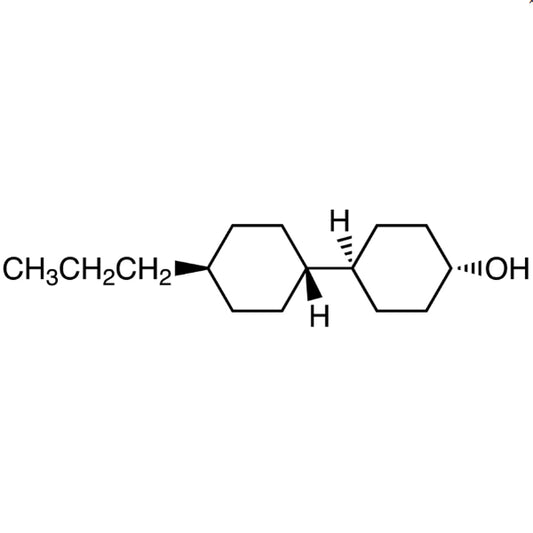
trans-4-(trans-4-Propylcyclohexyl)cyclohexanol TCI P2434
Regular price Rp 1.140.300,00Regular priceRp 812.700,00Sale price Rp 1.140.300,00

![117923-32-7 4-[2-(trans-4-Propylcyclohexyl)ethyl]cyclohexanone - AMI Scientific](http://amiscientific.com/cdn/shop/files/TCI2510P2372.jpg?v=1768362745&width=533)
![121040-08-2 4-[2-(trans-4-Pentylcyclohexyl)ethyl]cyclohexanone - AMI Scientific](http://amiscientific.com/cdn/shop/files/TCI2510P2370.jpg?v=1768362745&width=533)