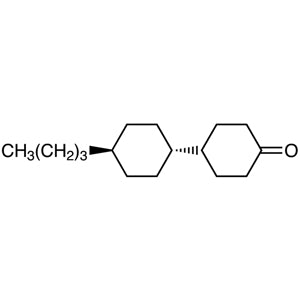
4-(trans-4-Pentylcyclohexyl)cyclohexanone from TCI is a liquid crystal building block. It has a cyclohexane ring with a pentyl chain in the trans configuration, joined to a cyclohexanone ring. The ketone group makes this molecule a very versatile intermediate for synthesising mesogens with a bicyclohexyl core. In the laboratory, this ketone is usually a starting point for building many kinds of liquid crystal molecules. Chemists convert it through nucleophilic addition, olefination, or reduction to alcohols with defined stereochemistry. This makes it a practical foundation for research into new liquid crystalline materials.
Researchers choose this compound mainly because its carbonyl group opens up many synthetic routes. Wittig or Horner–Wadsworth–Emmons reactions can give alkenyl derivatives, a class of liquid crystals known for low viscosity. Grignard or organolithium reactions with aryl halides can attach aromatic cores. Reduction gives cyclohexanols that can then be esterified. The trans configuration on the ring carrying the pentyl chain keeps the molecule's shape elongated, which matters for mesogenic behaviour. The pentyl chain is also a common chain length in liquid crystal materials, so the derivatives made from it are relevant to real-world systems.
In Indonesia, this building block is useful to university research groups, materials science laboratories, and organic synthesis teams working on liquid crystals and related functional materials. It supports exploratory work such as designing new mesogens, studying how molecular structure relates to liquid crystalline properties, and training students in multi-step organic synthesis. Because it comes from TCI, Indonesian laboratories can get a recognised research-grade reagent through AMI Scientific for both academic and applied materials projects.
Related TCI products
- TCI B4946 92413-47-3 4-(trans-4-Butylcyclohexyl)cyclohexanone
- TCI P2372 117923-32-7 4-[2-(trans-4-Propylcyclohexyl)ethyl]cyclohexanone
- TCI P2370 121040-08-2 4-[2-(trans-4-Pentylcyclohexyl)ethyl]cyclohexanone
- TCI P2108 82832-73-3 4-(trans-4-Propylcyclohexyl)cyclohexanone
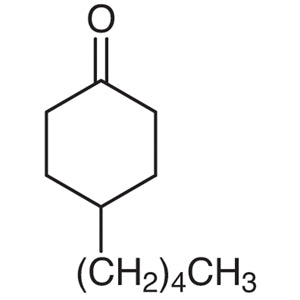
- TCI P0883 61203-83-6 4-Pentylcyclohexanone
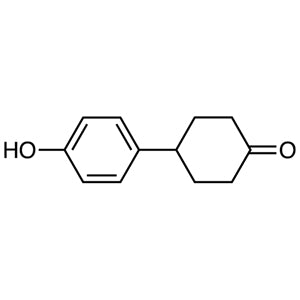
- TCI H1316 105640-07-1 4-(4-Hydroxyphenyl)cyclohexanone
- Synthesis of alkenyl liquid crystals: the ketone reacts readily in Wittig or Horner–Wadsworth–Emmons olefination, giving alkenyl bicyclohexyl derivatives that belong to a class of liquid crystals known for low viscosity.
- Attaching aromatic cores: Grignard or organolithium addition with aryl halides lets researchers connect aromatic units to the bicyclohexyl framework and build extended mesogenic structures.
- Preparation of cyclohexanol intermediates: reducing the carbonyl group gives cyclohexanols with defined stereochemistry, which can then be esterified to make ester-type liquid crystal molecules for further study.
- Structure–property studies of mesogens: the trans configuration and elongated molecular shape make this compound a sensible reference scaffold for studying how structural changes affect liquid crystalline behaviour.
- Teaching and research in organic synthesis: its single reactive carbonyl group and well-defined stereochemistry make it suitable for showing nucleophilic addition, olefination, and reduction strategies in advanced synthesis work.
| Brand | TCI (product code P2435) |
|---|---|
| CAS number | 84868-02-0 |
| Molecular formula | — |
| Purity | — |
| Category | Materials Science > Material Building Blocks > Liquid Crystal (LC) Building Blocks |
| Pack sizes | please check the product listing for the pack sizes currently offered |
| Physical form | — |
| Storage | follow the storage conditions on the TCI label and Safety Data Sheet |
Store 4-(trans-4-Pentylcyclohexyl)cyclohexanone in its original, tightly closed manufacturer's container. Keep it in a cool, dry, well-ventilated area away from direct sunlight, heat sources, and incompatible materials such as strong oxidising agents. Always follow the specific storage conditions on the TCI label and in the Safety Data Sheet. Handle the material in a fume hood or another well-ventilated area, and wear suitable personal protective equipment, including safety glasses, laboratory gloves, and a lab coat. Avoid inhaling dust or vapour and avoid contact with skin and eyes. Reseal the container promptly after use to limit exposure to moisture and air. Dispose of residues and contaminated materials according to institutional and local chemical waste regulations.
—
Produk Terkait
-
4-(trans-4-Butylcyclohexyl)cyclohexanone TCI B4946
Regular price From Rp 689.850,00Regular price -
4-[2-(trans-4-Propylcyclohexyl)ethyl]cyclohexanone TCI P2372
Regular price Rp 1.670.550,00Regular price -
4-[2-(trans-4-Pentylcyclohexyl)ethyl]cyclohexanone TCI P2370
Regular price Rp 1.035.300,00Regular price -
4-(trans-4-Propylcyclohexyl)cyclohexanone TCI P2108
Regular price From Rp 848.400,00Regular price -
4-Pentylcyclohexanone TCI P0883
Regular price Rp 1.298.850,00Regular price -
4-(4-Hydroxyphenyl)cyclohexanone TCI H1316
Regular price From Rp 1.167.600,00Regular price -
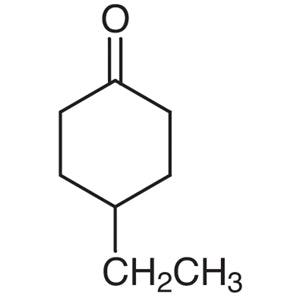
4-Ethylcyclohexanone TCI E0398
Regular price Rp 2.068.500,00Regular price -
trans-4-(trans-4-Pentylcyclohexyl)cyclohexanol TCI P2690
Regular price From Rp 3.155.250,00Regular price
![117923-32-7 4-[2-(trans-4-Propylcyclohexyl)ethyl]cyclohexanone - AMI Scientific](http://amiscientific.com/cdn/shop/files/TCI2510P2372.jpg?v=1768362745&width=533)
![121040-08-2 4-[2-(trans-4-Pentylcyclohexyl)ethyl]cyclohexanone - AMI Scientific](http://amiscientific.com/cdn/shop/files/TCI2510P2370.jpg?v=1768362745&width=533)