![121040-08-2 4-[2-(trans-4-Pentylcyclohexyl)ethyl]cyclohexanone - AMI Scientific](http://amiscientific.com/cdn/shop/files/TCI2510P2370.jpg?v=1768362745&width=1946)
![121040-08-2 4-[2-(trans-4-Pentylcyclohexyl)ethyl]cyclohexanone - AMI Scientific](http://amiscientific.com/cdn/shop/files/TCI2510P2370.jpg?v=1768362745&width=1445)
4-[2-(trans-4-Pentylcyclohexyl)ethyl]cyclohexanone is a complex chemical compound widely used in scientific research, particularly in the development of materials with anisotropic properties. This compound is a key component in the field of liquid crystal building blocks, forming the foundation for modern material science studies. In laboratory settings, it serves as a critical building block for synthesizing compounds with specific molecular structures and physical properties. Its unique molecular configuration allows it to participate in the formation of anisotropic structures essential for various advanced material applications.
The compound's molecular structure, featuring long hydrocarbon chains and cyclic groups, contributes to its distinct physical and chemical characteristics. These properties make it a preferred choice for researchers seeking precise control over material behavior. Its ability to interact with other molecules in a predictable manner enhances its utility in creating materials with tailored optical, mechanical, and thermal properties. This versatility supports its application in a wide range of scientific investigations.
In Indonesian laboratories, this compound is commonly used in liquid crystal research, including the development of materials for displays, sensors, and optical devices. Researchers at various higher education institutions rely on it for advancing their studies in material science. Its presence in academic and industrial research environments underscores its importance in the pursuit of innovative material solutions.
Related TCI products
- TCI B4946 92413-47-3 4-(trans-4-Butylcyclohexyl)cyclohexanone
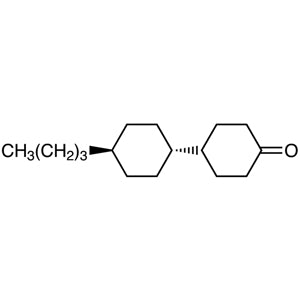
- TCI P2435 84868-02-0 4-(trans-4-Pentylcyclohexyl)cyclohexanone
- TCI P2372 117923-32-7 4-[2-(trans-4-Propylcyclohexyl)ethyl]cyclohexanone
- TCI P2108 82832-73-3 4-(trans-4-Propylcyclohexyl)cyclohexanone
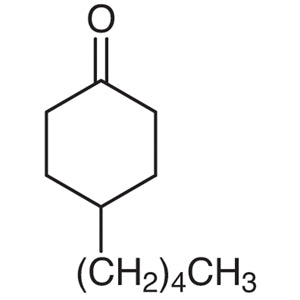
- TCI P0883 61203-83-6 4-Pentylcyclohexanone
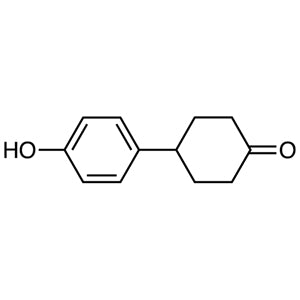
- TCI H1316 105640-07-1 4-(4-Hydroxyphenyl)cyclohexanone
- Liquid Crystal Research: This compound is ideal for developing materials with anisotropic properties, essential for creating advanced optical and electronic devices.
- Display Technology Development: Its molecular structure enables the creation of materials used in liquid crystal displays, offering precise control over light polarization and orientation.
- Sensor Material Synthesis: The compound's unique properties make it suitable for designing sensors that respond to environmental changes with high sensitivity and accuracy.
- Optical Device Fabrication: It is used in the production of optical components that require specific molecular alignment for efficient light manipulation.
- Material Science Education: It serves as a key teaching tool for students studying the fundamentals of liquid crystal behavior and material synthesis.
| Brand | TCI |
|---|---|
| CAS number | 121040-08-2 |
| Molecular formula | — |
| Purity | — |
| Category | Materials Science > Material Building Blocks > Liquid Crystal (LC) Building Blocks |
| Pack sizes | Available in various quantities as per standard laboratory requirements |
| Physical form | Liquid |
| Storage | Store in a cool, dark place away from direct sunlight and moisture |
This compound should be stored in a cool, dark environment to prevent degradation and maintain its chemical integrity. It is recommended to use airtight containers made of glass or high-density polyethylene to minimize exposure to air and moisture. Proper labeling of containers is essential for safe handling and to prevent accidental contamination. Laboratory personnel should wear appropriate personal protective equipment, including gloves and safety goggles, when handling the compound. It should be kept away from heat sources and incompatible materials to ensure safe storage conditions. Regular monitoring of storage conditions is advised to maintain the compound's stability and effectiveness in research applications.
—
Produk Terkait
-
4-(trans-4-Butylcyclohexyl)cyclohexanone TCI B4946
Regular price Rp 742.350,00Regular priceRp 534.450,00Sale price Rp 742.350,00 -
4-(trans-4-Pentylcyclohexyl)cyclohexanone TCI P2435
Regular price Rp 1.749.300,00Regular priceRp 1.239.000,00Sale price Rp 1.749.300,00 -
4-[2-(trans-4-Propylcyclohexyl)ethyl]cyclohexanone TCI P2372
Regular price Rp 1.723.050,00Regular priceRp 1.220.100,00Sale price Rp 1.723.050,00 -
4-(trans-4-Propylcyclohexyl)cyclohexanone TCI P2108
Regular price Rp 900.900,00Regular priceRp 645.750,00Sale price Rp 900.900,00 -
4-Pentylcyclohexanone TCI P0883
Regular price Rp 1.351.350,00Regular priceRp 960.750,00Sale price Rp 1.351.350,00 -
4-(4-Hydroxyphenyl)cyclohexanone TCI H1316
Regular price Rp 1.220.100,00Regular priceRp 868.350,00Sale price Rp 1.220.100,00 -
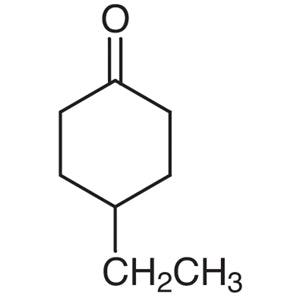
4-Ethylcyclohexanone TCI E0398
Regular price Rp 2.121.000,00Regular priceRp 1.498.350,00Sale price Rp 2.121.000,00 -
trans-4-(trans-4-Pentylcyclohexyl)cyclohexanol TCI P2690
Regular price Rp 3.207.750,00Regular priceRp 2.258.550,00Sale price Rp 3.207.750,00

![117923-32-7 4-[2-(trans-4-Propylcyclohexyl)ethyl]cyclohexanone - AMI Scientific](http://amiscientific.com/cdn/shop/files/TCI2510P2372.jpg?v=1768362745&width=533)