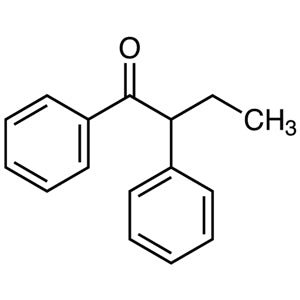
2-Phenylbutyrophenone is a chemical compound widely used in organic synthesis reactions. It serves as a fundamental building block in the creation of complex molecules with aromatic structures and carbon chains. This compound plays a crucial role in pharmaceutical research and chemical studies, acting as a key component in the synthesis of various pharmacological substances. In the laboratory, it is commonly used as a starting material to construct more complex molecular structures. Its stability under certain conditions and its ability to participate in nucleophilic and electrophilic reactions make it a versatile reagent.
The compound’s molecular structure, featuring a carbonyl group and an aromatic chain, makes it ideal for substitution reactions and the formation of new bonds. Its chemical versatility allows it to be applied in a wide range of scientific research areas. The ability to undergo various chemical transformations makes it a preferred choice for chemists and researchers. Its reliability in synthetic processes ensures consistent results in laboratory experiments.
In Indonesian laboratories, 2-Phenylbutyrophenone is extensively used in both pure and applied chemical research. It is frequently found in chemistry, pharmaceutical, and chemical industry laboratories. Due to its effectiveness in synthesis reactions, it is a favored material for researchers aiming to develop new compounds and explore chemical properties. Its broad applications make it an essential reagent in scientific investigations.
- Organic synthesis reactions benefit from 2-Phenylbutyrophenone due to its ability to participate in nucleophilic and electrophilic reactions, making it ideal for creating complex molecular structures.
- Pharmaceutical research utilizes this compound as a building block for synthesizing various pharmacological substances, supporting drug development efforts.
- Chemical analysis laboratories use it as a standard reagent for testing and characterizing other compounds through various analytical techniques.
- Industrial chemical production relies on its stability and reactivity for manufacturing a wide range of chemical products.
- Academic research institutions incorporate it into their studies to explore new chemical reactions and molecular transformations.
| Brand | TCI |
|---|---|
| CAS number | 16282-16-9 |
| Molecular formula | — |
| Purity | — |
| Category | Chemistry > Building Blocks > Non-Heterocyclic Building Blocks |
| Pack sizes | Available in standard laboratory quantities |
| Physical form | Solid or liquid, depending on the specific product |
| Storage | Store in a cool, dry place away from moisture and direct sunlight |
2-Phenylbutyrophenone should be stored in a cool, dry environment to maintain its chemical stability. It is recommended to keep it in airtight containers to prevent exposure to moisture and air. Proper labeling of containers is essential to ensure safe handling and prevent accidental use. In laboratory settings, it is important to use appropriate personal protective equipment, such as gloves and safety goggles, when handling the compound. Avoid direct contact with skin and inhalation of vapors. Storage should be away from incompatible materials to ensure safety. Regular inspection of storage conditions is advised to maintain the integrity of the compound.
—
Produk Terkait
-
Butyrophenone TCI B0769
Regular price From Rp 689.850,00Regular price -
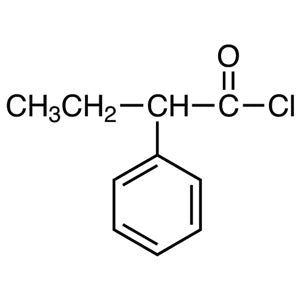
2-PhenylbutyrylChloride TCI P1665
Regular price From Rp 557.550,00Regular price -
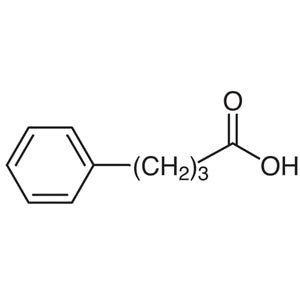
4-PhenylbutyricAcid TCI P0643
Regular price From Rp 2.094.750,00Regular price -
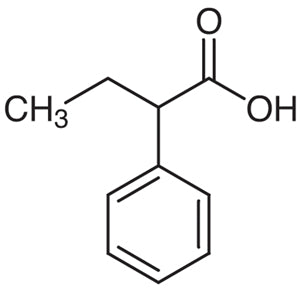
2-PhenylbutyricAcid TCI P0164
Regular price From Rp 505.050,00Regular price -
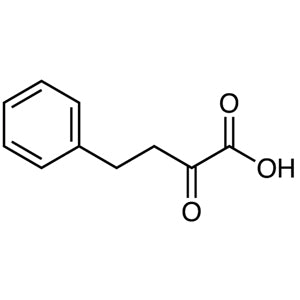
2-Oxo-4-phenylbutyricAcid TCI O0389
Regular price Rp 4.373.250,00Regular price -
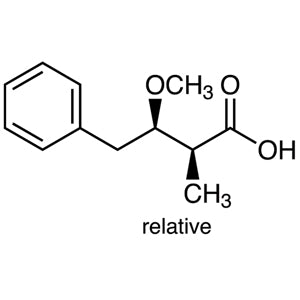
erythro-3-Methoxy-2-methyl-4-phenylbutyricAcid TCI M2415
Regular price Rp 3.949.050,00Regular price -
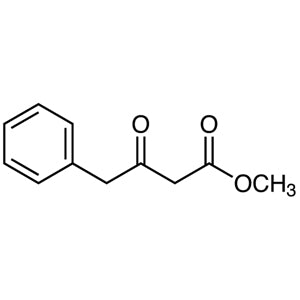
Methyl3-Oxo-4-phenylbutyrate(mixtureofisomers) TCI M2396
Regular price From Rp 2.279.550,00Regular price -
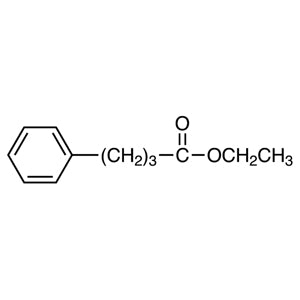
Ethyl4-Phenylbutyrate TCI E1027
Regular price From Rp 689.850,00Regular price