Butyrophenone is a chemical compound widely used as a foundational building block in the synthesis of complex organic compounds. It serves as a versatile intermediate in various chemical reactions, particularly in the formation of heterocyclic and aromatic compounds. Its molecular structure, while simple, plays a crucial role in enabling further functional group modifications, making it a key component in synthetic chemistry workflows. Butyrophenone is commonly employed in laboratory settings to initiate and guide the synthesis of more complex molecules, owing to its reactivity and compatibility with a wide range of functional groups.
The compound exhibits stable chemical properties under controlled conditions, yet it remains highly reactive in substitution and oxidation reactions. These characteristics make it an ideal choice for applications requiring precise chemical transformations. Its ability to participate in multiple reaction pathways enhances its utility in both research and industrial settings. Additionally, its relatively high boiling and melting points facilitate efficient isolation and purification processes, which are essential in laboratory operations.
In Indonesian laboratories, butyrophenone is extensively used in organic chemistry research, particularly within academic and research institutions. It is a fundamental reagent in the development of new compounds, pharmaceutical research, and studies on chemical reactivity. Its availability and reliability make it a preferred material for scientists working on advanced synthetic projects and analytical studies.
- Organic synthesis projects benefit from butyrophenone due to its reactivity and compatibility with various functional groups, enabling the creation of complex molecular structures.
- Pharmaceutical research utilizes butyrophenone as a building block for the synthesis of new drug compounds, supporting the development of therapeutic agents.
- Analytical chemistry laboratories use butyrophenone for standardization and calibration of chemical reagents, ensuring accurate and reproducible results.
- Academic research institutions incorporate butyrophenone into teaching and experimental protocols to train students in synthetic chemistry techniques.
- Industrial chemical processes rely on butyrophenone for the production of specialty chemicals, contributing to the development of advanced materials and products.
| Brand | TCI |
|---|---|
| CAS number | 495-40-9 |
| Molecular formula | — |
| Purity | — |
| Category | Chemistry > Building Blocks > Non-Heterocyclic Building Blocks |
| Pack sizes | Available in various quantities as per standard laboratory supply formats |
| Physical form | Liquid |
| Storage | Store in a cool, dry, and well-ventilated area away from light and incompatible substances |
Butyrophenone should be stored in a cool, dry, and well-ventilated area, away from direct sunlight and sources of heat. It is recommended to use sealed containers made of glass or high-density polyethylene to prevent contamination and evaporation. Due to its reactivity, it should be kept away from strong oxidizing agents and incompatible materials. In laboratory settings, proper personal protective equipment such as gloves, goggles, and a lab coat should be worn when handling the compound. Regular monitoring of storage conditions is essential to maintain its chemical stability and ensure safe usage in research environments.
—
Produk Terkait
-
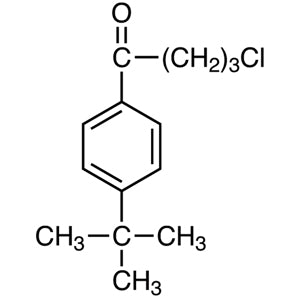
4'-tert-Butyl-4-chlorobutyrophenone TCI B3144
Regular price Rp 2.173.500,00Regular priceRp 1.535.100,00Sale price Rp 2.173.500,00 -
2-Phenylbutyrophenone TCI P2269
Regular price Rp 2.121.000,00Regular priceRp 1.482.600,00Sale price Rp 2.121.000,00 -
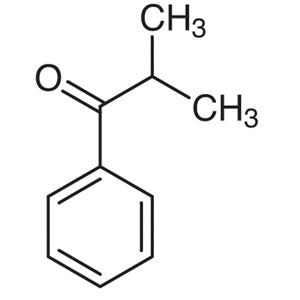
Isobutyrophenone TCI I0113
Regular price From Rp 1.060.500,00Regular priceRp 741.300,00Sale price From Rp 1.060.500,00 -
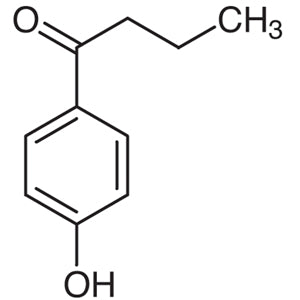
4'-Hydroxybutyrophenone TCI H0903
Regular price Rp 2.252.250,00Regular priceRp 1.590.750,00Sale price Rp 2.252.250,00 -
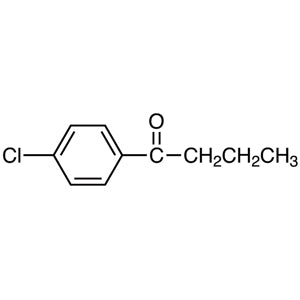
4'-Chlorobutyrophenone TCI C1547
Regular price Rp 1.378.650,00Regular priceRp 979.650,00Sale price Rp 1.378.650,00 -
3-Hydroxy-p-butyrophenetidine TCI H0371
Regular price Rp 848.400,00Regular priceRp 609.000,00Sale price Rp 848.400,00 -
2-Benzyl-2-(dimethylamino)-4'-morpholinobutyrophenone TCI B3914
Regular price From Rp 1.060.500,00Regular priceRp 757.050,00Sale price From Rp 1.060.500,00 -
4-Chloro-4'-fluorobutyrophenone TCI C1294
Regular price Rp 822.150,00Regular priceRp 590.100,00Sale price Rp 822.150,00