(2E,4E)-5-Phenyl-2,4-pentadienoic Acid is a chemical compound widely used in organic synthesis reactions within laboratory settings. It serves as a fundamental building block in the creation of complex molecules, including pharmaceuticals, industrial chemicals, and other organic compounds. This compound is essential for researchers and chemists who are engaged in the development of new materials and substances, providing a versatile starting point for various chemical transformations. Its presence in the laboratory enables the synthesis of more intricate structures through controlled chemical reactions.
The compound’s unique molecular structure, featuring two double bonds at positions 2 and 4, along with a phenyl group at position 5, contributes to its high reactivity. These structural features allow it to participate in multiple types of chemical reactions, such as substitution, hydrolysis, and condensation. This reactivity makes it a preferred choice for organic chemists seeking to explore new synthetic pathways and develop novel compounds. Its versatility and chemical stability make it an important tool in both academic and industrial research environments.
In Indonesian laboratories, (2E,4E)-5-Phenyl-2,4-pentadienoic Acid is commonly used by chemists, pharmacists, and students conducting research on complex molecule synthesis. It plays a key role in pharmaceutical development, industrial chemical production, and educational purposes. Its availability and chemical properties make it a valuable resource for advancing research in organic chemistry and related fields.
Related TCI products
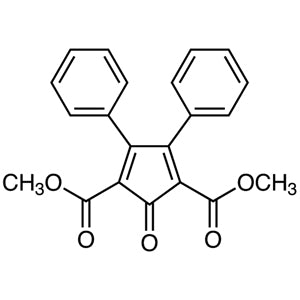
- TCI B1962 16691-79-5 2,5-Bis(methoxycarbonyl)-3,4-diphenylcyclopentadienone
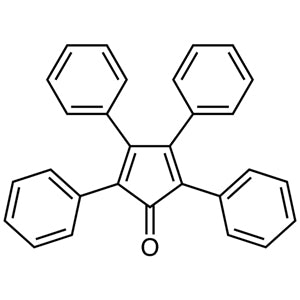
- TCI T1062 479-33-4 Tetraphenylcyclopentadienone
- TCI P1841 504-60-9 1,3-Pentadiene (cis- and trans- mixture) (stabilized with TBC)
- TCI P0805 591-95-7 1,2-Pentadiene
- TCI P0650 1574-41-0 cis-1,3-Pentadiene (stabilized with TBC)
- TCI P0647 2004-70-8 trans-1,3-Pentadiene (stabilized with TBC)
- Organic synthesis of complex pharmaceutical compounds due to its reactive double bonds and phenyl group.
- Development of industrial chemicals through controlled chemical reactions and molecular modifications.
- Educational use in teaching organic chemistry principles and synthetic methodologies to students.
- Research in medicinal chemistry for the design of new drug molecules with specific structural features.
- Creation of functional materials through chemical modifications and polymer synthesis techniques.
| Brand | TCI |
|---|---|
| CAS number | 28010-12-0 |
| Molecular formula | — |
| Purity | — |
| Category | Chemistry > Building Blocks > Non-Heterocyclic Building Blocks |
| Pack sizes | Available in various quantities as per supplier specifications |
| Physical form | Solid, crystalline appearance |
| Storage | Store in a cool, dry place away from light and moisture |
This compound should be stored in a cool, dry environment, away from direct light and moisture to maintain its chemical integrity. It is recommended to use airtight containers made of glass or high-density polyethylene to prevent contamination and degradation. Proper labeling of storage containers is essential for safety and traceability. When handling, it is advisable to use appropriate personal protective equipment, such as gloves and safety goggles, to minimize exposure. Due to its reactivity, it should be kept away from incompatible substances like strong oxidizing agents. Regular inspection of storage conditions ensures the compound remains suitable for use in laboratory applications.
—
Produk Terkait
-
2,5-Bis(methoxycarbonyl)-3,4-diphenylcyclopentadienone TCI B1962
Regular price From Rp 2.625.000,00Regular price -
Tetraphenylcyclopentadienone TCI T1062
Regular price From Rp 823.200,00Regular price -
1,3-Pentadiene(cis-andtrans-mixture)(stabilizedwithTBC) TCI P1841
Regular price Rp 10.229.100,00Regular price -
1,2-Pentadiene TCI P0805
Regular price From Rp 8.453.550,00Regular price -
cis-1,3-Pentadiene(stabilizedwithTBC) TCI P0650
Regular price From Rp 5.962.950,00Regular price -
trans-1,3-Pentadiene(stabilizedwithTBC) TCI P0647
Regular price From Rp 1.829.100,00Regular price -
1,4-Pentadiene TCI P0038
Regular price From Rp 5.327.700,00Regular price -
2-Methyl-1,4-pentadiene TCI M0616
Regular price From Rp 1.856.400,00Regular price