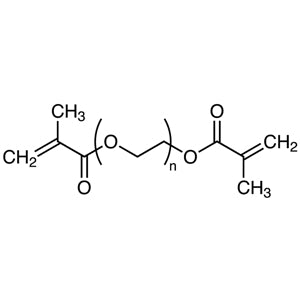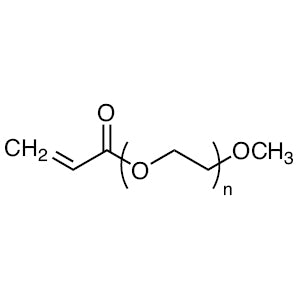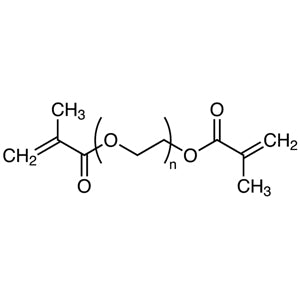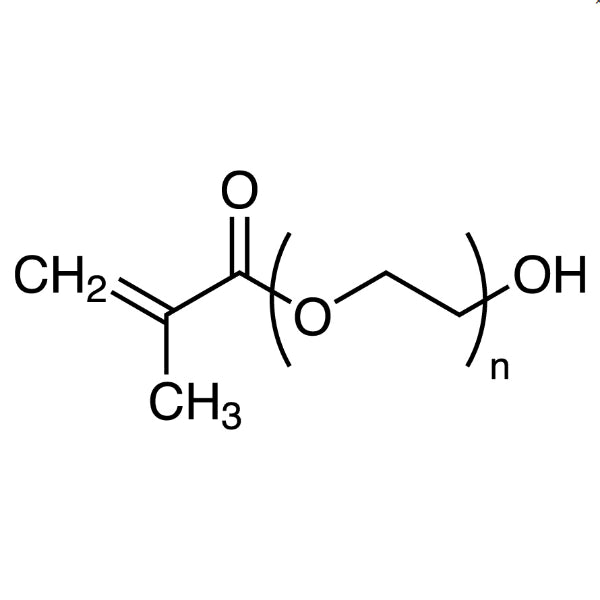
Polyethylene Glycol Monomethacrylate (PEG MMA) is a chemical compound widely used in laboratory settings involving polymer science and chemical reactions. This monomer is derived from polyethylene glycol and contains a methacrylate group, making it a versatile building block for synthesizing polymers and composite materials. Its unique structure allows it to participate in various polymerization processes, contributing to the development of materials with tailored properties. PEG MMA is particularly valued for its ability to form stable and flexible structures, which makes it a key component in advanced material research.
The properties of PEG MMA make it a preferred choice in laboratory applications. It exhibits good solubility in organic solvents, ensuring compatibility with a wide range of chemical systems. Its chemical stability and ability to interact with other molecules enhance its utility in both synthetic and analytical processes. Additionally, the presence of MEHQ as a stabilizer prevents oxidative degradation, maintaining the material's integrity under various storage and reaction conditions. These characteristics ensure consistent performance, making PEG MMA a reliable reagent for scientific research.
In Indonesian laboratories, PEG MMA is commonly used in scientific research across multiple disciplines, including materials science, pharmaceuticals, and biotechnology. Its applications range from the development of composite materials to the creation of biomedical devices and packaging solutions. Due to its availability and favorable properties, PEG MMA is a valuable resource for researchers seeking to explore innovative material formulations and functional applications.
TCI brochures (PDF)
- Monomers 2025-05-28 · p. 8
Related TCI products
- TCI T1352 25852-47-5 Polyethylene Glycol Dimethacrylate (n=approx 4) (stabilized with MEHQ)
- TCI P3111 26915-72-0 Polyethylene Glycol Monomethyl Ether Methacrylate (Mw=ca 2100) (stabilized with MEHQ)
- TCI P3110 26915-72-0 Polyethylene Glycol Monomethyl Ether Methacrylate (n=approx. 23) (stabilized with MEHQ)
- TCI P3108 26915-72-0 Polyethylene Glycol Monomethyl Ether Methacrylate (n=approx. 4) (stabilized with MEHQ)
- TCI P3107 32171-39-4 Polyethylene Glycol Monomethyl Ether Acrylate (n=approx. 23) (stabilized with MEHQ)
- TCI P2895 52277-33-5 Polytetramethylene Glycol Diacrylate (n=approx. 9) (stabilized with MEHQ)
- Polymer synthesis and composite material development due to its ability to form stable and flexible structures.
- Biomedical research for creating biocompatible materials and drug delivery systems.
- Pharmaceutical applications in the formulation of controlled-release dosage forms and coatings.
- Surface modification and coating technologies for improving material properties and durability.
- Packaging material development for creating flexible and durable films with enhanced barrier properties.
| Brand | TCI |
|---|---|
| CAS number | 25736-86-1 |
| Molecular formula | — |
| Purity | — |
| Category | Materials Science > Polymer/Macromolecule Reagents > Monomers |
| Pack sizes | Available in various sizes as per standard laboratory supply formats |
| Physical form | Solid, typically in powder or pellet form |
| Storage | Store in a cool, dry place away from light and strong oxidizing agents |
PEG MMA should be stored in a cool, dry environment, away from direct sunlight and sources of heat. It is recommended to keep the material in a sealed container to prevent moisture absorption and contamination. Due to its chemical stability, it does not require refrigeration but should be protected from strong oxidizing agents. In laboratory settings, it is important to handle PEG MMA with appropriate personal protective equipment, such as gloves and safety goggles, to ensure safe handling. Proper ventilation should be maintained when working with this compound to minimize exposure. Regular inspection of storage containers is advised to ensure the integrity of the material remains unaffected by environmental factors.
—
Product Categories
Produk Terkait
-
PolyethyleneGlycolDimethacrylate(n=approx4)(stabilizedwithMEHQ) TCI T1352
Regular price From Rp 505.050,00Regular price -
PolyethyleneGlycolMonomethylEtherMethacrylate(Mw=ca2100)(stabilizedwithMEHQ) TCI P3111
Regular price From Rp 1.326.150,00Regular price -
PolyethyleneGlycolMonomethylEtherMethacrylate(n=approx.23)(stabilizedwithMEHQ) TCI P3110
Regular price From Rp 1.220.100,00Regular price -
PolyethyleneGlycolMonomethylEtherMethacrylate(n=approx.4)(stabilizedwithMEHQ) TCI P3108
Regular price From Rp 1.220.100,00Regular price -
PolyethyleneGlycolMonomethylEtherAcrylate(n=approx.23)(stabilizedwithMEHQ) TCI P3107
Regular price From Rp 1.326.150,00Regular price -
PolytetramethyleneGlycolDiacrylate(n=approx.9)(stabilizedwithMEHQ) TCI P2895
Regular price From Rp 955.500,00Regular price -
PolyethyleneGlycolMonomethylEtherAcrylate(n=approx13)(stabilizedwithMEHQ) TCI P2870
Regular price From Rp 1.035.300,00Regular price -
PolyethyleneGlycolDimethacrylate(n=approx14)(stabilizedwithMEHQ) TCI P2760
Regular price From Rp 610.050,00Regular price