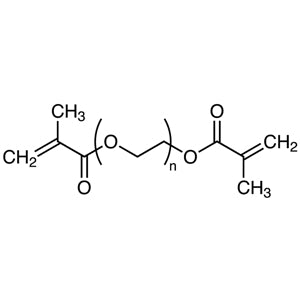
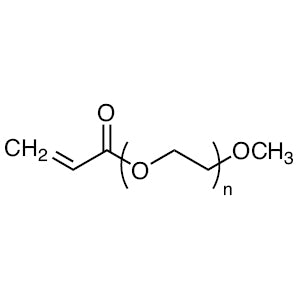
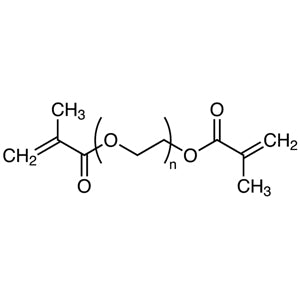
Polyethylene Glycol Monomethyl Ether Acrylate (PEGMA) is a key chemical compound widely used in materials science and polymer chemistry. As a monomer, it plays a crucial role in the synthesis of polymers with hydrophilic properties and high reactivity. Its versatility makes it an essential component in various laboratory processes, enabling the creation of complex polymer structures. PEGMA is particularly valuable for developing functional materials that can be tailored for specific applications. Its chemical structure allows for modification, making it adaptable to a wide range of experimental needs in both academic and industrial settings.
PEGMA is preferred due to its stability and reactivity, which are enhanced by stabilization with MEHQ (methyl ethyl ketone peroxide). This stabilization ensures that the compound remains resistant to oxidation and unwanted chemical reactions, even under less controlled laboratory conditions. Its hydrophilic nature makes it suitable for applications requiring water-soluble or bio-compatible materials. Additionally, its compatibility with various polymerization techniques allows researchers to achieve precise control over the final polymer properties. These characteristics make PEGMA a reliable and effective reagent in polymer synthesis.
In Indonesian laboratories, PEGMA is commonly used in research related to biomedical materials, coatings, and drug delivery systems. Its ability to form water-soluble polymers makes it ideal for applications in biotechnology and pharmaceutical sciences. Researchers in Indonesia frequently utilize PEGMA to develop advanced materials with tailored properties for specific scientific and industrial purposes. Its availability and performance make it a go-to choice for many laboratory applications in the region.
TCI brochures (PDF)
- Biomaterials Research Reagents 2025-02-19 · p. 9
- Monomers 2025-05-28 · p. 5
Related TCI products
- TCI T1352 25852-47-5 Polyethylene Glycol Dimethacrylate (n=approx 4) (stabilized with MEHQ)
- TCI P3111 26915-72-0 Polyethylene Glycol Monomethyl Ether Methacrylate (Mw=ca 2100) (stabilized with MEHQ)
- TCI P3110 26915-72-0 Polyethylene Glycol Monomethyl Ether Methacrylate (n=approx. 23) (stabilized with MEHQ)
- TCI P3108 26915-72-0 Polyethylene Glycol Monomethyl Ether Methacrylate (n=approx. 4) (stabilized with MEHQ)
- TCI P3010 25736-86-1 Polyethylene Glycol Monomethacrylate (n=approx 5) (stabilized with MEHQ)
- TCI P2895 52277-33-5 Polytetramethylene Glycol Diacrylate (n=approx. 9) (stabilized with MEHQ)
- Polymer synthesis for hydrophilic and biocompatible materials due to its reactivity and hydrophilic nature.
- Development of water-soluble polymers for biomedical applications such as drug delivery systems and coatings.
- Creation of encapsulated polymers for controlled release applications in biotechnology and pharmaceutical research.
- Formulation of functional coatings with tunable properties for industrial and laboratory use.
- Research into advanced materials requiring precise molecular structure modification for specific applications.
| Brand | TCI |
|---|---|
| CAS number | 32171-39-4 |
| Molecular formula | — |
| Purity | — |
| Category | Materials Science > Polymer/Macromolecule Reagents > Monomers |
| Pack sizes | As listed on product page |
| Physical form | Liquid |
| Storage | Store in a cool, dry place away from light and heat sources. |
PEGMA should be stored in a cool, dry place, away from direct light and heat sources to maintain its stability. It is recommended to use airtight containers to prevent exposure to moisture and contaminants. Due to its reactivity, it should be handled in a well-ventilated area, and appropriate personal protective equipment should be worn. Avoid contact with strong oxidizing agents to prevent unwanted chemical reactions. Proper labeling and storage conditions ensure the material remains safe and effective for use in laboratory settings.
—
Product Categories
Produk Terkait
-
PolyethyleneGlycolDimethacrylate(n=approx4)(stabilizedwithMEHQ) TCI T1352
Regular price From Rp 505.050,00Regular price -
PolyethyleneGlycolMonomethylEtherMethacrylate(Mw=ca2100)(stabilizedwithMEHQ) TCI P3111
Regular price From Rp 1.326.150,00Regular price -
PolyethyleneGlycolMonomethylEtherMethacrylate(n=approx.23)(stabilizedwithMEHQ) TCI P3110
Regular price From Rp 1.220.100,00Regular price -
PolyethyleneGlycolMonomethylEtherMethacrylate(n=approx.4)(stabilizedwithMEHQ) TCI P3108
Regular price From Rp 1.220.100,00Regular price -
PolyethyleneGlycolMonomethacrylate(n=approx5)(stabilizedwithMEHQ) TCI P3010
Regular price From Rp 1.193.850,00Regular price -
PolytetramethyleneGlycolDiacrylate(n=approx.9)(stabilizedwithMEHQ) TCI P2895
Regular price From Rp 955.500,00Regular price -
PolyethyleneGlycolMonomethylEtherAcrylate(n=approx13)(stabilizedwithMEHQ) TCI P2870
Regular price From Rp 1.035.300,00Regular price -
PolyethyleneGlycolDimethacrylate(n=approx14)(stabilizedwithMEHQ) TCI P2760
Regular price From Rp 610.050,00Regular price