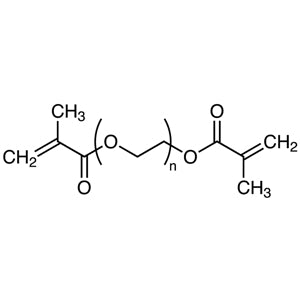
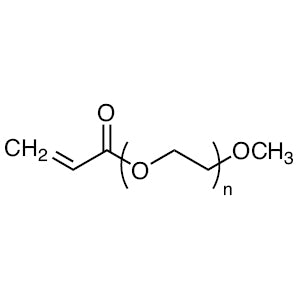
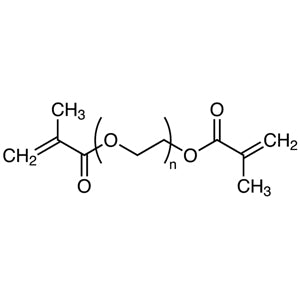
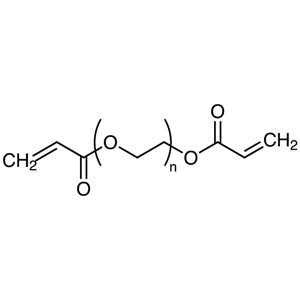
Polyethylene Glycol Monomethyl Ether Methacrylate (PEG MMA) is a versatile chemical compound widely used in materials science and polymer chemistry. It serves as a monomer that can be modified to produce polymers with specific properties, such as mechanical strength, chemical resistance, or hydrophobic characteristics. In the laboratory, PEG MMA is commonly used as a foundational material in polymer synthesis, coating applications, and the formulation of specialty chemical products. Its unique molecular structure, consisting of a polyethylene glycol chain attached to a methacrylate group, provides reactivity and flexibility during polymerization processes. This makes it an essential component in the development of advanced materials and functional polymers.
PEG MMA is preferred due to its stability under certain conditions and its excellent reactivity, which simplifies synthesis processes. The stabilization with MEHQ (methyl ethyl glycol hydroquinone) ensures that the material remains resistant to oxidative degradation during storage and use. This stability, combined with its reactivity, allows researchers to achieve consistent results in polymerization reactions. The material’s molecular weight of approximately 2100 further enhances its utility in creating polymers with controlled properties, making it a reliable choice for various scientific applications.
In Indonesian laboratories, PEG MMA is extensively used in material science, polymer chemistry, and packaging technology research. It is a preferred choice due to its reliability and adaptability across different experimental setups. Its role in developing coatings, adhesives, and other specialty materials makes it a key component in both academic and industrial research environments.
TCI brochures (PDF)
- Biomaterials Research Reagents 2025-02-19 · p. 10
- Monomers 2025-05-28 · p. 8
Related TCI products
- TCI T1352 25852-47-5 Polyethylene Glycol Dimethacrylate (n=approx 4) (stabilized with MEHQ)
- TCI P3110 26915-72-0 Polyethylene Glycol Monomethyl Ether Methacrylate (n=approx. 23) (stabilized with MEHQ)
- TCI P3108 26915-72-0 Polyethylene Glycol Monomethyl Ether Methacrylate (n=approx. 4) (stabilized with MEHQ)
- TCI P3107 32171-39-4 Polyethylene Glycol Monomethyl Ether Acrylate (n=approx. 23) (stabilized with MEHQ)
- TCI P3010 25736-86-1 Polyethylene Glycol Monomethacrylate (n=approx 5) (stabilized with MEHQ)
- TCI P2870 32171-39-4 Polyethylene Glycol Monomethyl Ether Acrylate (n=approx 13) (stabilized with MEHQ)
- Polymer synthesis and modification for creating materials with tailored mechanical and chemical properties.
- Coating formulation for applications requiring hydrophobic or surface-active characteristics.
- Development of adhesives and sealants where controlled reactivity and flexibility are essential.
- Research in advanced materials for use in packaging technology and biomedical applications.
- Formulation of specialty chemical products that require specific functional group reactivity and stability.
| Brand | TCI |
|---|---|
| CAS number | 26915-72-0 |
| Molecular formula | — |
| Purity | — |
| Category | Materials Science > Polymer/Macromolecule Reagents > Monomers |
| Pack sizes | Available in standard laboratory quantities as per supplier specifications |
| Physical form | Liquid |
| Storage | Store in a cool, dark place away from heat and direct sunlight |
PEG MMA should be stored in a cool, dark environment to maintain its stability and prevent oxidative degradation. It is recommended to use suitable containers that are resistant to chemical reactions, such as glass or high-density polyethylene vessels. The material should be kept away from heat sources and direct sunlight to avoid any potential degradation. In laboratory settings, it is important to handle the compound with appropriate personal protective equipment, including gloves and safety goggles, to ensure safe usage. Proper ventilation should be maintained when working with this material to minimize exposure risks. Always follow standard safety protocols when handling reactive chemical compounds to ensure a safe working environment.
—
Product Categories
Produk Terkait
-
PolyethyleneGlycolDimethacrylate(n=approx4)(stabilizedwithMEHQ) TCI T1352
Regular price From Rp 505.050,00Regular price -
PolyethyleneGlycolMonomethylEtherMethacrylate(n=approx.23)(stabilizedwithMEHQ) TCI P3110
Regular price From Rp 1.220.100,00Regular price -
PolyethyleneGlycolMonomethylEtherMethacrylate(n=approx.4)(stabilizedwithMEHQ) TCI P3108
Regular price From Rp 1.220.100,00Regular price -
PolyethyleneGlycolMonomethylEtherAcrylate(n=approx.23)(stabilizedwithMEHQ) TCI P3107
Regular price From Rp 1.326.150,00Regular price -
PolyethyleneGlycolMonomethacrylate(n=approx5)(stabilizedwithMEHQ) TCI P3010
Regular price From Rp 1.193.850,00Regular price -
PolyethyleneGlycolMonomethylEtherAcrylate(n=approx13)(stabilizedwithMEHQ) TCI P2870
Regular price From Rp 1.035.300,00Regular price -
PolyethyleneGlycolDimethacrylate(n=approx14)(stabilizedwithMEHQ) TCI P2760
Regular price From Rp 610.050,00Regular price -
PolyethyleneGlycolDiacrylate(n=approx14)(stabilizedwithMEHQ) TCI P2757
Regular price From Rp 557.550,00Regular price