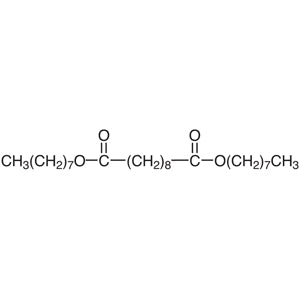
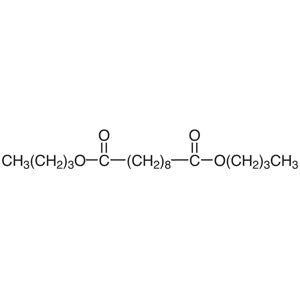
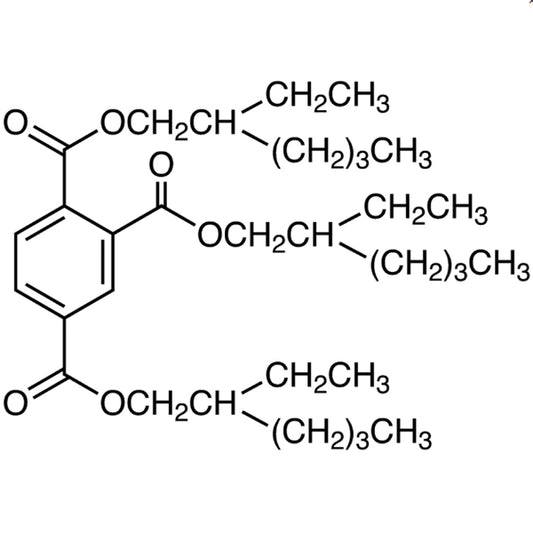
Bis(2-ethylhexyl) sebacate (BEHS) is a chemical compound widely used as a polymer additive in laboratory settings. It serves as a plasticizer, enhancing the flexibility and tensile strength of polymer materials. This compound is essential in material science research, particularly in the modification of polymer properties. Its role in the laboratory extends beyond basic polymer processing, supporting advanced studies in composite materials and polymer engineering. BEHS is a key component in experiments aimed at improving the mechanical and thermal performance of synthetic materials.
BEHS is valued for its chemical stability and resistance to degradation under various reaction conditions. It exhibits excellent thermal and moisture resistance, making it suitable for long-term applications. These properties ensure that the material maintains its integrity and functionality over time, even in demanding environments. Its non-toxic and non-hazardous nature further enhances its appeal for use in both academic and industrial research settings. This combination of safety and performance makes BEHS a reliable choice for laboratory use.
In Indonesian laboratories, BEHS is commonly used in material research, especially in the development of environmentally friendly polymer materials. It is also widely applied in local manufacturing industries to improve the quality of final products. Its availability in the local market makes it a practical and cost-effective option for researchers and manufacturers alike. The material’s versatility supports a wide range of applications in both academic and industrial contexts.
TCI brochures (PDF)
- Polymer Additives 2026-04-16 · p. 3
- Polymer modification studies where flexibility and tensile strength enhancement are required
- Composite material development to improve mechanical and thermal properties
- Plasticizer testing in polymer processing to assess material behavior under different conditions
- Environmental material research focusing on sustainable and biodegradable polymer formulations
- Industrial quality control processes to ensure consistent product performance in manufacturing
| Brand | TCI |
|---|---|
| CAS number | 122-62-3 |
| Molecular formula | — |
| Purity | — |
| Category | Materials Science > Polymer/Macromolecule Reagents > Polymer Additives |
| Pack sizes | Available in various sizes as per standard laboratory requirements |
| Physical form | Liquid |
| Storage | Store in a cool, dry place away from direct sunlight |
BEHS should be stored in a cool, dry environment to maintain its chemical stability. It is recommended to keep the material in a sealed container to prevent exposure to moisture and air. Suitable containers include glass or high-density polyethylene bottles to ensure compatibility and prevent contamination. Laboratory personnel should handle BEHS with care, using appropriate personal protective equipment when necessary. Due to its non-toxic nature, it is generally safe to handle, but standard laboratory safety protocols should still be followed. Proper storage and handling ensure the material remains effective and safe for use in research and industrial applications.
—
Produk Terkait
-
Di-n-octylSebacate TCI S0028
Regular price Rp 3.630.900,00Regular priceRp 2.554.650,00Sale price Rp 3.630.900,00 -
DimethylSebacate TCI S0027
Regular price From Rp 530.250,00Regular priceRp 386.400,00Sale price From Rp 530.250,00 -
DiethylSebacate TCI S0024
Regular price From Rp 557.550,00Regular priceRp 405.300,00Sale price From Rp 557.550,00 -
DibutylSebacate TCI S0023
Regular price From Rp 530.250,00Regular priceRp 386.400,00Sale price From Rp 530.250,00 -
Bis(2-ethylhexyl)Adipate TCI A0163
Regular price Rp 452.550,00Regular priceRp 316.050,00Sale price Rp 452.550,00 -
Bis(2-ethylhexyl)Isophthalate TCI B4302
Regular price Rp 584.850,00Regular priceRp 408.450,00Sale price Rp 584.850,00 -
Tris(2-ethylhexyl)Trimellitate TCI B0881
Regular price From Rp 505.050,00Regular priceRp 352.800,00Sale price From Rp 505.050,00 -
Bis(2-ethylhexyl)Azelate TCI A1473
Regular price Rp 2.942.100,00Regular priceRp 2.072.700,00Sale price Rp 2.942.100,00