Butyl Stearate from TCI is a fatty acid ester formed from stearic acid and butanol. It belongs to the non-heterocyclic building blocks class and is widely used in organic chemistry, formulation science, and materials research. In the laboratory, Butyl Stearate serves as a model compound for long-chain esters and is also studied as a plasticizer, lubricant, and emollient. Its long, saturated carbon chain makes it a common choice for studying how fatty esters behave in polymer systems, cosmetic formulations, and bio-based fuels.
Researchers choose Butyl Stearate because it is hydrophobic, has only a faint odor, and is relatively chemically stable under normal storage conditions. Its melting point is close to room temperature, so it may appear as a liquid or as a soft solid depending on the ambient temperature. This behavior makes it useful in plasticizer and lubricant research. It dissolves well in nonpolar organic solvents, which makes it easy to blend into many kinds of formulations. The 25 g and 400 g pack sizes cover both small-scale screening tests and formulation development work that needs larger quantities.
In Indonesia, Butyl Stearate is relevant to chemical engineering laboratories, oleochemical research groups, and university departments working on polymers, cosmetics, and renewable fuels. Academic researchers can use it as a reference ester when they characterize fatty acid derivatives. Industrial R&D laboratories can use it to benchmark plasticizer or lubricant performance. Teaching laboratories can also use it to demonstrate ester structure and properties, along with the solubility behavior of long-chain hydrophobic compounds.
TCI brochures (PDF)
- Lipids 2025-12-17 · p. 13
- Model compound for long-chain esters: its saturated fatty acid chain and simple ester structure make it a clear reference for studying how fatty esters behave and how they can be characterized.
- Plasticizer research: its hydrophobic character and near-room-temperature melting behavior make it suitable for studying how fatty esters change flexibility and processing in polymer systems.
- Lubricant studies: its long saturated carbon chain and relative chemical stability let researchers test the friction-reducing performance of ester-based lubricants under controlled conditions.
- Cosmetic and emollient formulation: its faint odor, hydrophobicity, and good solubility in nonpolar solvents make it easy to work into experimental creams, oils, and skin-care prototypes.
- Bio-based fuel research: as a fatty acid ester, it serves as a useful reference when studying the properties and behavior of ester components in renewable fuel systems.
| Brand | TCI (product code S0077) |
|---|---|
| CAS number | 123-95-5 |
| Molecular formula | — |
| Purity | — |
| Category | Chemistry > Building Blocks > Non-Heterocyclic Building Blocks |
| Pack sizes | 25 g and 400 g |
| Physical form | liquid or soft solid, depending on ambient temperature (melting point is close to room temperature) |
| Storage | relatively stable under normal storage conditions; keep the container tightly closed |
Keep Butyl Stearate in its original, tightly closed container in a cool, dry, well-ventilated area, away from direct sunlight, heat sources, and strong oxidizing agents. Because its melting point is close to room temperature, the material may partly solidify or liquefy as the temperature changes. If needed, warm it gently and mix it to make it uniform before sampling. Use clean glass or chemically compatible containers when transferring it. Follow standard laboratory practice: wear safety glasses, gloves, and a lab coat, avoid contact with eyes and skin, and do not breathe in vapors or mists. Clean up spills promptly to prevent slippery surfaces. Always check the supplier's Safety Data Sheet for detailed hazard and disposal information.
—
Produk Terkait
-
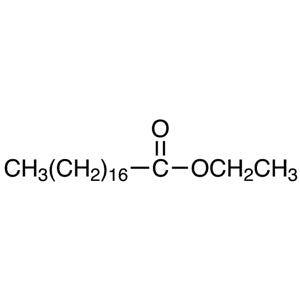
EthylStearate TCI S0365
Regular price Rp 3.180.450,00Regular priceRp 2.223.900,00Sale price Rp 3.180.450,00 -
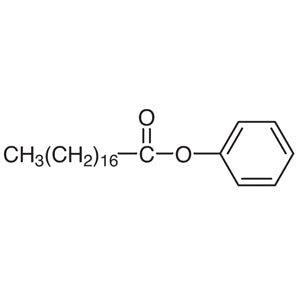
PhenylStearate TCI O0007
Regular price From Rp 3.446.100,00Regular priceRp 2.409.750,00Sale price From Rp 3.446.100,00 -
DodecylStearate TCI S0078
Regular price Rp 689.850,00Regular priceRp 481.950,00Sale price Rp 689.850,00 -
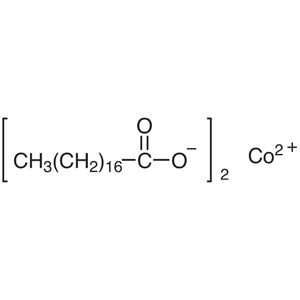
Cobalt(II)Stearate TCI S0393
Regular price Rp 557.550,00Regular priceRp 389.550,00Sale price Rp 557.550,00 -
GlycidylStearate TCI S0366
Regular price From Rp 3.976.350,00Regular priceRp 2.780.400,00Sale price From Rp 3.976.350,00 -
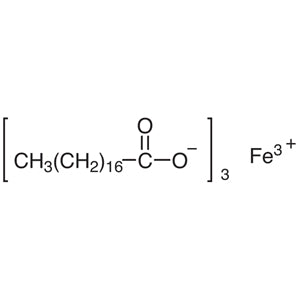
Iron(III)Stearate TCI S0256
Regular price From Rp 1.298.850,00Regular priceRp 908.250,00Sale price From Rp 1.298.850,00 -
Magnesium(II)Stearate TCI S0238
Regular price From Rp 477.750,00Regular priceRp 333.900,00Sale price From Rp 477.750,00 -
CalciumStearate TCI S0236
Regular price From Rp 610.050,00Regular priceRp 426.300,00Sale price From Rp 610.050,00