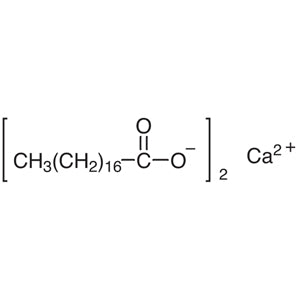
Calcium Stearate from TCI, product code S0236, is the calcium salt of stearic acid and one of the best-known metal soaps. It does not dissolve in water and is strongly hydrophobic because two long hydrocarbon chains are bound to a single calcium ion. In the laboratory, Calcium Stearate is used as a formulation ingredient and as a study material in polymer, pharmaceutical and construction-material research. It is also useful in other studies that need a solid lubricant, a mold release agent or a water repellent.
Researchers often choose Calcium Stearate because it is less hazardous than heavy-metal soaps and it can do several jobs. In polymer processing, it acts as a lubricant that reduces friction. In polyolefins, it works as an acid scavenger that neutralizes leftover acidic catalyst. It is also a stabilizer component for PVC in calcium-zinc systems that contain no heavy metals. Because it repels water, it is also used as an anti-caking agent in powders and as a water-repellent additive in cement-based materials. This range of uses makes it a practical reference material for many research programs.
In Indonesia, Calcium Stearate is relevant to chemical engineering, materials engineering and civil engineering laboratories at universities. It is also relevant to research and development laboratories working on polymer, pharmaceutical and building-material formulations. Students and researchers use it in coursework, final projects and applied studies of lubrication, polymer stabilization and water resistance. Because it is a TCI-grade reagent, results from different research groups can be compared more reliably. It also fits well into both teaching and industrial-collaboration laboratory settings across the country.
TCI brochures (PDF)
- Lipids 2025-12-17 · p. 7
- Polymer processing studies: Calcium Stearate is a solid lubricant that reduces friction when polymers are processed, so researchers can study how it affects flow behavior and processing.
- Acid scavenging in polyolefins: it neutralizes leftover acidic catalyst in polyolefin samples, which lets laboratories study how acid scavengers improve polymer stability and protect processing equipment.
- PVC stabilizer research: as a component of calcium-zinc stabilizer systems, it supports work on PVC formulations that contain no heavy metals and are less hazardous than older stabilizer chemistries.
- Anti-caking studies for powders: its strongly hydrophobic character makes it a good model additive for studying how powders resist clumping and keep flowing during storage and handling.
- Water-repellent cement-based materials: civil engineering laboratories use it as a water-repellent additive to study how mortar and concrete absorb water and hold up over time.
| Brand | TCI (product code S0236) |
|---|---|
| CAS number | 1592-23-0 |
| Molecular formula | — |
| Purity | — |
| Category | Chemistry > Building Blocks > Non-Heterocyclic Building Blocks |
| Pack sizes | as listed on the product page |
| Physical form | solid metal soap that does not dissolve in water |
| Storage | keep tightly closed in a cool, dry place |
Store Calcium Stearate in its original, tightly sealed container in a cool, dry, well-ventilated area, away from moisture, heat sources and strong oxidizing agents. If you move the material to another container, use a clean, dry, chemically compatible one and label it clearly with the product name and CAS number. Follow standard laboratory practice: wear safety glasses, gloves and a lab coat. Avoid creating or breathing in dust, and weigh the material in a well-ventilated area or under local exhaust. Clean up spills promptly to prevent slippery surfaces. Always read the supplier's Safety Data Sheet before use, and dispose of waste according to institutional and local regulations.
—
Produk Terkait
-
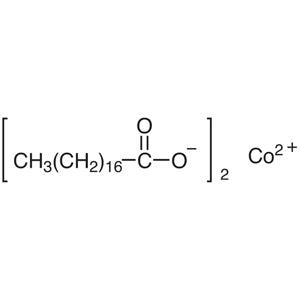
Cobalt(II)Stearate TCI S0393
Regular price Rp 557.550,00Regular price -
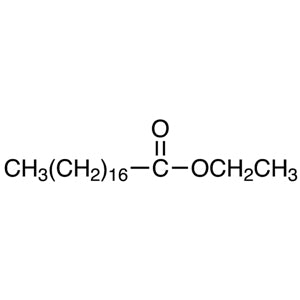
EthylStearate TCI S0365
Regular price Rp 3.180.450,00Regular price -
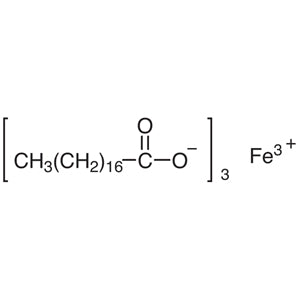
Iron(III)Stearate TCI S0256
Regular price From Rp 1.298.850,00Regular price -
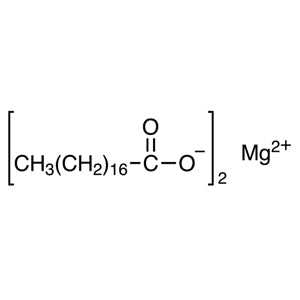
Magnesium(II)Stearate TCI S0238
Regular price From Rp 477.750,00Regular price -
BariumStearate TCI S0235
Regular price From Rp 477.750,00Regular price -
ButylStearate TCI S0077
Regular price From Rp 477.750,00Regular price -
PotassiumStearate(containsPotassiumPalmitate) TCI P3165
Regular price From Rp 769.650,00Regular price -
PhenylStearate TCI O0007
Regular price From Rp 3.446.100,00Regular price