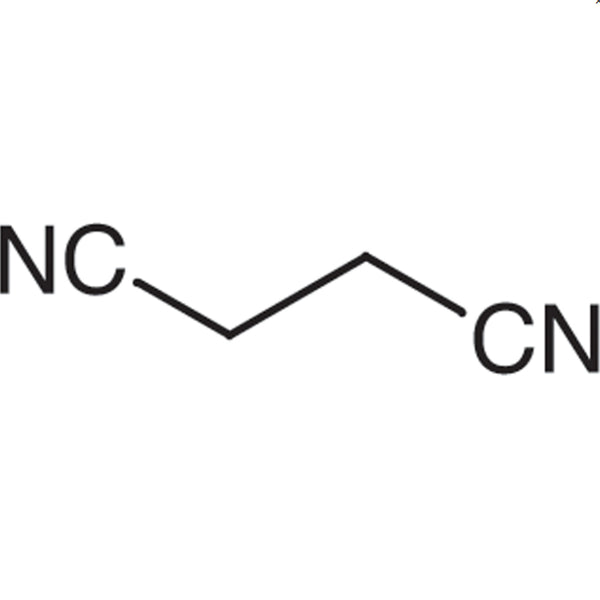
Succinonitrile from TCI is a simple aliphatic dinitrile with two nitrile groups, one at each end of an ethylene chain. TCI lists it among its non-heterocyclic building blocks. Its nitrile groups can be turned into amines, carboxylic acids, amides or heterocycles through a range of standard reactions, which makes it a useful starting material for synthesis. Beyond synthetic chemistry, succinonitrile is also widely known in electrochemical research, especially in developing electrolytes for lithium batteries. It suits both organic synthesis and materials research laboratories.
What sets succinonitrile apart is that it behaves as a plastic crystal at room temperature. Its molecules can still rotate within the solid lattice, so the material can dissolve lithium salts and conduct ions even though it is a solid. Its high polarity also makes it an attractive solvent or additive for solid and gel electrolytes. In synthesis, its two symmetrical nitrile groups allow chemists to build bifunctional compounds such as diamines, which are useful as monomers. Together, these properties give researchers one compound that serves both electrochemistry and synthetic chemistry, with the consistent quality associated with the TCI brand.
Interest in lithium batteries and electric vehicles continues to grow in Indonesia. This makes succinonitrile relevant to energy research laboratories at universities and research institutions working on new electrolyte systems. University organic chemistry groups also use it as a building block in synthesis projects, coursework research and graduate theses. Polymer and materials science teams may use it as a precursor to bifunctional monomers. AMI Scientific supplies this TCI product to support research laboratories across Indonesia.
Related TCI products
- Solid-state electrolyte research: As a plastic crystal at room temperature, succinonitrile can dissolve lithium salts and conduct ions while staying solid, which makes it a valuable matrix for lithium battery electrolyte studies.
- Gel polymer electrolyte development: Its high polarity makes it an attractive solvent or additive in gel electrolyte formulations, helping researchers study ion transport and electrolyte performance in lithium battery systems.
- Organic synthesis building block: The two terminal nitrile groups can be converted through standard reactions into amines, carboxylic acids or amides, which makes it a versatile starting material for multistep synthesis.
- Heterocycle construction: Nitrile groups can be used to build heterocyclic structures, so this non-heterocyclic building block is useful for synthetic chemists preparing nitrogen-containing ring systems for further research.
- Bifunctional monomer preparation: Because its two nitrile groups are symmetrical, succinonitrile allows the preparation of bifunctional compounds such as diamines, which are useful as monomers in polymer and materials research.
| Brand | TCI (product code S0109) |
|---|---|
| CAS number | 110-61-2 |
| Molecular formula | — |
| Purity | — |
| Category | Chemistry > Building Blocks > Non-Heterocyclic Building Blocks |
| Pack sizes | please refer to the options listed on the product page |
| Physical form | solid (plastic crystal at room temperature) |
| Storage | keep tightly closed in a cool, dry, well-ventilated place; follow the TCI label and SDS |
Store succinonitrile in its original, tightly closed container in a cool, dry and well-ventilated area, away from heat sources, moisture and incompatible materials such as strong oxidizers, acids and bases. Return the container to storage promptly after use and keep the label legible. Handle the material in a fume hood or a well-ventilated workspace, wearing chemical-resistant gloves, safety glasses and a lab coat. Avoid inhaling dust or vapor and avoid contact with skin and eyes. Before use, read the Safety Data Sheet (SDS) supplied with the product, and dispose of waste according to institutional and local regulations.
—
Produk Terkait
-
Tetramethylsuccinonitrile TCI T0155
Regular price Rp 8.162.700,00Regular price -
meso-2,3-Diphenylsuccinonitrile TCI D2219
Regular price Rp 1.881.600,00Regular price -
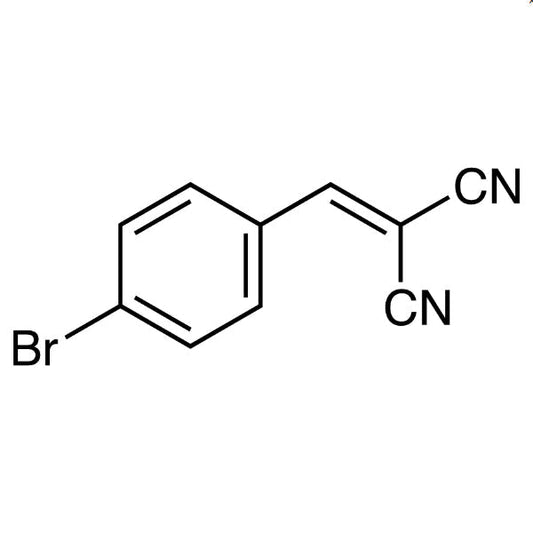
2-(4-Bromobenzylidene)malononitrile TCI B4712
Regular price Rp 4.506.600,00Regular price -
tert-Butylmalononitrile TCI B1584
Regular price From Rp 2.199.750,00Regular price -
Benzalmalononitrile TCI B0947
Regular price From Rp 2.254.350,00Regular price -
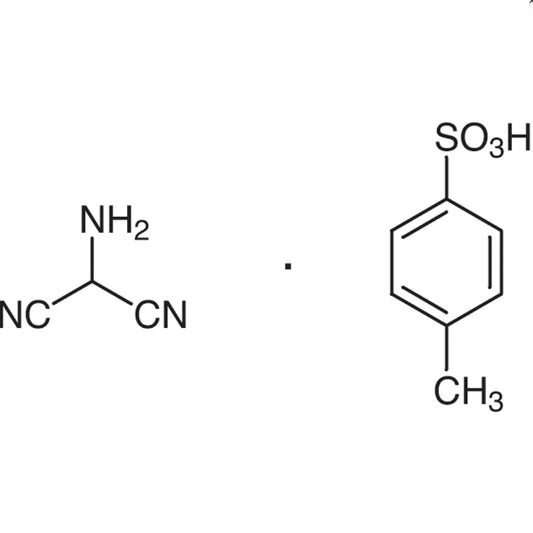
Aminomalononitrilep-Toluenesulfonate TCI A1119
Regular price From Rp 2.041.200,00Regular price -
3-Aminocrotononitrile TCI A0944
Regular price From Rp 743.400,00Regular price -
Pentadecanonitrile TCI P0871
Regular price From Rp 664.650,00Regular price