3-Aminocrotononitrile is a chemical compound widely used as a building block in the synthesis of complex molecules. It plays a crucial role in organic chemistry and pharmacology, serving as a versatile intermediate for various chemical reactions. Its unique molecular structure enables it to participate in substitution, addition, and condensation reactions, making it an essential tool for researchers aiming to construct intricate molecular frameworks. This compound is particularly valuable in the development of new pharmaceuticals and industrial chemicals due to its reactivity and structural adaptability.
The chemical properties of 3-Aminocrotononitrile make it a preferred choice for high-efficiency chemical reactions. It exhibits good solubility in organic solvents, which simplifies processing and separation techniques in laboratory settings. Its stability under specific conditions ensures reliable performance during synthesis processes. However, its reactivity also means it requires careful handling to prevent unintended side reactions. These characteristics position it as a key component in advanced chemical research, especially in the field of bioactive compound development.
In Indonesian laboratories, 3-Aminocrotononitrile is extensively used by researchers and educational institutions for research and development purposes. It is a fundamental material in the study of complex organic molecules and the creation of bioactive compounds. Its availability and utility make it a standard item in many research laboratories across Indonesia, supporting both academic and industrial chemical innovation.
Related TCI products
- TCI C3132 627-26-9 trans-Crotononitrile (contains ca. 20% cis- isomer)
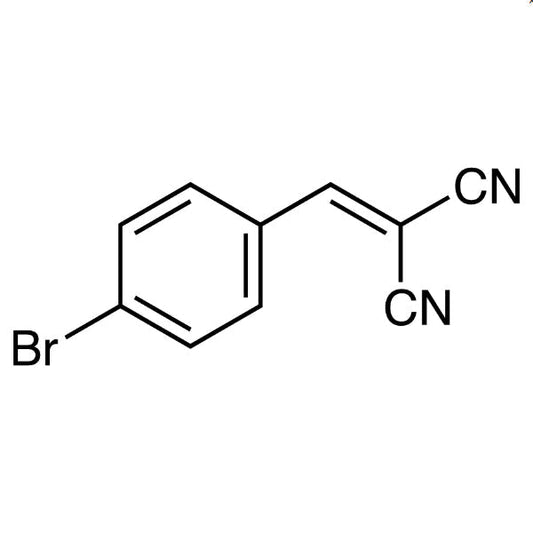
- TCI B4712 2826-24-6 2-(4-Bromobenzylidene)malononitrile
- TCI B1584 4210-60-0 tert-Butylmalononitrile
- TCI B0947 2700-22-3 Benzalmalononitrile
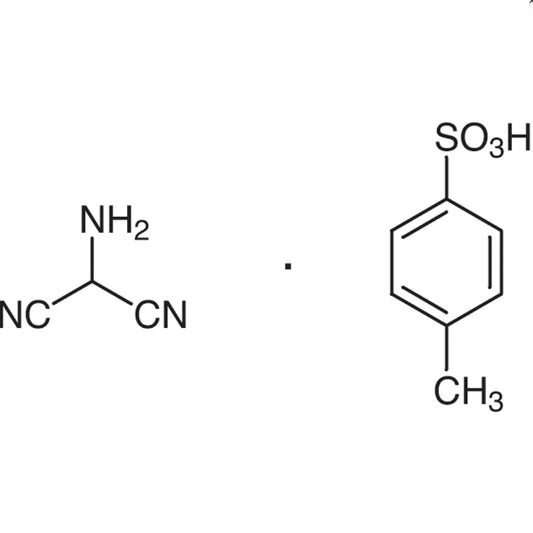
- TCI A1119 5098-14-6 Aminomalononitrile p-Toluenesulfonate
- TCI T0155 3333-52-6 Tetramethylsuccinonitrile
- Organic synthesis of complex molecules requiring nitrile functional groups due to its reactivity and structural versatility.
- Development of pharmaceutical compounds where precise molecular structure is essential for biological activity.
- Research in pharmacology for the synthesis of bioactive agents and drug candidates.
- Industrial chemical production where stable and reactive intermediates are required for large-scale synthesis.
- Educational use in academic institutions for teaching and experimental research in organic chemistry.
| Brand | TCI |
|---|---|
| CAS number | 1118-61-2 |
| Molecular formula | — |
| Purity | — |
| Category | Chemistry > Building Blocks > Non-Heterocyclic Building Blocks |
| Pack sizes | Available in various quantities as per supplier specifications |
| Physical form | Liquid |
| Storage | Store in a cool, dry place away from direct sunlight and incompatible materials |
3-Aminocrotononitrile should be stored in a cool, dry environment, away from direct sunlight and sources of heat. It is recommended to keep it in a sealed container to prevent exposure to air and moisture. Due to its reactivity, it should be stored separately from strong oxidizing agents and incompatible substances. Laboratory personnel should wear appropriate personal protective equipment, including gloves and safety goggles, when handling this compound. Proper ventilation is essential to minimize inhalation risks. The compound should not be stored in areas where it could be exposed to high temperatures or physical damage. Regular monitoring of storage conditions is advised to ensure the stability and safety of the material.
—
Produk Terkait
-
trans-Crotononitrile(containsca.20%cis-isomer) TCI C3132
Regular price Rp 1.272.600,00Regular priceRp 905.100,00Sale price Rp 1.272.600,00 -
2-(4-Bromobenzylidene)malononitrile TCI B4712
Regular price Rp 4.559.100,00Regular priceRp 3.203.550,00Sale price Rp 4.559.100,00 -
tert-Butylmalononitrile TCI B1584
Regular price Rp 2.252.250,00Regular priceRp 1.590.750,00Sale price Rp 2.252.250,00 -
Benzalmalononitrile TCI B0947
Regular price Rp 2.306.850,00Regular priceRp 1.628.550,00Sale price Rp 2.306.850,00 -
Aminomalononitrilep-Toluenesulfonate TCI A1119
Regular price Rp 2.093.700,00Regular priceRp 1.479.450,00Sale price Rp 2.093.700,00 -
Tetramethylsuccinonitrile TCI T0155
Regular price Rp 8.215.200,00Regular priceRp 5.760.300,00Sale price Rp 8.215.200,00 -
Succinonitrile TCI S0109
Regular price Rp 717.150,00Regular priceRp 516.600,00Sale price Rp 717.150,00 -
Pentadecanonitrile TCI P0871
Regular price Rp 717.150,00Regular priceRp 516.600,00Sale price Rp 717.150,00