Tetramethylsuccinonitrile from TCI (product code T0155, CAS 3333-52-6) is an aliphatic dinitrile with two adjacent quaternary carbon atoms. Each of these carbons carries two methyl groups and one nitrile group. The compound is well known in polymer chemistry as the radical recombination product that forms when azo initiators such as AIBN (azobisisobutyronitrile) decompose. In the laboratory, tetramethylsuccinonitrile serves as an analytical reference compound, a non-heterocyclic building block, and a model substance for studying free-radical reaction mechanisms.
Researchers choose this material mainly because it is so closely tied to radical initiator chemistry. The two 2-cyanoprop-2-yl radicals released by AIBN can recombine inside the solvent "cage" to form tetramethylsuccinonitrile, so the amount of this compound present indicates initiation efficiency and the strength of the cage effect. Its symmetrical structure, built around quaternary carbons, makes it relatively stable and easy to identify by gas chromatography and by spectroscopic methods. Its two nitrile groups can also be converted into amides, carboxylic acids, or amines for further synthetic work.
In Indonesia, this compound is relevant to polymer chemistry and chemical engineering laboratories that use AIBN in polymerization work. University research groups studying radical kinetics, initiator efficiency, and cage effects can use it as an authentic reference standard when they identify by-products in reaction mixtures. Synthetic organic chemistry laboratories can also use it as a compact dinitrile building block. Quality control and analytical laboratories that characterize residues from AIBN-initiated processes will find it useful for confirming peak assignments in chromatographic analysis.
- Analytical reference standard: tetramethylsuccinonitrile is the known recombination product of AIBN-derived radicals, so it confirms by-product peaks in gas chromatography and spectroscopic analysis.
- Initiator efficiency studies: measuring how much of this compound forms during AIBN decomposition shows how many radicals are lost to recombination rather than starting polymer chains.
- Cage effect research: because it forms when 2-cyanoprop-2-yl radicals recombine inside the solvent cage, it is a direct marker for studying solvent cage phenomena in radical chemistry.
- Free-radical mechanism studies: its well-defined origin and stable, symmetrical quaternary-carbon structure make it a dependable model compound for teaching and researching radical reaction pathways.
- Non-heterocyclic building block synthesis: its two nitrile groups can be converted into amides, carboxylic acids, or amines, which makes it a versatile starting material for synthetic laboratory work.
| Brand | TCI (product code T0155) |
|---|---|
| CAS number | 3333-52-6 |
| Molecular formula | — |
| Purity | — |
| Category | Chemistry > Building Blocks > Non-Heterocyclic Building Blocks |
| Pack sizes | available in TCI's standard pack sizes; please confirm the options when ordering |
| Physical form | — |
| Storage | keep tightly closed in a cool, dry, well-ventilated place, following the TCI Safety Data Sheet |
- Chemical class: aliphatic dinitrile with two adjacent quaternary carbons
Store tetramethylsuccinonitrile in its original, tightly sealed TCI container. Keep it in a cool, dry, well-ventilated area away from heat sources, direct sunlight, and incompatible substances such as strong oxidizers, strong acids, and strong bases. Like other organic nitriles, it should be handled with care. Work in a fume hood or a well-ventilated area, and wear suitable gloves, safety glasses, and a laboratory coat. Avoid inhaling dust or vapor and avoid contact with skin and eyes. Label all containers clearly and keep them out of reach of unauthorized personnel. Always read the product's Safety Data Sheet before use, and dispose of waste according to local chemical waste regulations.
—
Produk Terkait
-
Succinonitrile TCI S0109
Regular price From Rp 717.150,00Regular priceRp 516.600,00Sale price From Rp 717.150,00 -
meso-2,3-Diphenylsuccinonitrile TCI D2219
Regular price Rp 1.934.100,00Regular priceRp 1.368.150,00Sale price Rp 1.934.100,00 -
MethylsuccinicAcid TCI M0430
Regular price Rp 2.677.500,00Regular priceRp 1.887.900,00Sale price Rp 2.677.500,00 -
2,2-DimethylsuccinicAnhydride TCI D4417
Regular price From Rp 1.405.950,00Regular priceRp 998.550,00Sale price From Rp 1.405.950,00 -
2,2-DimethylsuccinicAcid TCI D2184
Regular price From Rp 662.550,00Regular priceRp 478.800,00Sale price From Rp 662.550,00 -
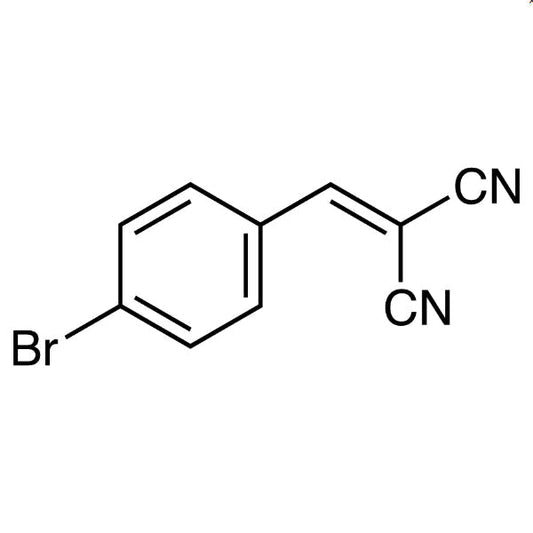
2-(4-Bromobenzylidene)malononitrile TCI B4712
Regular price Rp 4.559.100,00Regular priceRp 3.203.550,00Sale price Rp 4.559.100,00 -
tert-Butylmalononitrile TCI B1584
Regular price From Rp 2.252.250,00Regular priceRp 1.590.750,00Sale price From Rp 2.252.250,00 -
Benzalmalononitrile TCI B0947
Regular price From Rp 2.306.850,00Regular priceRp 1.628.550,00Sale price From Rp 2.306.850,00