Lithium Stearate from TCI, product code S0237, is the lithium salt of stearic acid and belongs to the metal soap family. It is best known as the thickening agent in lithium-based greases. TCI also lists it in its battery materials category. In the laboratory, it is used as a study material in research on lubricants, polymers and energy storage materials. It is an easy-to-handle organolithium compound and a convenient lithium source in the form of a fatty acid salt.
Researchers choose Lithium Stearate because it combines a small lithium ion with a long, hydrophobic hydrocarbon chain. In oil, lithium soaps form a fibrous network that traps the base oil, producing greases with good water resistance and mechanical stability. In battery materials research, fatty acid-based lithium compounds are of interest as additives, surface coating agents or lithium precursors in material synthesis. Whether it suits a particular system still has to be confirmed through the researcher's own experiments.
For laboratories in Indonesia, this material is relevant as battery and electric vehicle research continues to grow across the country. University research groups, materials science laboratories and industrial R&D teams can use Lithium Stearate in exploratory studies of electrode coatings, electrolyte additives and lithium-containing precursors. It is also useful in lubricant formulation work. Its well-defined identity as a TCI reagent makes it a sound reference material for comparative and reproducible experiments.
TCI brochures (PDF)
- Lithium Electrolytes 2026-04-06 · p. 1
- Battery Research Reagents 2026-09-18 · p. 3
- Lipids 2025-12-17 · p. 7
Related TCI products
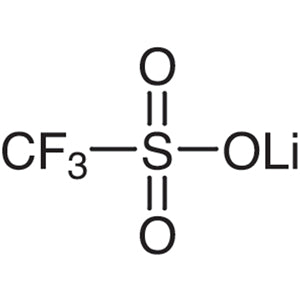
- TCI T1548 33454-82-9 Lithium Trifluoromethanesulfonate
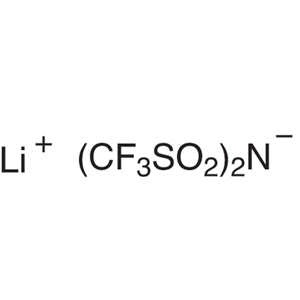
- TCI B2542 90076-65-6 Lithium Bis(trifluoromethanesulfonyl)imide
- TCI P0659 2922-61-4 Lithium Pyruvate Monohydrate [Guaranteed for Standard to GOT, GPT]
- TCI N0710 131651-65-5 Lithium Nonafluoro-1-butanesulfonate
- TCI L0420 176719-70-3 Lithium [(Nonafluorobutyl)sulfonyl][(trifluoromethyl)sulfonyl]azanide
- TCI L0418 LATSP (Li1+x+yAlxTi2-xSiyP3-yO12)
- Lubricant and grease research: Lithium Stearate is the classic thickener for lithium-based greases, so it suits studies of how soap fibers trap base oil and affect water resistance.
- Battery materials research: as a fatty acid-based lithium compound, it can be studied as an additive or surface coating agent, with suitability confirmed through the researcher's own experimental evaluation.
- Lithium precursor studies: it provides lithium as a fatty acid salt, making it a candidate lithium source when researchers prepare and compare lithium-containing materials.
- Polymer research: its combination of a lithium ion and a long hydrophobic chain makes it useful for studying how metal soaps interact with polymer matrices and formulations.
- Teaching and reference work: as a well-characterized metal soap from TCI, it serves as a practical example compound for illustrating the structure and behavior of lithium soaps.
| Brand | TCI (product code S0237) |
|---|---|
| CAS number | 4485-12-5 |
| Molecular formula | — |
| Purity | — |
| Category | Materials Science > Battery Materials > Battery Electrolytes |
| Pack sizes | as offered by TCI; please confirm available sizes when ordering |
| Physical form | — |
| Storage | keep tightly closed in a cool, dry place; follow the TCI Safety Data Sheet |
- Chemical class: lithium salt of stearic acid (metal soap)
Keep Lithium Stearate in its original, tightly sealed container in a cool, dry and well-ventilated area, away from moisture, heat sources and incompatible substances such as strong oxidizing agents. Reseal containers promptly after use to protect the material from humidity and contamination. Wear standard laboratory protective equipment, including gloves, safety glasses and a lab coat. Avoid creating or breathing in dust, and handle open material in a fume hood or ventilated area where possible. Always read the TCI Safety Data Sheet before use and dispose of waste according to local regulations and institutional procedures.
—
Produk Terkait
-
LithiumTrifluoromethanesulfonate TCI T1548
Regular price Rp 1.485.750,00Regular priceRp 1.038.450,00Sale price Rp 1.485.750,00 -
LithiumBis(trifluoromethanesulfonyl)imide TCI B2542
Regular price From Rp 1.483.650,00Regular priceRp 1.053.150,00Sale price From Rp 1.483.650,00 -
LithiumPyruvateMonohydrate[GuaranteedforStandardtoGOT,GPT] TCI P0659
Regular price Rp 2.147.250,00Regular priceRp 1.517.250,00Sale price Rp 2.147.250,00 -
LithiumNonafluoro-1-butanesulfonate TCI N0710
Regular price Rp 1.803.900,00Regular priceRp 1.261.050,00Sale price Rp 1.803.900,00 -
Lithium[(Nonafluorobutyl)sulfonyl][(trifluoromethyl)sulfonyl]azanide TCI L0420
Regular price From Rp 3.392.550,00Regular priceRp 2.387.700,00Sale price From Rp 3.392.550,00 -
LATSP(Li1+x+yAlxTi2-xSiyP3-yO12) TCI L0418
Regular price Rp 5.034.750,00Regular priceRp 3.520.650,00Sale price Rp 5.034.750,00 -
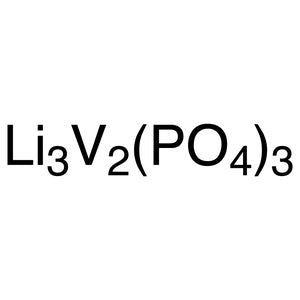
LithiumVanadiumPhosphate(Li3V2(PO4)3) TCI L0417
Regular price From Rp 3.683.400,00Regular priceRp 2.575.650,00Sale price From Rp 3.683.400,00 -
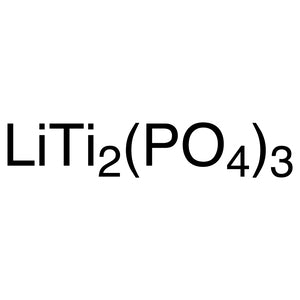
LithiumTitaniumPhosphate(LiTi2(PO4)3) TCI L0416
Regular price From Rp 3.870.300,00Regular priceRp 2.705.850,00Sale price From Rp 3.870.300,00