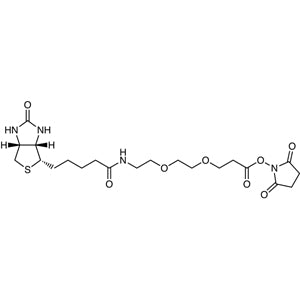
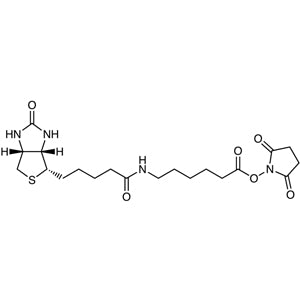
N-Succinimidyl D-Biotinate (N-SBD) is a chemical compound widely used in biochemical research, particularly in molecular biology and immunology. It serves as a key reagent for conjugating biological molecules such as proteins, lipids, and carbohydrates through a succinimidyl activation reaction. In the laboratory, N-SBD plays a critical role in modifying and identifying biomolecules that exhibit affinity for biotin. Its ability to form stable covalent bonds with amino groups makes it an essential tool for various analytical techniques.
The chemical properties of N-SBD, including its stability and high reactivity, make it a preferred choice for laboratory applications. Its ability to react selectively with amino groups ensures efficient and specific conjugation reactions under controlled laboratory conditions. This reagent is known for its reliability and consistency, which are crucial for reproducible results in scientific research. The structural characteristics of N-SBD allow it to be used in a wide range of experimental setups, making it a versatile component in biochemical studies.
In Indonesian laboratories, N-SBD is extensively used in biochemical research, particularly in higher education institutions and research centers. It is a key reagent for studies involving molecular binding, protein modification, and the development of analytical techniques that require specific reagents. Its relevance in these contexts underscores its importance in advancing scientific research and innovation in the region.
TCI brochures (PDF)
- Oligosaccharides Applied to Sugar-conjugates 2024-12-20 · p. 2
- Europium Fluorescent Labeling Reagent and Labeled Probes 2025-01-30 · p. 4
- Streptavidins and Related Reagents 2025-02-28 · p. 3
- Biotinylation Reagents and Avidins 2025-06-26 · p. 1
- Bioconjugation Reagents 2026-07-07 · p. 2
- Reagents for Glyco Chemistry & Biology 5th Edition · p. 147
Related TCI products
- TCI S0956 89889-52-1 N-Succinimidyl N-[6-(Biotinamido)hexanoyl]-6-aminohexanoate
- TCI S0955 596820-83-6 N-Succinimidyl 9-(Biotinamido)-4,7-dioxanonanoate
- TCI S0490 72040-63-2 N-Succinimidyl 6-Biotinamidohexanoate
- TCI H0623 6066-82-6 N-Hydroxysuccinimide
- TCI A2523 875770-34-6 Biotin-PEG3-Azide
- TCI B5546 1309649-57-7 Biotin-PEG4-Azide
- ELISA techniques benefit from N-SBD as it enables the conjugation of antibodies to biotinylated molecules, enhancing detection sensitivity and specificity.
- Western blot analysis utilizes N-SBD for labeling proteins, allowing for precise identification and quantification in complex biological samples.
- Biotinylated probe development relies on N-SBD to create probes that can specifically bind to streptavidin, improving the accuracy of molecular interactions.
- Molecular interaction studies use N-SBD to investigate binding affinities between biomolecules, providing insights into biological processes.
- Protein modification experiments employ N-SBD to attach biotin tags to proteins, facilitating downstream applications such as purification and detection.
| Brand | TCI |
|---|---|
| CAS number | 35013-72-0 |
| Molecular formula | — |
| Purity | — |
| Category | Chemistry > Chemical Biology > Glycoscience |
| Pack sizes | Available in various quantities as per standard laboratory requirements |
| Physical form | Solid powder |
| Storage | Store at room temperature in a dry, cool place away from moisture and light |
N-SBD should be stored in a dry, cool environment, away from moisture and direct light to maintain its chemical stability. It is recommended to keep the reagent in a tightly sealed container to prevent exposure to air and humidity. When handling N-SBD, laboratory personnel should wear appropriate personal protective equipment, such as gloves and safety goggles, to ensure safety. The compound is generally non-hazardous under normal conditions, but care should be taken to avoid inhalation or contact with skin. Proper labeling of storage containers is essential to prevent accidental use. Regular monitoring of storage conditions ensures that the reagent remains effective for its intended applications.
—
Product Categories
Produk Terkait
-
N-SuccinimidylN-[6-(Biotinamido)hexanoyl]-6-aminohexanoate TCI S0956
Regular price From Rp 3.815.700,00Regular priceRp 2.683.800,00Sale price From Rp 3.815.700,00 -
N-Succinimidyl9-(Biotinamido)-4,7-dioxanonanoate TCI S0955
Regular price From Rp 3.419.850,00Regular priceRp 2.406.600,00Sale price From Rp 3.419.850,00 -
N-Succinimidyl6-Biotinamidohexanoate TCI S0490
Regular price From Rp 1.431.150,00Regular priceRp 1.016.400,00Sale price From Rp 1.431.150,00 -
N-Hydroxysuccinimide TCI H0623
Regular price From Rp 1.220.100,00Regular priceRp 868.350,00Sale price From Rp 1.220.100,00 -
Biotin-PEG3-Azide TCI A2523
Regular price Rp 4.373.250,00Regular priceRp 3.073.350,00Sale price Rp 4.373.250,00 -
Biotin-PEG4-Azide TCI B5546
Regular price Rp 7.949.550,00Regular priceRp 5.574.450,00Sale price Rp 7.949.550,00 -
N-(2,2,2-Trichloroethoxycarbonyloxy)succinimide TCI T2713
Regular price Rp 2.173.500,00Regular priceRp 1.535.100,00Sale price Rp 2.173.500,00 -
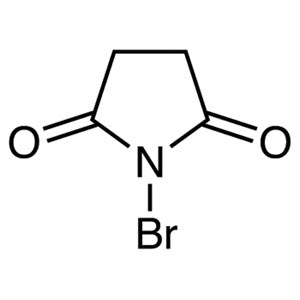
N-Bromosuccinimide TCI B0656
Regular price From Rp 530.250,00Regular priceRp 386.400,00Sale price From Rp 530.250,00