


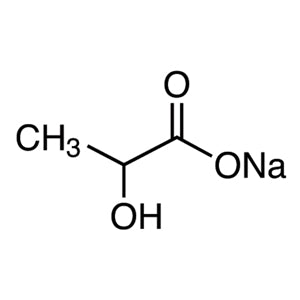
Sodium DL-Lactate (72-17-3) is a chemical compound widely used in laboratory settings for its versatile applications in chemical experiments and research. As a sodium salt of lactic acid, it is soluble in water and serves as an essential reagent in organic synthesis. Its ability to act as a pH buffer and provide a source of sodium ions makes it a valuable tool in various chemical processes. This compound is commonly used in laboratory environments to prepare specific solutions required for chemical analysis or other experimental procedures. Its stability and compatibility with a range of chemical reactions make it a reliable choice for researchers.
Sodium DL-Lactate is preferred due to its chemical stability, solubility in water, and non-toxic nature. These properties ensure safe handling and effective use in laboratory conditions. Its role as a pH regulator and its utility in organic synthesis contribute to its popularity among chemists. The compound’s high purity and consistent availability further enhance its appeal for use in both academic and industrial research. Sodium DL-Lactate is also known for its reliability in maintaining the integrity of chemical reactions and supporting accurate analytical results.
In Indonesian laboratories, Sodium DL-Lactate is commonly used in chemical research, including the synthesis of organic compounds, pH testing, and chemical analysis. It plays a crucial role in supporting various experimental protocols and is a standard reagent in many laboratory workflows. Its widespread application in both academic and industrial settings highlights its importance in the chemical research landscape of Indonesia.
TCI brochures (PDF)
- Pharmaceutical Ingredients for Research and Experimental Use 2026-03-09 · p. 48
- Reagents for Biological Research 2025-03-11 · p. 50
- Organic Synthesis: Sodium DL-Lactate is used in the preparation of organic compounds due to its ability to act as a pH buffer and provide sodium ions.
- pH Regulation: It is widely used to adjust and maintain pH levels in chemical reactions and solutions.
- Analytical Chemistry: Sodium DL-Lactate is employed in the preparation of standard solutions for analytical procedures.
- Buffer Solutions: It serves as a buffer in experiments requiring stable pH conditions for accurate results.
- Industrial Research: It is used in research and development processes for its chemical stability and reactivity.
| Brand | TCI |
|---|---|
| CAS number | 72-17-3 |
| Molecular formula | — |
| Purity | — |
| Category | Chemistry > Building Blocks > Non-Heterocyclic Building Blocks |
| Pack sizes | 60% in water |
| Physical form | Solution |
| Storage | Store in a cool, dry place away from direct sunlight |
Sodium DL-Lactate should be stored in a cool, dry place away from direct sunlight to maintain its chemical stability. It is recommended to use airtight containers to prevent moisture absorption and contamination. Since it is a water-based solution, it should be kept in a sealed container to avoid evaporation and degradation. General laboratory precautions include wearing appropriate personal protective equipment when handling the compound. It is non-toxic but should be handled with care to ensure safe laboratory practices. Proper storage and handling are essential to maintain its effectiveness and safety in laboratory applications.
—
Product Categories
- Biochemicals and ReagentsPharmaceutical Research Reagents (for Experimental Use)Pharmaceutical Research Reagents (Others)
- Biochemicals and ReagentsPharmaceutical Research Reagents (for Experimental Use)Cosmetic Research Reagents (for Experimental Use)
- Pharmaceutical Development and Drug Discovery ResearchPharmaceutical Research Reagents (for Experimental Use)Pharmaceutical Research Reagents (Others)
- Pharmaceutical Development and Drug Discovery ResearchPharmaceutical Research Reagents (for Experimental Use)Cosmetic Research Reagents (for Experimental Use)
Produk Terkait
-
TetradecylLactate TCI T2231
Regular price Rp 848.400,00Regular priceRp 593.250,00Sale price Rp 848.400,00 -
PropylLactate TCI L0121
Regular price Rp 2.545.200,00Regular priceRp 1.779.750,00Sale price Rp 2.545.200,00 -
IsoamylLactate TCI L0117
Regular price Rp 1.353.450,00Regular priceRp 946.050,00Sale price Rp 1.353.450,00 -
MethylLactate TCI L0004
Regular price From Rp 903.000,00Regular priceRp 631.050,00Sale price From Rp 903.000,00 -
EthylLactate TCI L0003
Regular price From Rp 505.050,00Regular priceRp 352.800,00Sale price From Rp 505.050,00 -
ButylLactate TCI L0002
Regular price From Rp 505.050,00Regular priceRp 352.800,00Sale price From Rp 505.050,00 -
HexadecylLactate TCI H1159
Regular price From Rp 584.850,00Regular priceRp 408.450,00Sale price From Rp 584.850,00 -
Sodium3-(4-Hydroxy-3-methoxyphenyl)lactate TCI H0538
Regular price From Rp 3.445.050,00Regular priceRp 2.424.450,00Sale price From Rp 3.445.050,00


