Sodium Hypochlorite Pentahydrate (NaClO·5H₂O) is a chemical compound widely used in laboratory settings, particularly in the fields of catalysis and inorganic chemistry. This compound plays a crucial role in various chemical reactions due to its strong oxidizing properties. It is commonly employed as a reagent or an active chlorine source in chemical processes. Its versatility makes it an essential material for both qualitative and quantitative analysis in laboratory research.
The compound’s reactivity and oxidizing nature make it a preferred choice for laboratory applications. It is stable under normal conditions but sensitive to heat and moisture. Its pentahydrate form dissolves well in water, making it easy to handle and use in a wide range of chemical reactions. The solubility and reactivity of Sodium Hypochlorite Pentahydrate contribute to its effectiveness in various analytical and synthetic procedures.
In Indonesian laboratories, Sodium Hypochlorite Pentahydrate is frequently used in chemical experiments and research. Its availability and chemical properties make it a reliable material for educational and industrial applications. It is commonly found in academic and research institutions, supporting both basic and advanced chemical studies. Its role in oxidation reactions and qualitative analysis is well recognized in the local scientific community.
Advantages (TCI brochure)
- Crystalline solid capable of being weighed
- Stable for long term in a refrigerator
- Effective for the oxidations of hydroxy groups and sulfur-containing compounds
TCI brochures (PDF)
- Crystalline Hypochlorite Salt with Ease of Handling 2025-06-17 · p. 1
- Oxidizing Agents 2025-06-11 · p. 2
Related TCI products
- TCI S0965 22451-06-5 Sodium Tellurite Pentahydrate
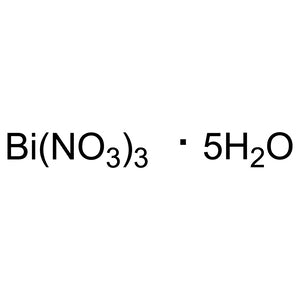
- TCI B7064 10035-06-0 Bismuth(III) Nitrate Pentahydrate
- TCI T0245 6106-07-6 L-Thyroxine Sodium Salt Pentahydrate
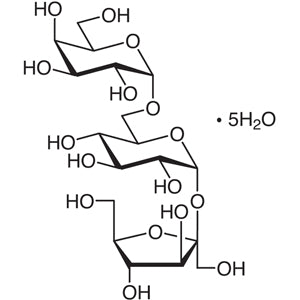
- TCI R0002 17629-30-0 D-(+)-Raffinose Pentahydrate
- TCI B4523 1537876-31-5 Bis(3-bromophenylboronic Acid) scyllo-Inositol Complex Dipotassium Pentahydrate
- TCI S0584 22189-32-8 Spectinomycin Dihydrochloride Pentahydrate
- Oxidation Reactions: Sodium Hypochlorite Pentahydrate is ideal for oxidation processes due to its strong oxidizing properties, making it suitable for breaking down organic compounds.
- Qualitative Analysis: It is used in identifying chloride ions and generating other useful compounds, supporting analytical chemistry in Indonesian labs.
- Synthesis of Chlorinated Compounds: Its active chlorine source makes it valuable for creating chlorinated derivatives in organic synthesis.
- Environmental Testing: It is applied in water and soil analysis for detecting contaminants and assessing oxidation potential.
- Disinfection and Sterilization: Its oxidizing properties make it effective for sterilizing laboratory equipment and surfaces in controlled environments.
From the TCI brochure
- Oxidation of secondary alcohols
- Syntheses of sulfonyl chlorides from disulfides or thiols
- Oxidation of sulfides
- Oxidative cleavage of 1,2-diols
- Y. 95% (1.2 eq S0939, TEMPO 0.013 eq, Bu4NHSO4 0.05 eq, CH2Cl2, 5 °C)
- Y. 96% (1.6 eq S0939, TEMPO 0.01 eq, Bu4NHSO4 0.05 eq, CH2Cl2, 15 °C)
| Brand | TCI |
|---|---|
| CAS number | 10022-70-5 |
| Molecular formula | — |
| Purity | — |
| Category | Chemistry > Catalysis and Inorganic Chemistry > Main-group Elements |
| Pack sizes | Available in standard laboratory quantities |
| Physical form | White crystalline solid |
| Storage | Store in a cool, dry place away from heat and moisture |
Data from the TCI brochure
| Yield, sulfonil klorida dari disulfida aromatik | Y. 80% (AcOH, rt) |
|---|---|
| Yield, sulfonil klorida dari tiol sikloalkil | Y. 95% (AcOH, rt) |
| Yield, pemecahan oksidatif trans 1,2-diol | Y. 93% (AcOH, rt) |
| Yield, pemecahan oksidatif cis 1,2-diol | Y. 73% (AcOH, rt) |
| Rasio produk sulfoksida (NMR) | 98% (1.1 eq NaClO (S0939), 0.3 h, CH3CN:H2O, rt) |
| Rasio produk sulfon (GC area) | 2% (1.1 eq NaClO (S0939), 0.3 h, CH3CN:H2O, rt) |
| Rasio produk sulfoksida (NMR) dengan S0939 | 0%* (substrat), 0%* (sulfoksida), >99%* (sulfon) (2.4 eq S0939, 2 h, toluena:H2O, rt) |
Source: TCI brochure RR064 (2025-06-17)
Sodium Hypochlorite Pentahydrate should be stored in a cool, dry place away from heat and moisture to maintain its stability. It is recommended to use airtight containers to prevent exposure to air and humidity. Due to its reactivity, it should be handled with care, avoiding contact with incompatible substances such as acids or reducing agents. In laboratory settings, it is important to ensure proper ventilation when working with this compound. Always wear appropriate personal protective equipment, including gloves and safety goggles, to minimize exposure risks. The compound should never be stored near flammable materials or in direct sunlight. Proper labeling and storage conditions are essential to ensure safety and maintain the integrity of the material.
References cited in the TCI brochure
- Yoshikazu Kimura. Sodium Hypochlorite Pentahydrate (NaOCl·5H2O) Crystals as an Extraordinary Oxidant for Primary and Secondary Alcohols Synlett, 2014. doi:10.1055/s-0033-1340483
- Tomohide Okada. An Efficient Method for the Preparation of Sulfonyl Chlorides: Reaction of Disulfides or Thiols with Sodium Hypochlorite Pentahydrate (NaOCl·5H2O) Crystals Chemistry Letters, 2014. doi:10.1246/cl.140899
- Masayuki Kirihara. Selective Synthesis of Sulfoxides through Oxidation of Sulfides with Sodium Hypochlorite Pentahydrate Crystals Synlett, 2015. doi:10.1055/s-0035-1560482
Produk Terkait
-
SodiumTelluritePentahydrate TCI S0965
Regular price Rp 1.167.600,00Regular priceRp 815.850,00Sale price Rp 1.167.600,00 -
Bismuth(III)NitratePentahydrate TCI B7064
Regular price From Rp 505.050,00Regular priceRp 352.800,00Sale price From Rp 505.050,00 -
L-ThyroxineSodiumSaltPentahydrate TCI T0245
Regular price Rp 1.087.800,00Regular priceRp 775.950,00Sale price Rp 1.087.800,00 -
D-(+)-RaffinosePentahydrate TCI R0002
Regular price Rp 848.400,00Regular priceRp 609.000,00Sale price Rp 848.400,00 -
Bis(3-bromophenylboronicAcid)scyllo-InositolComplexDipotassiumPentahydrate TCI B4523
Regular price From Rp 769.650,00Regular priceRp 553.350,00Sale price From Rp 769.650,00 -
SpectinomycinDihydrochloridePentahydrate TCI S0584
Regular price Rp 2.041.200,00Regular priceRp 1.442.700,00Sale price Rp 2.041.200,00 -
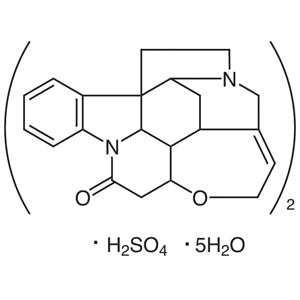
StrychnineSulfatePentahydrate TCI S0094
Regular price Rp 4.213.650,00Regular priceRp 2.962.050,00Sale price Rp 4.213.650,00 -
SodiumThiosulfatePentahydrate TCI O0522
Regular price Rp 477.750,00Regular priceRp 333.900,00Sale price Rp 477.750,00