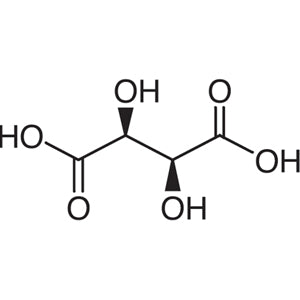
L-(+)-Tartaric Acid is a chiral compound widely used in laboratory settings, particularly in asymmetric synthesis and the production of chiral compounds. It plays a crucial role in organic chemistry by enabling the creation of optically active molecules, which are essential in pharmaceutical and chemical research. Its unique molecular structure allows it to form complexes with metals and act as a reaction control agent, making it a versatile tool for chemists. Due to its stability and reactivity, it is frequently used in the development of chiral building blocks for various synthetic applications.
This compound is preferred for its physical and chemical stability, as well as its ability to interact with a wide range of organic molecules. Its chiral nature allows for precise control over molecular structures, which is vital in the synthesis of enantiomerically pure compounds. Additionally, its solubility in organic solvents facilitates its use in diverse chemical reactions. These properties make it a reliable and effective reagent in both academic and industrial laboratory environments.
In Indonesian laboratories, L-(+)-Tartaric Acid is commonly used in organic chemistry research, especially in asymmetric synthesis and the development of pharmacological compounds. It is a key component in experiments aimed at creating chiral molecules with specific biological activities. Many research institutions and universities in Indonesia rely on this compound for its consistent performance and reliability in chemical processes.
TCI brochures (PDF)
- Chiral Auxiliaries and Optical Resolving Agents 2025-06-17 · p. 7
- Chiral Building Blocks 2025-04-14 · p. 13
Related TCI products
- Asymmetric Synthesis: L-(+)-Tartaric Acid is ideal for asymmetric synthesis due to its chiral structure, enabling the selective formation of enantiomers in organic reactions.
- Chiral Compound Development: Its ability to form chiral complexes makes it a valuable tool in the creation of optically active compounds for pharmaceutical applications.
- Metal Complex Formation: The compound's capacity to form complexes with metals supports its use in catalytic and coordination chemistry experiments.
- Organic Reaction Control: It acts as a reaction control agent, helping to regulate the direction and efficiency of chemical reactions in laboratory settings.
- Pharmaceutical Research: Its role in synthesizing chiral molecules is critical in the development of new drugs and bioactive compounds.
| Brand | TCI |
|---|---|
| CAS number | 87-69-4 |
| Molecular formula | — |
| Purity | — |
| Category | Chemistry > Asymmetric Synthesis > Chiral Building Blocks |
| Pack sizes | Available in various quantities as per standard laboratory supply |
| Physical form | Solid |
| Storage | Store in a cool, dry place away from moisture and direct sunlight |
L-(+)-Tartaric Acid should be stored in a cool, dry environment to maintain its chemical stability and prevent degradation. It is recommended to keep the compound in a sealed container to avoid moisture exposure, which could affect its purity and reactivity. Due to its solid form, it is typically stored in airtight containers made of glass or high-density polyethylene to ensure long-term preservation. In laboratory settings, it is important to handle the compound with care, using appropriate personal protective equipment such as gloves and safety goggles. While it is generally non-hazardous, proper storage and handling protocols should be followed to ensure safe usage and maintain the integrity of the compound.
—
Product Categories
- Asymmetric SynthesisChiral Building BlocksChiral Non-Heterocyclic Building Blocks
- Asymmetric SynthesisChiral Resolution ReagentsChiral Resolving Reagents
- Building BlocksChiral Building BlocksChiral Non-Heterocyclic Building Blocks
- Synthetic ReagentsAcids, Bases [Synthetic Reagents]Acids [Synthetic Reagents]
Produk Terkait
-
D-(-)-TartaricAcid TCI T0026
Regular price From Rp 980.700,00Regular priceRp 701.400,00Sale price From Rp 980.700,00 -
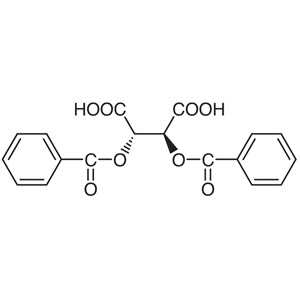
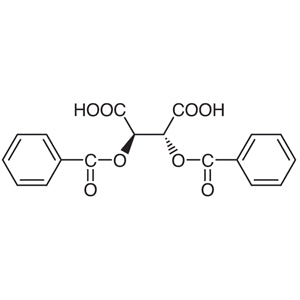
(+)-Dibenzoyl-D-tartaricAcid TCI D3826
Regular price From Rp 903.000,00Regular priceRp 631.050,00Sale price From Rp 903.000,00 -
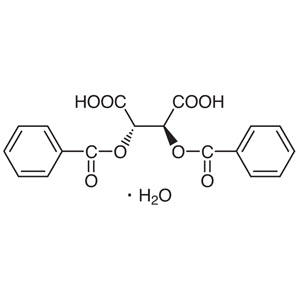
(-)-Dibenzoyl-L-tartaricAcid TCI D3492
Regular price From Rp 1.087.800,00Regular priceRp 775.950,00Sale price From Rp 1.087.800,00 -
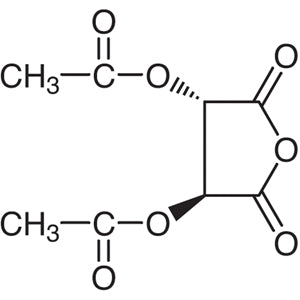
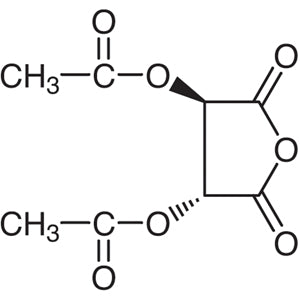
(-)-Diacetyl-D-tartaricAnhydride TCI D2645
Regular price From Rp 743.400,00Regular priceRp 519.750,00Sale price From Rp 743.400,00 -
(+)-Diacetyl-L-tartaricAnhydride TCI D1911
Regular price Rp 1.220.100,00Regular priceRp 852.600,00Sale price Rp 1.220.100,00 -
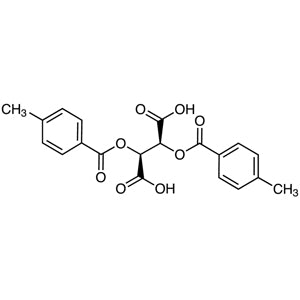
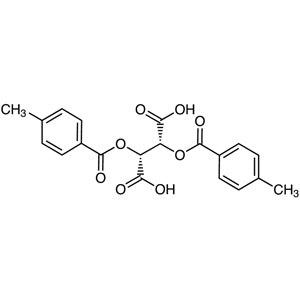
(+)-Di-p-toluoyl-D-tartaricAcid TCI D1417
Regular price From Rp 1.193.850,00Regular priceRp 834.750,00Sale price From Rp 1.193.850,00 -
(+)-Dibenzoyl-D-tartaricAcidMonohydrate TCI D1398
Regular price From Rp 637.350,00Regular priceRp 445.200,00Sale price From Rp 637.350,00 -
(-)-Di-p-toluoyl-L-tartaricAcid TCI D1387
Regular price From Rp 1.961.400,00Regular priceRp 1.371.300,00Sale price From Rp 1.961.400,00