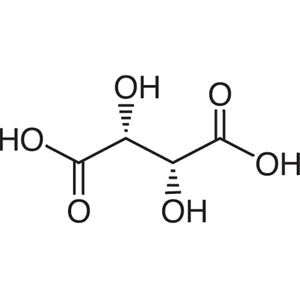
D-(-)-Tartaric Acid is a chiral compound widely used in chemical synthesis, particularly in asymmetric reactions. It serves as a key chiral building block in the development of compounds with specific stereochemistry and biological activity. In laboratory settings, this compound is essential for producing optically active substances, which are crucial in pharmaceutical and industrial chemical applications. Its role in creating enantiomerically pure products makes it indispensable in research focused on drug development and advanced organic chemistry.
The physical and chemical properties of D-(-)-Tartaric Acid make it a preferred choice for laboratory use. It has a high melting point and good solubility in organic solvents, which facilitates its handling and application in various chemical processes. Its stability and consistent quality ensure reliable results in experiments, supporting accurate and reproducible outcomes. The compound’s ability to participate in asymmetric reactions, reductions, and ester formation further enhances its utility in synthetic chemistry.
In Indonesian laboratories, D-(-)-Tartaric Acid is commonly used in research and development projects related to pharmaceuticals, fine chemicals, and specialty materials. Its chiral nature is vital for creating compounds with specific biological functions, making it a critical reagent in both academic and industrial settings. The compound’s high purity and consistent performance are essential for maintaining the integrity of experimental data and supporting scientific innovation.
TCI brochures (PDF)
- Chiral Auxiliaries and Optical Resolving Agents 2025-06-17 · p. 7
- Chiral Building Blocks 2025-04-14 · p. 13
Related TCI products
- Asymmetric synthesis is a key application where D-(-)-Tartaric Acid is used to create enantiomerically pure compounds, which are essential for drug development and pharmaceutical research.
- Chiral resolution processes benefit from this compound's ability to form diastereomeric salts, enabling the separation of enantiomers with high efficiency.
- Organic synthesis in industrial settings relies on D-(-)-Tartaric Acid for its role in catalytic and non-catalytic asymmetric reactions, enhancing reaction specificity and yield.
- Pharmaceutical research utilizes this compound to develop active pharmaceutical ingredients with specific stereochemistry, ensuring therapeutic efficacy and safety.
- Specialty chemical production requires D-(-)-Tartaric Acid for the synthesis of optically active compounds used in agrochemicals, flavors, and fragrances.
| Brand | TCI |
|---|---|
| CAS number | 147-71-7 |
| Molecular formula | — |
| Purity | — |
| Category | Chemistry > Asymmetric Synthesis > Chiral Building Blocks |
| Pack sizes | Available in various quantities as per standard laboratory requirements |
| Physical form | White crystalline solid |
| Storage | Store in a cool, dry place away from moisture and direct sunlight |
D-(-)-Tartaric Acid should be stored in a cool, dry environment to maintain its chemical stability and prevent degradation. It is recommended to use airtight containers to protect it from moisture and humidity, which can affect its purity and performance. As a solid compound, it is typically handled in a well-ventilated laboratory setting to ensure safe working conditions. Proper labeling and storage in designated chemical cabinets are essential for safety and organization. Laboratory personnel should always wear appropriate personal protective equipment when handling this compound to minimize exposure risks. Regular inspection of storage conditions ensures the compound remains suitable for use in chemical synthesis and research applications.
—
Produk Terkait
-
L-(+)-TartaricAcid TCI T0025
Regular price From Rp 530.250,00Regular priceRp 386.400,00Sale price From Rp 530.250,00 -
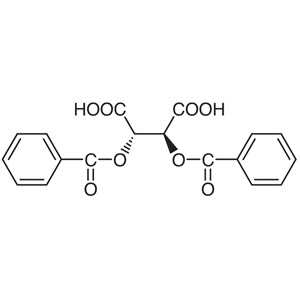
(+)-Dibenzoyl-D-tartaricAcid TCI D3826
Regular price From Rp 903.000,00Regular priceRp 631.050,00Sale price From Rp 903.000,00 -
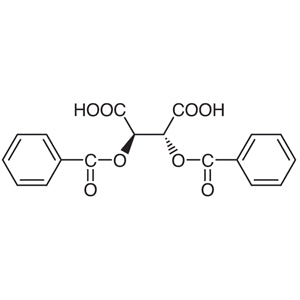
(-)-Dibenzoyl-L-tartaricAcid TCI D3492
Regular price From Rp 1.087.800,00Regular priceRp 775.950,00Sale price From Rp 1.087.800,00 -
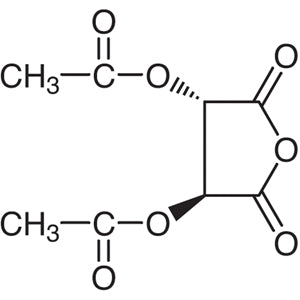
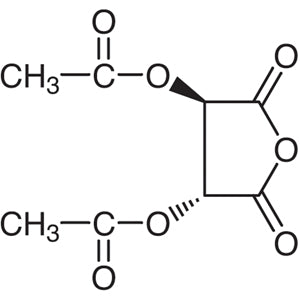
(-)-Diacetyl-D-tartaricAnhydride TCI D2645
Regular price From Rp 743.400,00Regular priceRp 519.750,00Sale price From Rp 743.400,00 -
(+)-Diacetyl-L-tartaricAnhydride TCI D1911
Regular price Rp 1.220.100,00Regular priceRp 852.600,00Sale price Rp 1.220.100,00 -
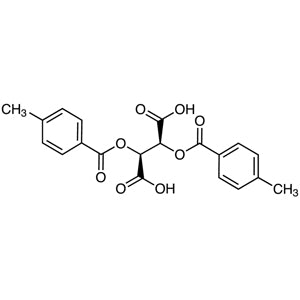
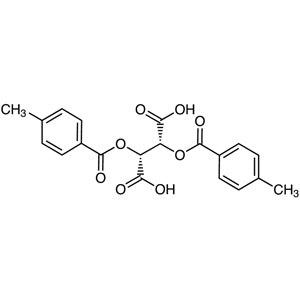
(+)-Di-p-toluoyl-D-tartaricAcid TCI D1417
Regular price From Rp 1.193.850,00Regular priceRp 834.750,00Sale price From Rp 1.193.850,00 -
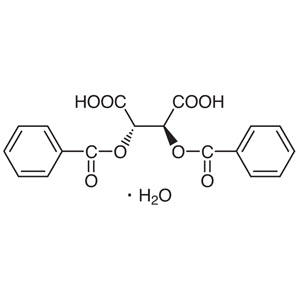
(+)-Dibenzoyl-D-tartaricAcidMonohydrate TCI D1398
Regular price From Rp 637.350,00Regular priceRp 445.200,00Sale price From Rp 637.350,00 -
(-)-Di-p-toluoyl-L-tartaricAcid TCI D1387
Regular price From Rp 1.961.400,00Regular priceRp 1.371.300,00Sale price From Rp 1.961.400,00