

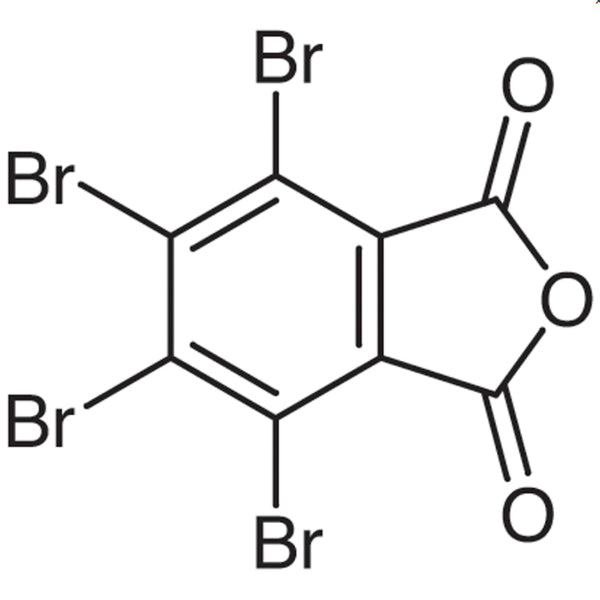
Tetrabromophthalic Anhydride (TCI T0046), with CAS number 632-79-1, is a chemical compound widely used in laboratory settings for the synthesis of complex compounds, particularly in the field of materials science and polymer chemistry. This compound is characterized by its phthalic anhydride structure, enhanced with bromine atoms, which contribute to its reactivity and ability to form bonds with various molecules. Its unique chemical structure makes it a valuable reagent for the development of advanced materials and polymers. In the laboratory, it plays a crucial role in the creation of high-performance materials, especially polyimides, which are known for their exceptional thermal and corrosion resistance.
Tetrabromophthalic Anhydride is preferred due to its chemical stability under certain conditions and its high reactivity towards amines and hydroxides. These properties allow it to participate in a wide range of chemical reactions, making it suitable for the synthesis of novel compounds with unique properties. Its molecular complexity enables it to interact with various functional groups, which is essential in the development of new materials and polymers. The compound’s versatility and reactivity make it a key component in many research applications, particularly in the study of advanced polymeric materials.
In Indonesian laboratories, Tetrabromophthalic Anhydride is commonly used by researchers in materials science, chemistry, and engineering. It is an essential reagent in the development of high-performance polymers, especially polyimides, which are used in a variety of industrial and technological applications. Its role in the synthesis of complex compounds makes it a fundamental material for scientific research and innovation in the field of polymer chemistry.
TCI brochures (PDF)
- Raw Materials for Polyimide Synthesis 2026-05-11 · p. 3
Related TCI products
- TCI T3871 632-79-1 Tetrabromophthalic Anhydride (purified by sublimation)
- TCI B4061 82-73-5 3-Bromophthalic Anhydride
- TCI I0856 38103-06-9 4,4'-(4,4'-Isopropylidenediphenoxy)diphthalic Anhydride
- TCI T2381 652-12-0 Tetrafluorophthalic Anhydride
- TCI B4629 36978-41-3 3,4'-Biphthalic Anhydride
- TCI B4262 2420-87-3 4,4'-Biphthalic Anhydride (purified by sublimation)
- Used in the synthesis of polyimide materials due to its ability to react with amines and form high-performance polymers.
- Applied in materials science research for the development of heat-resistant and corrosion-resistant compounds.
- Utilized in polymer chemistry experiments to create advanced macromolecular structures with unique properties.
- Employed in chemical synthesis processes to generate complex organic compounds with tailored functionalities.
- Integrated into laboratory workflows for the production of specialty polymers used in aerospace and electronic industries.
| Brand | TCI |
|---|---|
| CAS number | 632-79-1 |
| Molecular formula | — |
| Purity | — |
| Category | Materials Science > Polymer/Macromolecule Reagents > Polyimide Raw Materials |
| Pack sizes | Available in various quantities as per standard laboratory supply |
| Physical form | Solid |
| Storage | Store in a cool, dry, and well-ventilated area away from moisture and direct sunlight |
Tetrabromophthalic Anhydride should be stored in a cool, dry, and well-ventilated area to maintain its chemical stability. It is recommended to use airtight containers to prevent exposure to moisture and air, which can affect its reactivity. The compound is highly reactive towards amines and hydroxides, so it should be handled with care in laboratory settings. Proper personal protective equipment, such as gloves and safety goggles, should be worn during handling. Avoid contact with incompatible substances and ensure adequate ventilation when working with this material. Regular monitoring of storage conditions is essential to maintain the integrity and effectiveness of the compound in research applications.
—
Produk Terkait
-
TetrabromophthalicAnhydride(purifiedbysublimation) TCI T3871
Regular price Rp 2.625.000,00Regular priceRp 1.835.400,00Sale price Rp 2.625.000,00 -
3-BromophthalicAnhydride TCI B4061
Regular price From Rp 1.246.350,00Regular priceRp 871.500,00Sale price From Rp 1.246.350,00 -
4,4'-(4,4'-Isopropylidenediphenoxy)diphthalicAnhydride TCI I0856
Regular price From Rp 1.431.150,00Regular priceRp 1.016.400,00Sale price From Rp 1.431.150,00 -
TetrafluorophthalicAnhydride TCI T2381
Regular price From Rp 1.458.450,00Regular priceRp 1.019.550,00Sale price From Rp 1.458.450,00 -
3,4'-BiphthalicAnhydride TCI B4629
Regular price From Rp 2.411.850,00Regular priceRp 1.686.300,00Sale price From Rp 2.411.850,00 -
4,4'-BiphthalicAnhydride(purifiedbysublimation) TCI B4262
Regular price Rp 4.347.000,00Regular priceRp 3.039.750,00Sale price Rp 4.347.000,00 -
4,4'-BiphthalicAnhydride TCI B1326
Regular price From Rp 1.298.850,00Regular priceRp 908.250,00Sale price From Rp 1.298.850,00 -
TrimelliticAnhydrideChloride TCI T1079
Regular price From Rp 1.193.850,00Regular priceRp 834.750,00Sale price From Rp 1.193.850,00


