1,2,3,4-Tetrahydroquinaldine, also known as 2-methyl-1,2,3,4-tetrahydroquinoline, is a heterocyclic secondary amine. It is formed by hydrogenating the pyridine ring of quinaldine. The molecule has a benzene ring fused to a saturated nitrogen-containing ring that carries a methyl group, which gives it one chiral centre at the 2-position. In the laboratory, this TCI product (T0112, CAS 1780-19-4) is used as a heterocyclic building block, a model substrate in catalysis research, and an intermediate in the synthesis of dyes and bioactive compounds.
Chemists choose this compound because its secondary nitrogen atom is nucleophilic. It can be alkylated, acylated, or sulfonylated to give a wide range of derivatives from one starting scaffold. The chiral centre at the 2-position makes it an important substrate for kinetic resolution and enantiomer separation studies. Because it is the hydrogenation product of quinaldine, it also serves as a reference compound in research on the asymmetric hydrogenation of heteroarenes. The tetrahydroquinoline framework appears in many natural products and drugs, which makes it especially valuable for medicinal chemistry research.
In Indonesian laboratories, 1,2,3,4-Tetrahydroquinaldine is relevant to university research groups working on catalysis, asymmetric synthesis, and pharmaceutical chemistry. Graduate students and researchers use it to build heterocyclic compound libraries, test new catalytic hydrogenation systems, and develop chiral separation methods. Because it comes from TCI, a well-established reagent brand, research teams can count on consistent material for repeatable experiments. This matters for thesis projects and for studies that will be published.
Related TCI products
- Heterocyclic building block synthesis: the nucleophilic secondary nitrogen can be alkylated, acylated, or sulfonylated, so researchers can make many tetrahydroquinoline derivatives from one starting material.
- Asymmetric hydrogenation research: as the hydrogenation product of quinaldine, this compound is a reference standard for checking conversion and selectivity when new catalysts are tested on heteroarenes.
- Kinetic resolution studies: the single chiral centre at the 2-position makes it a useful model substrate for evaluating enantioselective reagents, enzymes, and catalysts that tell its two enantiomers apart.
- Enantiomer separation method development: its well-defined chirality suits it to developing and validating chiral chromatographic methods and other techniques for separating stereoisomers in analytical laboratories.
- Medicinal chemistry and intermediate synthesis: the tetrahydroquinoline scaffold appears widely in natural products and drugs, so this compound is a useful intermediate for bioactive compounds and dye synthesis.
| Brand | TCI (product code T0112) |
|---|---|
| CAS number | 1780-19-4 |
| Molecular formula | — |
| Purity | — |
| Category | Chemistry > Building Blocks > Heterocyclic Building Blocks |
| Pack sizes | available in standard TCI pack sizes; see the product listing for current options |
| Physical form | see the TCI product label and certificate of analysis |
| Storage | keep tightly closed in a cool, dry, well-ventilated area, following the TCI safety data sheet |
Store 1,2,3,4-Tetrahydroquinaldine in its original, tightly sealed TCI container in a cool, dry, well-ventilated place, away from direct sunlight, heat sources, and strong oxidizing agents. If you transfer portions, use clean, dry, chemically compatible glass containers and label them clearly. Handle the compound in a fume hood, and wear suitable gloves, safety glasses, and a laboratory coat. Do not inhale vapours or let the compound touch skin or eyes. Always check the supplier's safety data sheet before use, and dispose of residues according to institutional chemical waste procedures.
—
Produk Terkait
-
QuinaldineEthiodide TCI E0172
Regular price Rp 2.068.500,00Regular priceRp 1.461.600,00Sale price Rp 2.068.500,00 -
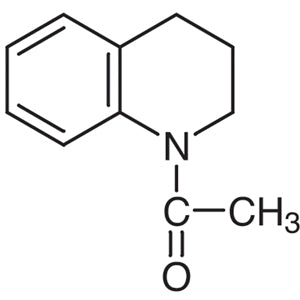
1-Acetyl-1,2,3,4-tetrahydroquinoline TCI A1641
Regular price From Rp 1.643.250,00Regular priceRp 1.164.450,00Sale price From Rp 1.643.250,00 -
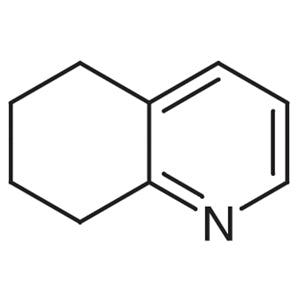
5,6,7,8-Tetrahydroquinoline TCI T1150
Regular price From Rp 1.405.950,00Regular priceRp 998.550,00Sale price From Rp 1.405.950,00 -
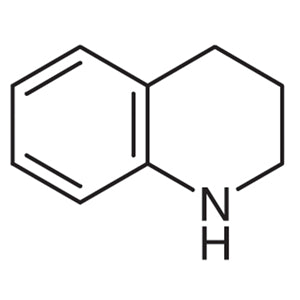
1,2,3,4-Tetrahydroquinoline TCI T0113
Regular price From Rp 717.150,00Regular priceRp 516.600,00Sale price From Rp 717.150,00 -
7-Nitro-1,2,3,4-tetrahydroquinoline TCI N0955
Regular price From Rp 1.351.350,00Regular priceRp 960.750,00Sale price From Rp 1.351.350,00 -
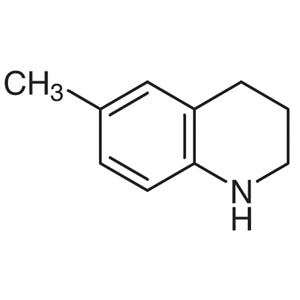
6-Methyl-1,2,3,4-tetrahydroquinoline TCI M1302
Regular price Rp 2.227.050,00Regular priceRp 1.572.900,00Sale price Rp 2.227.050,00 -
1,2,3,4-Tetrahydroquinoxaline TCI T2999
Regular price From Rp 795.900,00Regular priceRp 572.250,00Sale price From Rp 795.900,00 -
5,6,7,8-Tetrahydroquinoxaline TCI T1403
Regular price From Rp 900.900,00Regular priceRp 645.750,00Sale price From Rp 900.900,00