1,2,4,5-Tetracyanobenzene is an organic chemical compound with an aromatic structure featuring four cyanide (-CN) groups at positions 1, 2, 4, and 5 on the benzene ring. This compound plays a crucial role in laboratory settings as a foundational building block for the synthesis of more complex molecules. Its versatility makes it a valuable tool in organic chemistry and material science, where it is used to create heterocyclic compounds, dyes, and active ingredients for various industrial applications. Due to its stable chemical structure and controlled reactivity, it is widely used in substitution and condensation reactions, enabling researchers to develop new materials and compounds with specific properties.
The compound’s chemical properties allow it to react with a variety of reagents, including alkalis, acids, and alkali metals, making it suitable for a wide range of synthetic processes. Its ability to participate in multiple chemical reactions under controlled conditions makes it a preferred choice for researchers aiming to explore reactivity and functional group transformations. The compound’s predictable behavior and compatibility with common laboratory reagents enhance its utility in both academic and industrial research environments.
In Indonesian laboratories, 1,2,4,5-Tetracyanobenzene is frequently used in organic chemistry research, chemical material development, and studies on aromatic compound reactivity. It is a key component in experiments that require complex molecular structures and controlled chemical transformations. Many research institutions and universities in Indonesia rely on this compound for experiments involving advanced synthetic methodologies and material innovation.
- Organic synthesis experiments benefit from this compound's role as a versatile building block for creating complex aromatic derivatives.
- Material science research utilizes its reactivity to develop new pigments, dyes, and functional materials with tailored properties.
- Heterocyclic compound synthesis relies on its ability to undergo substitution and condensation reactions under controlled conditions.
- Industrial chemical development incorporates its structural stability for the creation of active ingredients and specialty chemicals.
- Aromatic reactivity studies use its predictable behavior to explore chemical transformations and functional group modifications.
| Brand | TCI |
|---|---|
| CAS number | 712-74-3 |
| Molecular formula | — |
| Purity | — |
| Category | Chemistry > Building Blocks > Non-Heterocyclic Building Blocks |
| Pack sizes | Available in various quantities as per standard laboratory supply |
| Physical form | Solid, crystalline |
| Storage | Store in a cool, dry place away from moisture and direct sunlight |
This compound should be stored in a cool, dry environment, away from moisture and direct sunlight to maintain its chemical stability. It is recommended to use airtight containers made of glass or polyethylene to prevent contamination and degradation. Due to its reactivity with moisture and certain reagents, it should be handled with care, using appropriate personal protective equipment such as gloves and safety goggles. In laboratory settings, it should be stored separately from strong acids, bases, and reactive metals to avoid unintended chemical interactions. Proper labeling and storage conditions are essential to ensure safety and maintain the integrity of the compound during handling and experimentation.
—
Produk Terkait
-
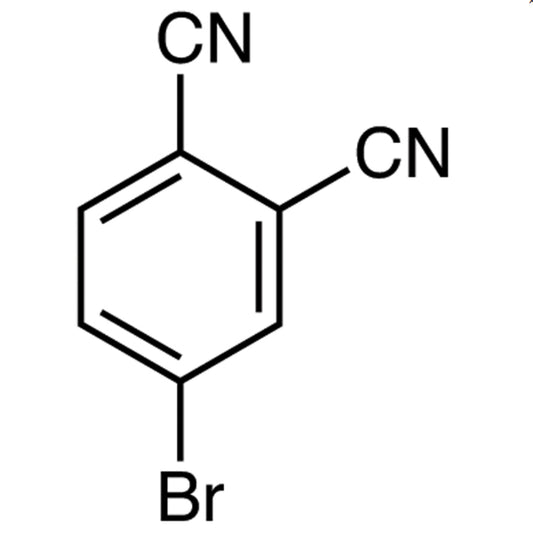
4-Bromophthalonitrile TCI B5509
Regular price From Rp 2.147.250,00Regular priceRp 1.517.250,00Sale price From Rp 2.147.250,00 -
4-Butoxyphthalonitrile TCI B1353
Regular price Rp 1.618.050,00Regular priceRp 1.146.600,00Sale price Rp 1.618.050,00 -
4-Pentyloxyphthalonitrile TCI P1071
Regular price From Rp 1.378.650,00Regular priceRp 979.650,00Sale price From Rp 1.378.650,00 -
4-Propoxyphthalonitrile TCI P1070
Regular price From Rp 1.749.300,00Regular priceRp 1.239.000,00Sale price From Rp 1.749.300,00 -
Phthalonitrile TCI P0404
Regular price From Rp 557.550,00Regular priceRp 405.300,00Sale price From Rp 557.550,00 -
4-Iodophthalonitrile TCI I1050
Regular price Rp 4.876.200,00Regular priceRp 3.425.100,00Sale price Rp 4.876.200,00 -
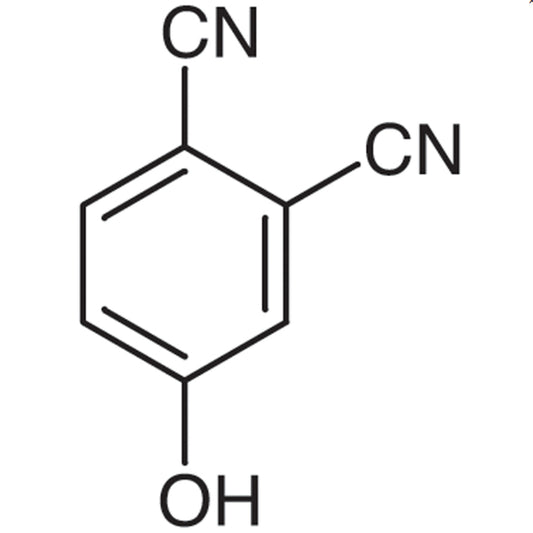
4-Hydroxyphthalonitrile TCI H0813
Regular price From Rp 2.147.250,00Regular priceRp 1.517.250,00Sale price From Rp 2.147.250,00 -
4-Hexyloxyphthalonitrile TCI H0691
Regular price Rp 1.378.650,00Regular priceRp 979.650,00Sale price Rp 1.378.650,00