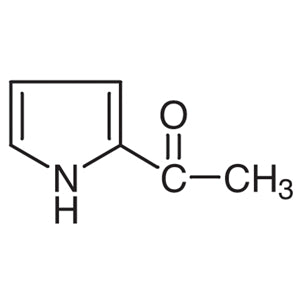
2-Acetylpyrrole is a versatile chemical compound widely used in the synthesis of heterocyclic and complex organic compounds. It plays a crucial role in laboratory settings where the formation of cyclic structures is required, especially in the development of compounds with specific biological properties. As a fundamental building block in heterocyclic synthesis, it is essential for organic chemistry and pharmacology research. Its unique structure, featuring two nitrogen atoms in an aromatic ring, contributes to its high reactivity and ability to participate in various chemical reactions such as Diels-Alder, substitution, and nucleophilic reactions.
The compound's aromatic nature and reactivity make it a preferred choice for researchers seeking stable yet reactive materials. Its ability to engage in multiple reaction pathways enhances its utility in both academic and industrial applications. The chemical's structural characteristics allow it to be a key component in the design of bioactive molecules, making it a valuable resource for laboratories focused on drug development and molecular structure studies. Its reliability and effectiveness in synthetic processes further solidify its position as a go-to material for chemical synthesis.
In Indonesian laboratories, 2-Acetylpyrrole is commonly used in scientific research, particularly in the fields of organic chemistry and pharmacy. It is highly relevant for studies involving the synthesis of biologically active compounds, drug development, and molecular structure analysis. Its application in heterocyclic synthesis makes it an essential tool for researchers aiming to create new compounds with specific functional properties.
- Heterocyclic Compound Synthesis: 2-Acetylpyrrole is ideal for creating complex ring structures due to its aromatic nature and reactivity.
- Pharmaceutical Research: The compound is used in the development of drugs as it can participate in various synthetic pathways that lead to bioactive molecules.
- Organic Chemistry Studies: It serves as a key building block for synthesizing a wide range of organic compounds with specific functional groups.
- Molecular Structure Analysis: Its unique chemical structure makes it useful for studying molecular interactions and reaction mechanisms.
- Bioactive Molecule Development: The compound is frequently used in the synthesis of compounds with potential therapeutic applications.
| Brand | TCI |
|---|---|
| CAS number | 1072-83-9 |
| Molecular formula | — |
| Purity | — |
| Category | Chemistry > Building Blocks > Heterocyclic Building Blocks |
| Pack sizes | Available in various quantities as per supplier specifications |
| Physical form | Solid |
| Storage | Store in a cool, dry place away from light and moisture |
2-Acetylpyrrole should be stored in a cool, dry place, away from direct light and moisture to maintain its chemical integrity. It is recommended to use airtight containers to prevent exposure to air and humidity. Due to its reactivity, it should be handled in a well-ventilated area, and appropriate personal protective equipment should be worn. The compound is not classified as hazardous under standard laboratory conditions, but standard safety protocols should still be followed. Proper labeling and storage are essential to ensure safe handling and prevent accidental contamination.
—
Produk Terkait
-
1-Acetylpyrrolidine TCI A1030
Regular price Rp 5.485.200,00Regular price -
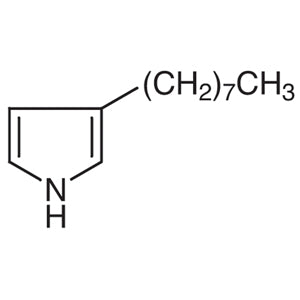
3-n-Octylpyrrole TCI O0241
Regular price Rp 5.246.850,00Regular priceRp 3.684.450,00Sale price Rp 5.246.850,00 -
2-Acetylpyrazine TCI A0988
Regular price From Rp 1.035.300,00Regular price -
3-Heptylpyrrole TCI H0809
Regular price Rp 4.266.150,00Regular priceRp 2.998.800,00Sale price Rp 4.266.150,00 -
1,2,5-Trimethylpyrrole TCI T1939
Regular price Rp 1.246.350,00Regular priceRp 887.250,00Sale price Rp 1.246.350,00 -
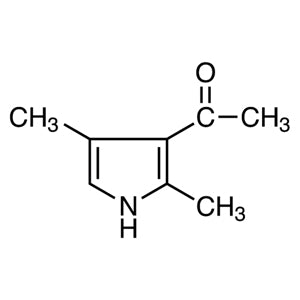
3-Acetyl-2,4-dimethylpyrrole TCI A2734
Regular price From Rp 1.724.100,00Regular price -
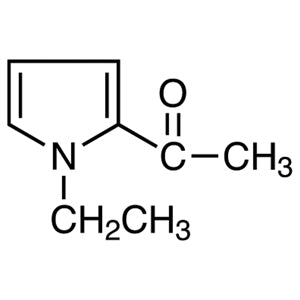
2-Acetyl-1-ethylpyrrole TCI A1977
Regular price From Rp 955.500,00Regular price -
2-Acetyl-1-methylpyrrole TCI A1014
Regular price From Rp 1.115.100,00Regular price