3-n-Octylpyrrole is a chemical compound classified under the category of heterocyclic building blocks, making it a valuable component in organic chemistry research. This compound serves as a foundational material in the synthesis of complex heterocyclic structures, enabling the development of new compounds with diverse applications. In laboratory settings, it plays a crucial role in facilitating chemical reactions that lead to the creation of advanced organic molecules. Its versatility makes it an essential tool for chemists and researchers working in various scientific fields.
The compound is preferred due to its stable molecular structure and good solubility in organic solvents, which simplifies its use in different reaction conditions. Its high chemical stability ensures that it remains effective even during prolonged storage and repeated use. Additionally, its reactivity allows it to participate in a wide range of substitution and cyclization reactions, making it a reliable choice for synthetic processes. These properties contribute to its widespread adoption in both academic and industrial laboratories.
In Indonesian laboratories, 3-n-Octylpyrrole is commonly used in organic chemistry research, particularly in the development of new compounds and the modification of complex molecular structures. It is an essential reagent for researchers aiming to explore novel chemical pathways and enhance the efficiency of synthetic processes. Its reliability and consistency make it a trusted material for scientific investigations in the region.
- Organic synthesis applications benefit from 3-n-Octylpyrrole due to its role in forming complex heterocyclic structures essential for pharmaceutical and material development.
- It is ideal for cyclization reactions because of its structural stability and reactivity, allowing for the formation of ring-based compounds with high precision.
- In pharmaceutical research, this compound supports the synthesis of bioactive molecules, aiding in drug discovery and development processes.
- Its solubility in organic solvents makes it suitable for use in solution-based reactions, enhancing the efficiency of chemical transformations.
- It is widely applied in material science for the creation of advanced polymers and functional materials with tailored properties.
| Brand | TCI |
|---|---|
| CAS number | 118799-18-1 |
| Molecular formula | — |
| Purity | — |
| Category | Chemistry > Building Blocks > Heterocyclic Building Blocks |
| Pack sizes | Available in various sizes as per standard laboratory supply |
| Physical form | Liquid |
| Storage | Store in a cool, dry place away from light and incompatible substances |
3-n-Octylpyrrole should be stored in a cool, dry environment, away from direct sunlight and sources of heat. It is recommended to keep it in a sealed container to prevent evaporation and contamination. Due to its chemical nature, it should be stored separately from strong oxidizing agents and reactive materials to avoid potential hazards. In laboratory settings, proper ventilation is essential when handling this compound to ensure safe working conditions. Always use appropriate personal protective equipment, such as gloves and safety goggles, to minimize exposure. Regular inspection of storage conditions is advised to maintain the integrity and safety of the compound.
—
Produk Terkait
-
2-Acetylpyrrole TCI A0894
Regular price From Rp 980.700,00Regular price -
3-Heptylpyrrole TCI H0809
Regular price From Rp 4.213.650,00Regular price -
1,2,5-Trimethylpyrrole TCI T1939
Regular price From Rp 1.193.850,00Regular price -
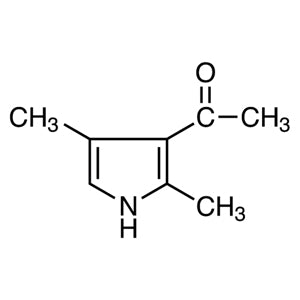
3-Acetyl-2,4-dimethylpyrrole TCI A2734
Regular price From Rp 1.724.100,00Regular price -
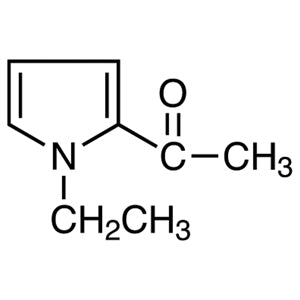
2-Acetyl-1-ethylpyrrole TCI A1977
Regular price From Rp 955.500,00Regular price -
2-Acetyl-1-methylpyrrole TCI A1014
Regular price From Rp 1.115.100,00Regular price -
3-Methylpyrrole TCI M1144
Regular price From Rp 9.223.200,00Regular price -
Methyl1-Methylpyrrole-2-acetate TCI M0846
Regular price From Rp 1.220.100,00Regular price