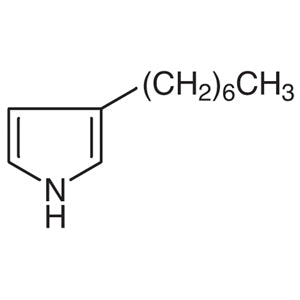
3-Heptylpyrrole is a chemical compound classified under the heterocyclic category, commonly used as a building block in the synthesis of complex compounds. It serves as a fundamental component in organic chemistry, enabling the creation of more intricate molecular structures. Its unique structure combines a pyrrole ring with a heptyl chain, offering versatility in chemical reactions. This compound is widely utilized in laboratories for its ability to participate in various synthetic pathways, making it an essential tool for researchers.
The compound is valued for its high reactivity, particularly at the nitrogen atom within the heterocyclic ring. This reactivity allows it to engage in substitution, addition, and cyclization reactions, enhancing its applicability in diverse chemical processes. Additionally, 3-Heptylpyrrole exhibits stability under certain conditions, ensuring it remains effective without rapid degradation. These properties make it a preferred choice for chemists seeking reliable and versatile reagents.
In Indonesian laboratories, 3-Heptylpyrrole is extensively used in organic chemistry research, especially in academic institutions and research centers. Its availability and adherence to international quality standards make it a favored material for both educational and experimental purposes. Its role in synthesizing complex compounds supports advancements in pharmaceutical and chemical research within the region.
- Organic synthesis applications benefit from 3-Heptylpyrrole due to its reactivity and ability to form complex molecular structures, supporting the development of new compounds.
- Pharmaceutical research utilizes this compound for the synthesis of bioactive molecules, as its heterocyclic nature aligns with drug design principles.
- Academic research in chemistry relies on 3-Heptylpyrrole for teaching and experimentation, providing students with hands-on experience in synthetic chemistry.
- Industrial chemical processes incorporate this compound for the production of specialty chemicals, leveraging its structural versatility.
- Analytical chemistry laboratories use 3-Heptylpyrrole as a standard reference material for testing and calibration of analytical instruments.
| Brand | TCI |
|---|---|
| CAS number | 878-11-5 |
| Molecular formula | — |
| Purity | — |
| Category | Chemistry > Building Blocks > Heterocyclic Building Blocks |
| Pack sizes | Available in various quantities as per supplier specifications |
| Physical form | Liquid or solid, depending on the specific product variant |
| Storage | Store in a cool, dry place away from direct sunlight and incompatible materials |
3-Heptylpyrrole should be stored in a cool, dry environment to maintain its chemical stability. It is recommended to keep it in a tightly sealed container to prevent exposure to moisture and air, which may affect its reactivity. The compound should be stored away from strong oxidizing agents and incompatible substances to avoid potential chemical interactions. In laboratory settings, it is essential to use appropriate personal protective equipment, such as gloves and safety goggles, when handling the material. Regular monitoring of storage conditions ensures the compound remains in optimal condition for use in research and synthesis processes. Proper labeling of containers is also crucial for safe handling and to prevent accidental exposure.
—
Produk Terkait
-
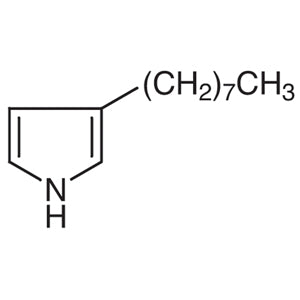
3-n-Octylpyrrole TCI O0241
Regular price Rp 5.246.850,00Regular priceRp 3.684.450,00Sale price Rp 5.246.850,00 -
2-Acetylpyrrole TCI A0894
Regular price From Rp 980.700,00Regular price -
1,2,5-Trimethylpyrrole TCI T1939
Regular price Rp 1.246.350,00Regular priceRp 887.250,00Sale price Rp 1.246.350,00 -
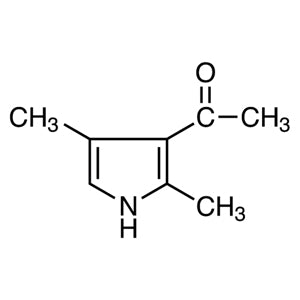
3-Acetyl-2,4-dimethylpyrrole TCI A2734
Regular price From Rp 1.724.100,00Regular price -
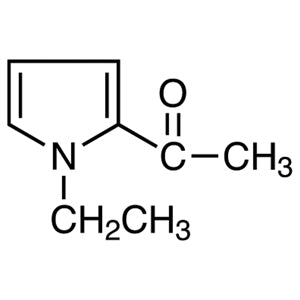
2-Acetyl-1-ethylpyrrole TCI A1977
Regular price From Rp 955.500,00Regular price -
2-Acetyl-1-methylpyrrole TCI A1014
Regular price From Rp 1.115.100,00Regular price -
3-Methylpyrrole TCI M1144
Regular price Rp 9.275.700,00Regular priceRp 6.501.600,00Sale price Rp 9.275.700,00 -
Methyl1-Methylpyrrole-2-acetate TCI M0846
Regular price Rp 1.272.600,00Regular priceRp 905.100,00Sale price Rp 1.272.600,00