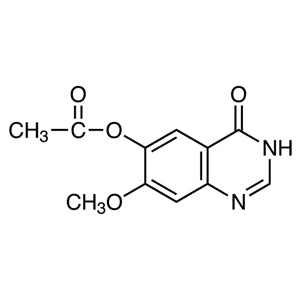
1-Acetoxy-2-methoxy-4-[(E)-1-propenyl]benzene is a chemical compound widely used in scientific experiments, particularly in the fields of biochemistry and pharmacology. This compound is a key component in the study of phenylpropanoids and aromatic polyketides, which are essential in the synthesis of bioactive compounds. Its unique molecular structure enables it to interact with various biological systems, making it an important tool for researchers. In laboratory settings, it serves as a building block for the development of compounds with pharmacological or biological activities. Its versatility and chemical stability make it a valuable resource for a wide range of experimental applications.
The compound’s chemical stability under specific conditions ensures consistent results in experiments, which is crucial for reliable scientific research. Its ability to react with different reagents under controlled conditions enhances its applicability in diverse laboratory processes. The compound’s molecular complexity allows it to be used in the analysis of complex biological systems and in the development of natural active compounds. These properties make it a preferred choice for scientists working in biochemistry and pharmacology.
In Indonesian laboratories, this compound is commonly used in scientific research conducted by universities and research institutions. It is particularly valuable in studies related to natural active compounds, drug development, and the analysis of complex biological substances. Researchers rely on this compound for its reliability and effectiveness in various experimental contexts. Its use supports the advancement of scientific knowledge and the development of new therapeutic agents.
TCI brochures (PDF)
- Polyphenols 2024-12-05 · p. 2
Related TCI products
- TCI A1527 2747-05-9 7-Acetoxy-4-methylcoumarin
- TCI P1103 93-16-3 4-(1-Propenyl)-1,2-dimethoxybenzene
- TCI E0804 94-86-0 2-Ethoxy-5-(1-propenyl)phenol
- TCI X0084 142627-97-2 1,4-Bis[[(3-ethyloxetan-3-yl)methoxy]methyl]benzene
- TCI T4045 402-52-8 1-Methoxy-4-(trifluoromethyl)benzene
- TCI B4539 173336-76-0 4-Bromo-1-methoxy-2-(3-methoxypropoxy)benzene
- Biochemical Research: This compound is ideal for studying the synthesis of bioactive compounds due to its molecular structure and reactivity.
- Pharmacological Studies: It supports the development of new drugs by serving as a building block for compounds with pharmacological activities.
- Natural Product Analysis: Its use in analyzing complex biological systems makes it suitable for research on natural active compounds.
- Environmental Toxicology: The compound’s stability and reactivity help in assessing the impact of chemicals on biological systems.
- Synthetic Chemistry: It is widely used in synthetic pathways for creating complex organic molecules with specific functional groups.
| Brand | TCI |
|---|---|
| CAS number | 5912-87-8 |
| Molecular formula | — |
| Purity | — |
| Category | Life Science > Biochemicals and Reagents > Phenylpropanoids, Aromatic Polyketides |
| Pack sizes | Available in various quantities as per standard laboratory requirements |
| Physical form | Liquid |
| Storage | Store in a cool, dry place away from direct sunlight |
This compound should be stored in a cool, dry place, away from direct sunlight and sources of heat. It is recommended to use airtight containers to prevent contamination and maintain its chemical integrity. Due to its reactivity, it should be handled with appropriate laboratory safety measures, such as wearing gloves and using a fume hood when necessary. Proper labeling of containers is essential to ensure safe handling and prevent accidental exposure. Regular inspection of storage conditions is advised to maintain the compound’s stability and effectiveness in research applications.
—
Produk Terkait
-
7-Acetoxy-4-methylcoumarin TCI A1527
Regular price Rp 1.140.300,00Regular priceRp 812.700,00Sale price Rp 1.140.300,00 -
4-(1-Propenyl)-1,2-dimethoxybenzene TCI P1103
Regular price From Rp 610.050,00Regular priceRp 426.300,00Sale price From Rp 610.050,00 -
2-Ethoxy-5-(1-propenyl)phenol TCI E0804
Regular price Rp 1.246.350,00Regular priceRp 887.250,00Sale price Rp 1.246.350,00 -
1,4-Bis[[(3-ethyloxetan-3-yl)methoxy]methyl]benzene TCI X0084
Regular price From Rp 1.351.350,00Regular priceRp 960.750,00Sale price From Rp 1.351.350,00 -
1-Methoxy-4-(trifluoromethyl)benzene TCI T4045
Regular price From Rp 2.016.000,00Regular priceRp 1.409.100,00Sale price From Rp 2.016.000,00 -
4-Bromo-1-methoxy-2-(3-methoxypropoxy)benzene TCI B4539
Regular price From Rp 848.400,00Regular priceRp 593.250,00Sale price From Rp 848.400,00 -
6-Acetoxy-7-methoxy-3H-quinazolin-4-one TCI A2717
Regular price From Rp 637.350,00Regular priceRp 460.950,00Sale price From Rp 637.350,00 -
1-Methoxy-4-(trans-4-propylcyclohexyl)benzene TCI M3152
Regular price From Rp 689.850,00Regular priceRp 481.950,00Sale price From Rp 689.850,00