2-Aminoadenosine is a chemical compound widely used in chemical and biological experiments. As a nucleotide derivative, it plays a crucial role in laboratory settings, particularly in the study of DNA and RNA. This compound is often utilized as a building block for the synthesis of more complex molecules or as a substrate in enzymatic reactions. Its unique chemical structure allows it to participate in various biochemical processes, making it a valuable tool for researchers.
The compound’s chemical stability and solubility in organic solvents such as ethyl acetate and acetone contribute to its versatility in experimental applications. Its reactivity under different reaction conditions further enhances its utility in diverse research scenarios. The high purity and consistent quality of 2-Aminoadenosine ensure reliable results, making it a preferred choice for laboratories requiring precise and reproducible outcomes.
In Indonesian laboratories, 2-Aminoadenosine is commonly used in research fields such as chemistry, molecular biology, and pharmacology. It is particularly relevant in studies involving molecular interactions and the development of new pharmaceutical compounds. Its availability supports ongoing experiments that require specialized chemical reagents, enabling researchers to advance their scientific inquiries effectively.
TCI brochures (PDF)
- Base Modified Nucleosides and Nucleotides for Epigenetic Research 2025-04-14 · p. 2
- Nucleosides, Nucleotides, Nucleic Acids and Related Reagents 2026-03-23 · p. 5
- Molecular Biology Research – 2-Aminoadenosine is ideal for studying nucleic acid interactions due to its structural similarity to adenosine, enabling precise molecular-level investigations.
- Enzymatic Reaction Studies – The compound serves as a substrate in enzymatic reactions, allowing researchers to analyze enzyme activity and substrate specificity under controlled conditions.
- Drug Development – Its role in molecular interactions makes it valuable in the development of new pharmaceutical compounds, particularly in targeting specific biological pathways.
- Organic Synthesis – The compound’s chemical stability and reactivity make it a preferred reagent for the synthesis of complex organic molecules in chemical research.
- Biochemical Assays – 2-Aminoadenosine is used in assays that require specific nucleotide derivatives to study biological processes and molecular mechanisms.
| Brand | TCI |
|---|---|
| CAS number | 2096-10-8 |
| Molecular formula | — |
| Purity | — |
| Category | Chemistry > Chemical Biology > Nucleic Acid Chemistry |
| Pack sizes | Available in various quantities as per supplier specifications |
| Physical form | Solid powder |
| Storage | Store in a cool, dry place away from light and moisture |
2-Aminoadenosine should be stored in a cool, dry environment, away from direct light and moisture to maintain its chemical stability. It is recommended to use airtight containers to prevent exposure to humidity and contaminants. Due to its reactivity, it should be handled in a well-ventilated area, and appropriate personal protective equipment, such as gloves and safety goggles, should be worn. Avoid contact with incompatible substances, and ensure proper waste disposal procedures are followed. Regular monitoring of storage conditions is essential to ensure the compound remains in optimal condition for experimental use.
—
Product Categories
- Biochemicals and ReagentsNucleosides, Nucleotides, OligonucleotidesNucleoside Analogs
- Biochemicals and ReagentsNucleosides, Nucleotides, OligonucleotidesNucleosides
- Molecular BiologyEpigeneticsBase Modified Nucleosides and Nucleotides
- Pharmaceutical Development and Drug Discovery ResearchNucleic Acid ChemistryBase Modified Nucleosides and Nucleotides
Produk Terkait
-
8-Oxoadenosine TCI O0401
Regular price From Rp 4.001.550,00Regular priceRp 2.814.000,00Sale price From Rp 4.001.550,00 -
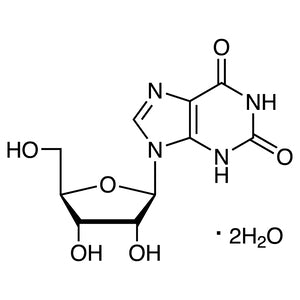
XanthosineDihydrate TCI X0008
Regular price Rp 1.167.600,00Regular priceRp 831.600,00Sale price Rp 1.167.600,00 -
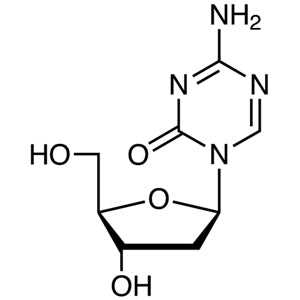
5-Aza-2'-deoxycytidine TCI A2232
Regular price From Rp 3.419.850,00Regular priceRp 2.406.600,00Sale price From Rp 3.419.850,00 -
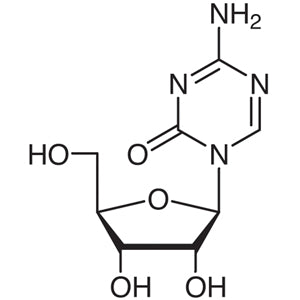
5-Azacytidine TCI A2033
Regular price From Rp 1.167.600,00Regular priceRp 831.600,00Sale price From Rp 1.167.600,00 -
6-Azauridine TCI A0559
Regular price Rp 505.050,00Regular priceRp 368.550,00Sale price Rp 505.050,00 -
Pseudouridine TCI P2396
Regular price Rp 9.063.600,00Regular priceRp 6.353.550,00Sale price Rp 9.063.600,00 -
5-Methylcytidine TCI M1931
Regular price Rp 4.266.150,00Regular priceRp 2.998.800,00Sale price Rp 4.266.150,00 -
Inosine TCI I0037
Regular price From Rp 1.405.950,00Regular priceRp 998.550,00Sale price From Rp 1.405.950,00