3,5-Dinitrobenzoyl Chloride is a chemical compound widely used in analytical chemistry for derivatization processes. It plays a crucial role in laboratories by enabling the modification of target molecules to enhance their detectability through advanced analytical techniques such as HPLC. This reagent is essential for improving the sensitivity and accuracy of chemical analysis, making it a valuable tool in both research and quality control settings. Its application is particularly relevant in environments where precise and reliable data are required for scientific investigations.
The compound is known for its chemical stability and reactivity towards various organic compounds. It exhibits strong affinity for functional groups such as amines, hydroxyls, and other reactive moieties, allowing it to form derivatives with enhanced detectability. These properties make it a preferred choice for analysts seeking reliable and consistent results. Its effectiveness in creating detectable derivatives ensures that it remains a key component in analytical workflows, especially in complex sample matrices where traditional detection methods may fall short.
In Indonesian laboratories, 3,5-Dinitrobenzoyl Chloride is commonly used in scientific research, product quality testing, and environmental analysis. Its ability to improve detection limits and provide clear analytical outcomes supports a wide range of applications. This reagent is particularly favored in settings where high precision and accuracy are critical, such as in academic and industrial research facilities across Indonesia.
Advantages (TCI brochure)
- Reacts with a hydroxy group to form an ester or with an amino group to form an amide
- Resulting ester or amide is stable and reaches the detector without decomposition in reversed phase HPLC
- Excellent chromatogram obtained at 254 nm, a wavelength generally used for UV detection
TCI brochures (PDF)
- HPLC Labeling Reagents 2026-03-10 · p. 2
Related TCI products
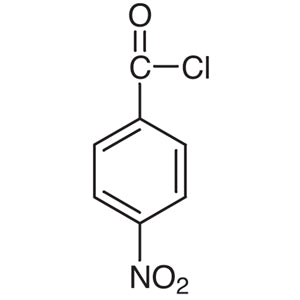
- TCI N0176 122-04-3 4-Nitrobenzoyl Chloride
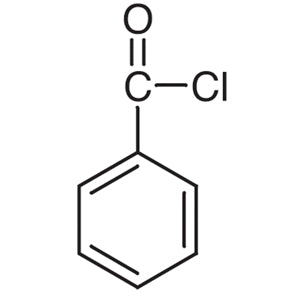
- TCI B0105 98-88-4 Benzoyl Chloride
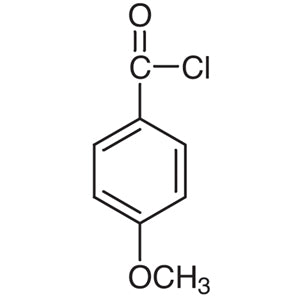
- TCI M0721 100-07-2 4-Methoxybenzoyl Chloride
- TCI A5524 178065-30-0 Nalpha-(5-Fluoro-2,4-dinitrophenyl)-D-leucinamide [HPLC Labeling Reagent for e.e. Determination]
- TCI A5523 178065-29-7 Nalpha-(5-Fluoro-2,4-dinitrophenyl)-L-leucinamide [HPLC Labeling Reagent for e.e. Determination]
- TCI A5522 68123-33-1 N-Succinimidyl 4-Nitrophenylacetate [for HPLC Labeling]
- Used in HPLC labeling for enhanced detection of amino compounds due to its strong reactivity with amine groups.
- Applied in environmental analysis to detect trace organic pollutants through improved chromatographic resolution.
- Utilized in pharmaceutical research for the derivatization of drug compounds to facilitate quantification in complex mixtures.
- Employed in food safety testing to identify and quantify amino acids in food samples with high sensitivity.
- Integrated into analytical workflows for the identification of hydroxyl-containing compounds in chemical and biological samples.
From the TCI brochure
- Alcohols (as 3,5-dinitrobenzoic acid esters)
- Mono- and diethylene glycols in polyethylene glycol
- Aliphatic alcohols
| Brand | TCI |
|---|---|
| CAS number | 99-33-2 |
| Molecular formula | — |
| Purity | — |
| Category | Analytical Chemistry > Analytical Reagents > Derivatization Reagents |
| Pack sizes | Available in various quantities as per standard laboratory reagent packaging |
| Physical form | Solid, crystalline powder |
| Storage | Store in a cool, dry place away from light and moisture |
Data from the TCI brochure
| Panjang gelombang deteksi UV | 254 nm (Kolom Kaseisorb LC ODS-300-5 4.6 mm I.D.x150 mm; CH3CN/H2O = 55/45; 1 mL/min) |
|---|
Source: TCI brochure A1096 (2026-03-10)
3,5-Dinitrobenzoyl Chloride should be stored in a cool, dry environment, away from direct sunlight and moisture. It is recommended to keep the compound in a sealed container to prevent exposure to air and humidity. Due to its reactivity, it should be handled in a well-ventilated area, preferably with appropriate personal protective equipment such as gloves and safety goggles. The material is not classified as hazardous under standard laboratory conditions, but care should be taken to avoid inhalation or skin contact. It is suitable for storage in glass or polyethylene containers, ensuring long-term stability and maintaining its chemical integrity. Always follow standard laboratory safety protocols when handling this reagent to ensure safe and effective use.
—
Product Categories
Produk Terkait
-
4-NitrobenzoylChloride TCI N0176
Regular price From Rp 557.550,00Regular priceRp 405.300,00Sale price From Rp 557.550,00 -
BenzoylChloride TCI B0105
Regular price Rp 557.550,00Regular priceRp 405.300,00Sale price Rp 557.550,00 -
4-MethoxybenzoylChloride TCI M0721
Regular price From Rp 1.033.200,00Regular priceRp 738.150,00Sale price From Rp 1.033.200,00 -

Nalpha-(5-Fluoro-2,4-dinitrophenyl)-D-leucinamide[HPLCLabelingReagentfore.e.Determination] TCI A5524
Regular price From Rp 3.472.350,00Regular priceRp 2.443.350,00Sale price From Rp 3.472.350,00 -

Nalpha-(5-Fluoro-2,4-dinitrophenyl)-L-leucinamide[HPLCLabelingReagentfore.e.Determination] TCI A5523
Regular price Rp 3.922.800,00Regular priceRp 2.758.350,00Sale price Rp 3.922.800,00 -
N-Succinimidyl4-Nitrophenylacetate[forHPLCLabeling] TCI A5522
Regular price Rp 3.365.250,00Regular priceRp 2.368.800,00Sale price Rp 3.365.250,00 -
2,3,4,6-Tetra-O-acetyl-beta-D-glucopyranosylIsothiocyanate[forHPLCLabeling] TCI A5514
Regular price From Rp 1.881.600,00Regular priceRp 1.331.400,00Sale price From Rp 1.881.600,00 -
2,4-Dinitrofluorobenzene[forHPLCLabeling] TCI A5512
Regular price From Rp 875.700,00Regular priceRp 612.150,00Sale price From Rp 875.700,00